Business
Japan producer prices jump at fastest pace in more than three years
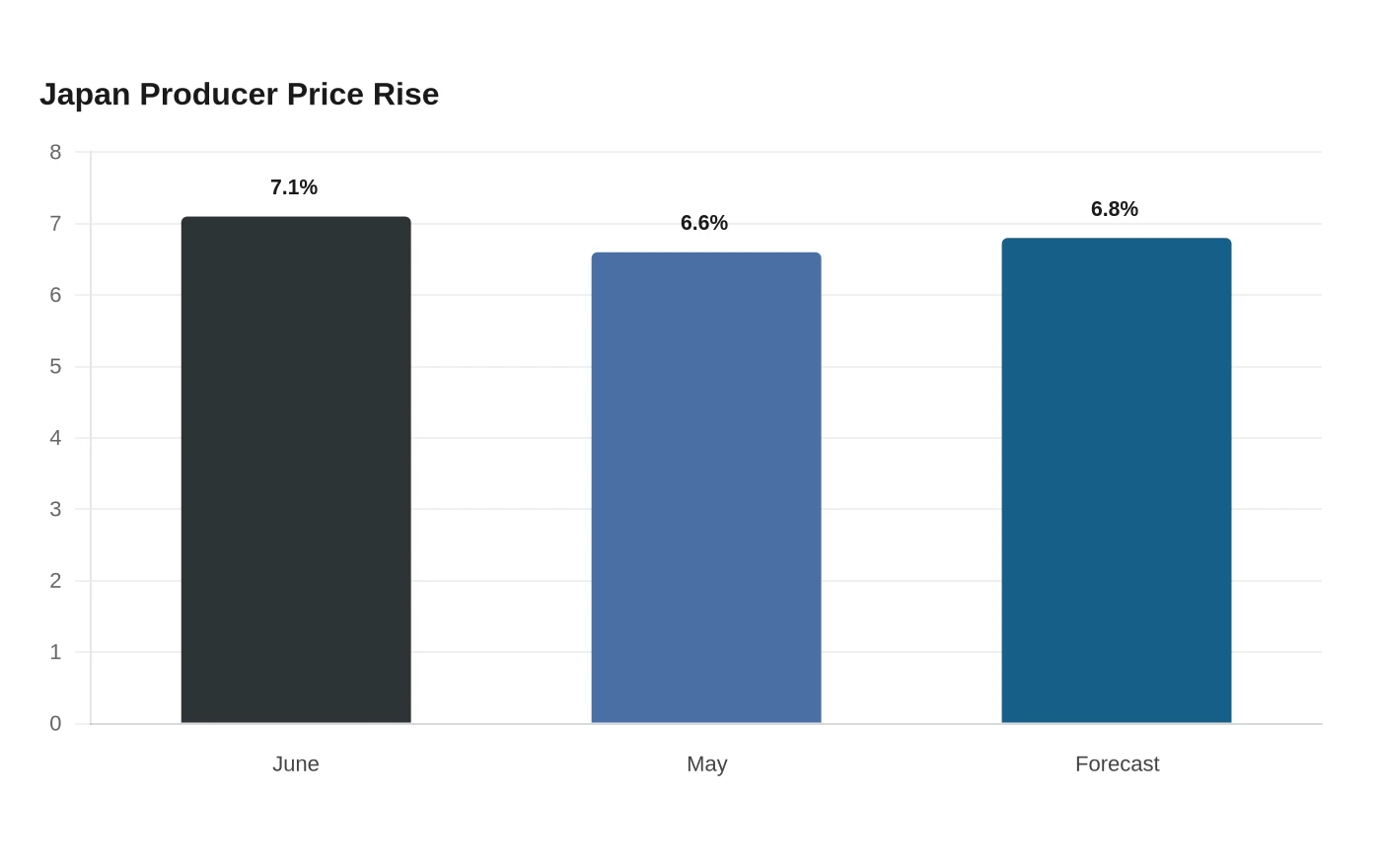
Japan's producer prices rose 7.1% in June from a year earlier, the fastest pace since March 2023, as fuel and metal costs climbed and a weak yen lifted import bills. The increase topped the 6.8% market forecast and followed a revised 6.6% gain in May. The Bank of Japan now faces a sharper test of whether imported costs are still the main driver of inflation or whether price gains are taking on a more durable shape.
The June reading in the corporate goods price index showed how quickly higher energy and raw material costs are feeding through factory gates. Fuel prices jumped 22.8% from a year earlier, while non-ferrous metal prices surged 39.2%. The yen-based import price index rose 29.7% in June, up from a revised 26.1% increase in May and the quickest rise since October 2022, underscoring how the currency remains a critical channel for imported inflation in Tokyo.

The Bank of Japan has already signaled that those pressures are broadening. On July 9, it said the pass-through of input costs was moving faster than before and could lift consumer inflation later this year. It also warned that the U.S.-Israeli war on Iran is likely to prod more firms to raise prices later in 2026, a sign that energy and shipping disruptions tied to the Middle East conflict are adding to Japan's cost burden. Core consumer inflation stayed below the BOJ's 2% target for a fourth straight month in May, but that has not stopped wholesale prices from accelerating.
Minoru Kiuchi, Japan's economy minister, said on Friday that past oil price increases were pushing up wholesale prices while consumer prices were rising only moderately because of government measures. Masato Koike of Sompo Institute Plus said wholesale inflation would remain elevated and that the BOJ "may be forced to raise rates early including in October" if prices keep moving up. He said supply constraints and earlier energy cost increases would spread to a wider range of goods, a warning that matters for households already facing higher food and utility bills.
The central bank raised its policy rate to 1% in June, a 31-year high, and is set to meet again at the end of July, with the two-day meeting scheduled to conclude on July 31. Officials will release fresh growth and price forecasts then, offering a clearer read on how far they think the inflation cycle has gone. The debate has widened beyond prices alone, after the government began weighing whether to add explicit language on Bank of Japan independence to its economic blueprint as bond yields climbed to multi-decade highs.
Sources
- [1]money.usnews.com
- [2]japannews.yomiuri.co.jp
- [3]boj.or.jp
- [4]wifc.com