World
Japan weighs adopting male relatives to shore up imperial succession
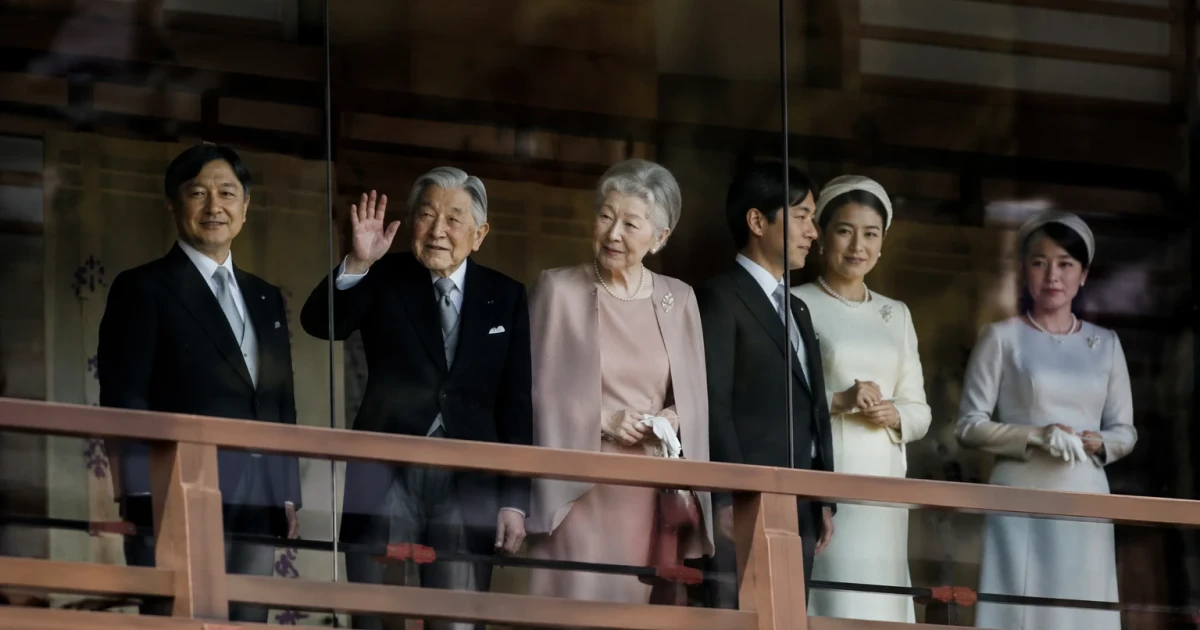
Japan’s lawmakers are closing in on a stopgap that would keep the imperial line male, even as public opinion tilts toward a broader break with tradition. A draft proposal would let the imperial family adopt male descendants from the 11 former branches that lost status in 1947, while also allowing female royals to keep their titles after marriage.
The move comes as the succession pool has narrowed to just three eligible male heirs: Crown Prince Akishino, his son Prince Hisahito and Prince Hitachi. Under the Imperial House Law, the throne can pass only to a male offspring in the male line, and the emperor and members of the imperial family are barred from adopting children. The family itself has shrunk to 16 members from 23 in 2005, and four female members have married and left the family over the past 20 years. That has turned succession from a ceremonial concern into a constitutional test of whether Japan can preserve a hereditary monarchy without rewriting the role women are allowed to play in it.
The draft would not make the adopted men heirs to the throne. Instead, it would bring them into the imperial family as a way to shore up the institution’s numbers, with limits on who could be adopted and at what age. The same package would leave unresolved whether the husbands and children of female royals should gain imperial status if those women are allowed to remain members after marriage, a point pushed by the Constitutional Democratic Party of Japan. Diet leaders’ proposal also treats women retaining their status after marriage as a transitional measure, and the government is expected to submit a bill revising the Imperial House Law.

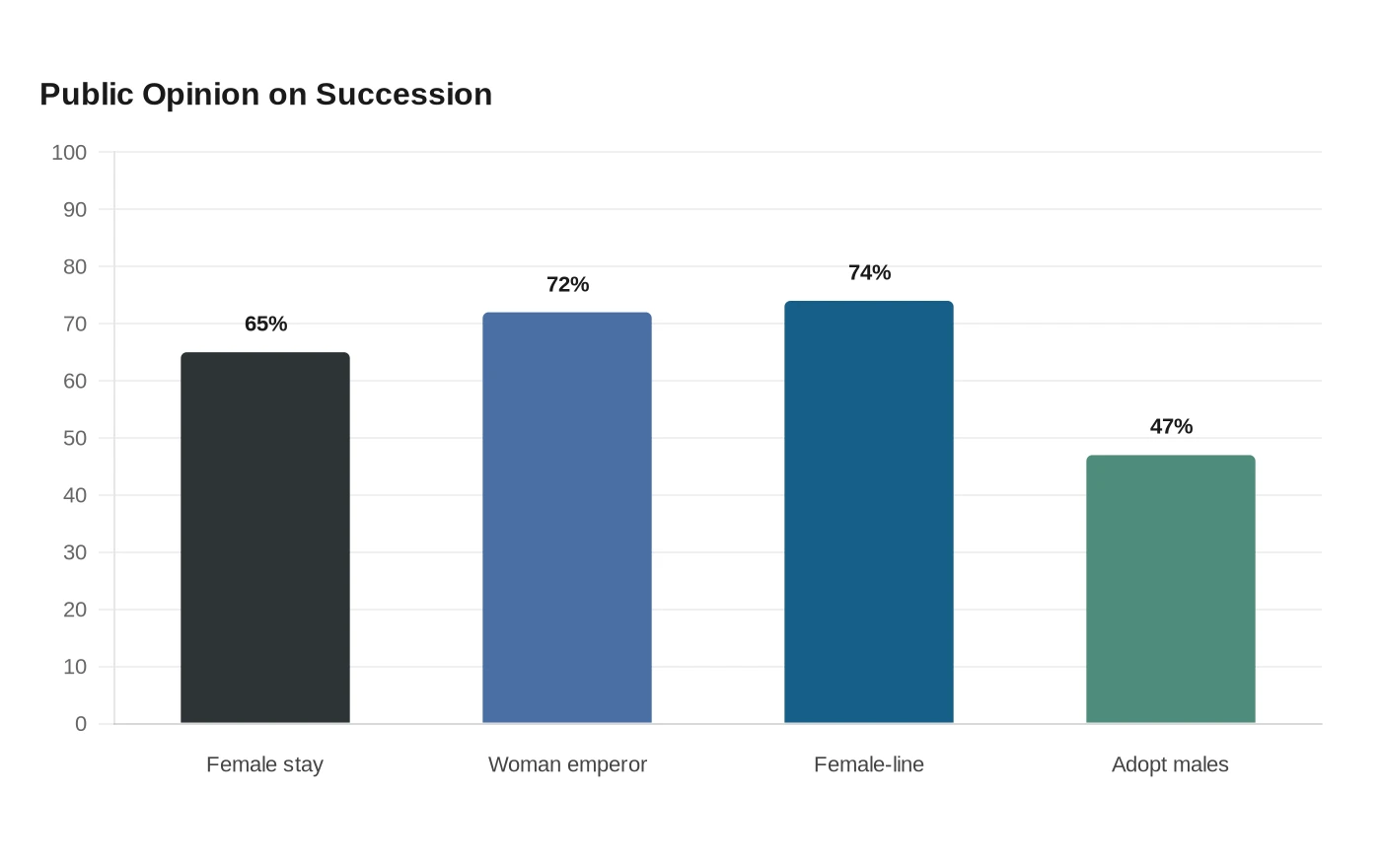
The political stakes are sharpened by public opinion. A May 2026 Asahi survey found 65% of respondents backed letting female imperial family members stay after marriage, 72% supported allowing a woman to become emperor and 74% favored a female-line emperor. By comparison, 47% supported adopting male descendants from former branches, while 36% opposed it. Japan has had eight female emperors in history, and for years surveys have shown public support for a woman on the throne.
The current debate follows earlier attempts to resolve the issue, including a 2005 expert panel under Prime Minister Junichiro Koizumi that favored succession through the female line, and later talks under Yoshihiko Noda, Yoshihide Suga and Fumio Kishida that never produced a final agreement. Sanae Takaichi has opposed changing the law to allow female emperors, saying male-line succession is central to imperial legitimacy. For supporters of reform, the deeper question is not nostalgia but survival: whether Japan wants an imperial family fixed to a narrow male rule, or a durable institution that reflects the society around it.
Sources
- [1]nytimes.com
- [2]kunaicho.go.jp
- [3]japannews.yomiuri.co.jp
- [4]asahi.com
- [5]nippon.com