Health
Japan’s school lunches teach healthy habits, as obesity stays low
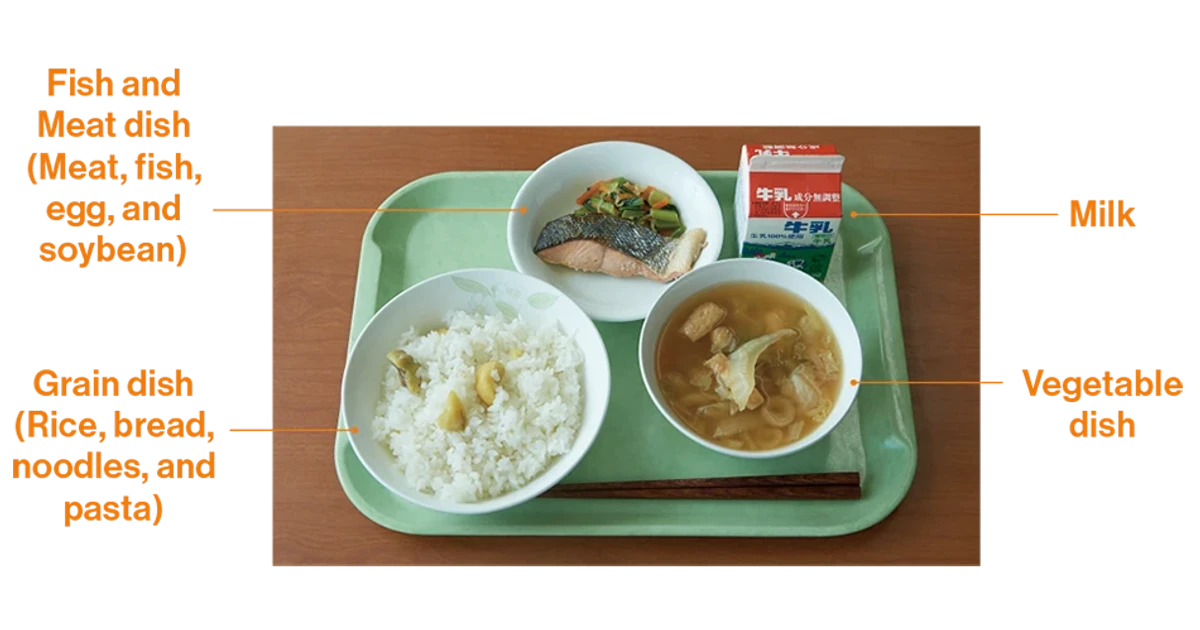
Japan’s low obesity rates are not an accident of individual willpower. They are the product of a school system that treats lunch as health education, with nutrition teachers, national standards, and daily routines that make balanced eating normal from childhood.
A public-health gap that starts in childhood
The contrast with the United States is stark. CDC data show 42.4% of U.S. adults had obesity in 2017 to 2018, while Japan remains among the OECD’s lowest-obesity countries. Even there, the OECD says overweight and obesity have risen gradually since the early 2000s, a reminder that Japan is not immune to the pressures reshaping diets across wealthy countries.
What stands out is not perfection but design. Japan has built a system that makes healthy eating part of ordinary schooling, rather than a message layered on top of a food environment dominated by convenience, excess calories, and uneven access to nutritious meals. That difference matters for American readers because it shifts the focus from individual discipline to public policy, institutional habits, and the daily structure of family life.
Shokuiku turns lunch into a lesson
Japan’s answer has long included school lunches and food education, known as shokuiku. The Ministry of Education, Culture, Sports, Science and Technology says shokuiku is part of school health education and is intended to raise children with healthy minds and bodies. In practice, that means lunch is not just fuel. It is a teaching tool.
The ministry says diet and nutrition teachers use school lunches as a “living” hands-on educational material. That phrase captures the heart of the model: children do not merely hear about balanced meals in the abstract, they encounter them every school day. The lesson is repeated through taste, routine, and shared practice, which gives the policy a reach that classroom lectures alone could never match.
How the school meal system works
Japan’s School Lunch Program Act requires safe, nutritionally balanced school meals. Most elementary schools provide balanced school-lunch menus devised by nutrition teachers and school nutritionists, with meals based on national standards for children’s growth. That means the menu is not left to chance, school budgets alone, or the preferences of individual families.
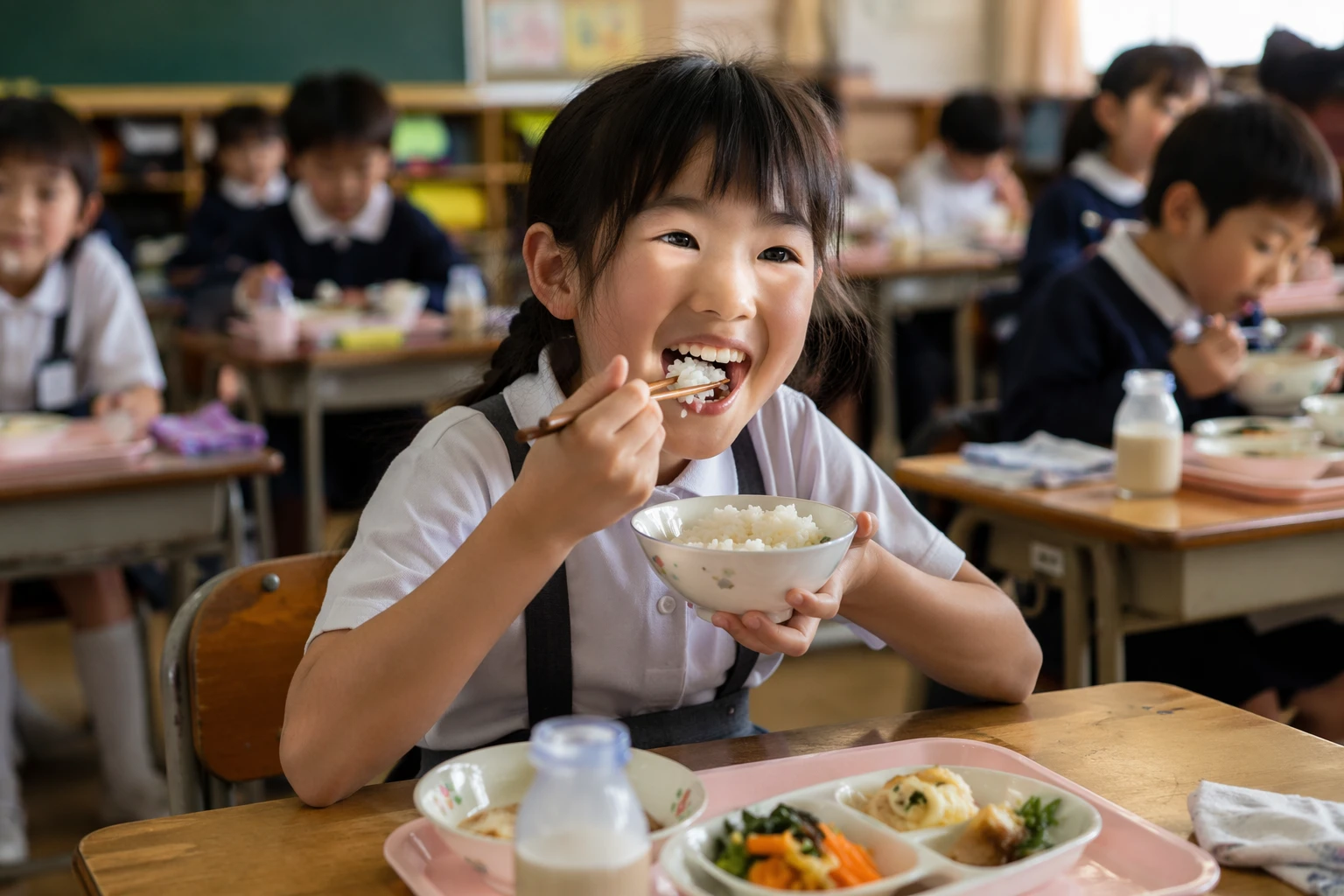
The ritual also teaches behavior, not just nutrition. The government says school lunch is meant to build practical habits such as choosing balanced meals, manners, and cleanup. Meals are typically eaten in classrooms, and students often serve classmates, reinforcing shared responsibility and normalizing the idea that food is part of a collective school culture.
That detail is important for any American discussion of what might transfer. The lesson is not that Japan has a magical diet. The lesson is that schools can shape social norms around portioning, variety, politeness, and shared labor, all while feeding children well. That is a systems-level intervention, not a slogan.
Why the system took root
Japan’s school lunch tradition was not built in a vacuum. The postwar backdrop was food scarcity, and the Ministry of Education says school lunch was institutionalized by the 1954 School Lunch Program Act. A 1991 ministry history says school health policy broadened after World War II to include school lunches alongside health education and school safety.
That history explains why nutrition policy in Japan is often framed as nation-building. A government paper says Japan’s nutrition strategy developed in response to citizen malnutrition and became a foundation for economic expansion. In other words, feeding children well was not treated as charity or a fringe wellness project. It was treated as part of recovery, productivity, and long-term national health.
The modern school diet-and-nutrition teacher system was established in fiscal 2005, giving the policy a professional backbone. As of May 1, 2022, Japan had 6,843 such teachers nationwide. Their presence signals that the country sees school meals as an area requiring expertise, standards, and accountability, not just cafeteria logistics.
What the numbers say now
Japan’s school-lunch system is deeply embedded in daily life. As of May 2021, school lunches were provided to 99.7% of public elementary schools and 98.2% of public junior high schools. That level of coverage matters because it means the policy is not a boutique program for a few districts. It is part of the mainstream educational environment.
The model has also become part of a broader policy conversation about affordability. In 2024, around 30% of Japanese municipalities provided fully free lunches at both elementary and junior high schools. For families, that turns school meals into both a health intervention and a financial relief measure, especially as child-rearing costs rise and household budgets remain tight.
Japan has also used the issue to speak on the global stage. The country hosted the Tokyo Nutrition for Growth Summit on December 7 and 8, 2021, where officials said the summit addressed both undernutrition and overnutrition and drew more than 90 VIP speakers from around 60 countries. That framing matters because it places obesity, hunger, and diet quality inside the same policy conversation instead of treating them as separate crises.
What the U.S. can actually learn
The most realistic lesson for the United States is not to copy Japan meal for meal. It is to borrow the structural logic.
• Make school meals a core public-health tool, not a sideline service. • Pay for nutrition expertise inside schools, not only around the edges. • Treat lunch as a daily lesson in portion norms, food variety, and shared responsibility. • Link school meals to family finances, so healthy food is not reserved for households with extra money or time. • Build policy around consistency, because habits formed every day are stronger than advice offered once in a while.
For American policymakers, the Japanese example points toward universal or near-universal school meals, stronger nutrition standards, and a wider definition of health education. For families, it suggests that children learn food habits from systems as much as from speeches. When schools normalize balanced meals, children absorb the idea that healthy eating is ordinary.
Japan’s experience does not offer a quick fix for the United States, where obesity is much higher and food inequality is deeply tied to income, school funding, and access. But it does show that a country can design its institutions to make healthy eating easier, more social, and more durable. That is the kind of lesson that travels well.
Sources
- [1]cbsnews.com
- [2]cdc.gov
- [3]oecd.org
- [4]mext.go.jp
- [5]japan.go.jp
- [6]mhlw.go.jp
- [7]schoolmealscoalition.org
- [8]nippon.com