US News
Jeff Epstein’s isolated Brooklyn childhood draws fresh scrutiny
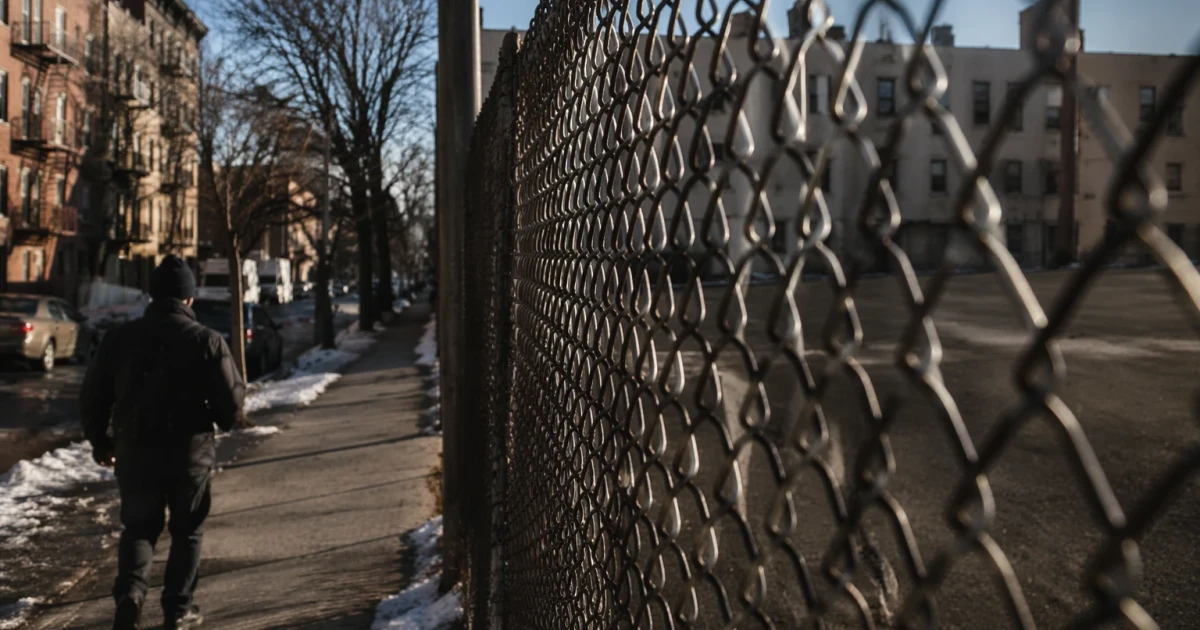
Sea Gate gave Jeffrey Epstein a tightly bounded world: gates, fences, a small circle of boys, and schools close enough to keep his life local. That enclosed setting is drawing fresh scrutiny not because it explains what he later became, but because it shows how easily bright, quiet, socially odd children can be overlooked when adults mistake isolation for harmlessness.
Sea Gate’s enclosed world
Epstein was born on January 20, 1953, in Brooklyn and grew up with his brother Mark in Sea Gate, the gated community at the western tip of Coney Island. Reporting has long described Sea Gate as New York City’s oldest gated community and, in some accounts, a middle-class haven. A recent neighbor account adds another layer: in the 1960s, Sea Gate was not just socially separate, but physically enclosed by fences and gates, a setting that could deepen a child’s sense of separation from the wider city.
That geography matters because it shaped the world Epstein moved through every day. The neighborhood’s boundaries were not only physical, they were social, creating a place where privacy and insulation could easily become normal. In that kind of environment, a child who seemed a little odd, or a little withdrawn, might not draw alarm so much as quiet accommodation.
The school trail that built his public identity
Epstein attended P.S. 188, Mark Twain Junior High School, and later Lafayette High School. Reports say he was a gifted math student, and some accounts say he skipped grades, including the third grade at P.S. 188 and later the eighth grade at Mark Twain, eventually graduating from Lafayette at age 16 in 1969. That academic speed became part of his early reputation, giving him the profile of a precocious student long before anyone was thinking about the adult he would become.
The school record also complicates any easy warning-sign story. Epstein was not remembered simply as a troublemaker. He was remembered as a smart boy moving quickly through school, one who could earn a place by being good at math and by helping others. According to later accounts, he sometimes tutored classmates, a detail that shows how easily competence can soften scrutiny. A child who helps with homework can be seen as useful, even when he is also socially detached.
How classmates and neighbors saw him

Contemporary and later reporting consistently circles the same descriptions: quiet, nerdy, socially strange, and awkward. Some classmates and neighbors called him “Eppy,” a nickname that sounds almost affectionate, even ordinary. The New York Times later described him as growing up in an insular world, keeping company with a few brainy boys and fixating on girls, while other accounts placed him in a social orbit that was narrow rather than broad.
A class photo reported by Rolling Stone Canada adds a vivid snapshot: Epstein standing in the back row among awkward-looking pre-teens at Mark Twain Junior High. That image is tempting to read backward, as if the picture itself contains an obvious clue. But that is precisely the trap of retrospective storytelling. A school photo can show a boy who looks out of place without telling you much about what he was capable of later, or what adults around him should have done differently.
Even the nickname “Eppy” and the recollection that he tutored classmates point to the same tension. He seems to have been visible enough to be known, but not visible enough to be understood. People noticed the oddness. They did not necessarily connect it to anything dangerous, and that gap is part of the story.
Why this childhood is being revisited now
The renewed attention to Epstein’s Brooklyn years is less about solving a mystery than about examining the limits of hindsight. Epstein later became one of the most notorious sex offenders in American history, and that fact has fueled a search for childhood clues that would make the adult pattern seem inevitable. Yet the safer, more honest question is not whether a childhood snapshot predicted his future. It is what people around him noticed, ignored, or normalized when he was simply a boy in Sea Gate and then a student in Brooklyn schools.
That distinction matters for public understanding and for policy. If communities and schools reduce harmful behavior to a later diagnosis of “he was always like that,” they can excuse their own blind spots. If they assume giftedness means safety, or social awkwardness means harmlessness, they may miss the quieter signals that a child is isolated, entitled, or learning that other people can be managed rather than respected.
For families, schools, and close-knit neighborhoods, Epstein’s story is a warning about how narrow social worlds can protect reputation more than they protect children. Sea Gate’s gates, the early academic praise, the tutoring, the nickname, the awkward class photo, all of it formed a childhood that looked ordinary from the outside. The lesson is not that every isolated, gifted, or strange child is hiding something sinister. The lesson is that adults should not confuse familiarity with insight, because the cost of that mistake can be carried by others for years.
Sources
- [1]nytimes.com
- [2]forward.com
- [3]ca.rollingstone.com
- [4]palmbeachpost.com
- [5]wikipedia.org