Business
Jobs report shows weak hiring as unemployment rate dips to 4.2 percent
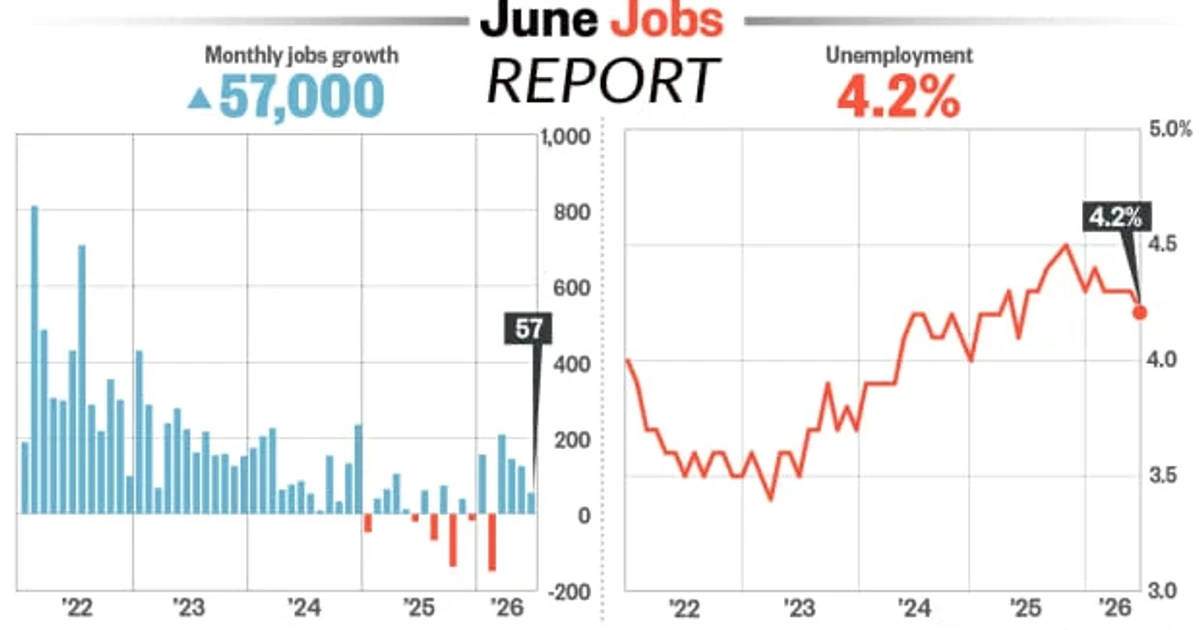
U.S. employers added 57,000 jobs in June, far below the 115,000 economists expected, even as the unemployment rate edged down to 4.2 percent and average hourly earnings rose 0.3 percent. That mix gave Kevin Warsh and other Federal Reserve officials more room to keep their focus on inflation rather than on signs of a wage spiral.
The labor market looked softer beneath the headline jobless rate. The labor force participation rate fell 0.3 percentage point to 61.5 percent, its lowest level since March 2021, and household employment dropped by 507,000. The Bureau of Labor Statistics said both payroll employment and the unemployment rate changed little in June, but the details showed fewer people working and fewer people looking for work.

Wage growth did not add urgency to the inflation debate. Average hourly earnings increased 3.5 percent from a year earlier, a pace that suggested pay gains were steady rather than accelerating. The broader unemployment measure, which includes discouraged workers and people working part time for economic reasons, declined to 7.9 percent. The June report also showed 7.1 million unemployed people, 1.9 million long-term unemployed and 4.7 million people working part time for economic reasons.
The revision picture also pointed to a labor market that was cooling rather than re-accelerating. May payroll gains were marked down to 129,000, and April was revised to 148,000. That left June as a clear disappointment on hiring, even as the unemployment rate moved lower for reasons that had more to do with a smaller labor force than with stronger job creation.

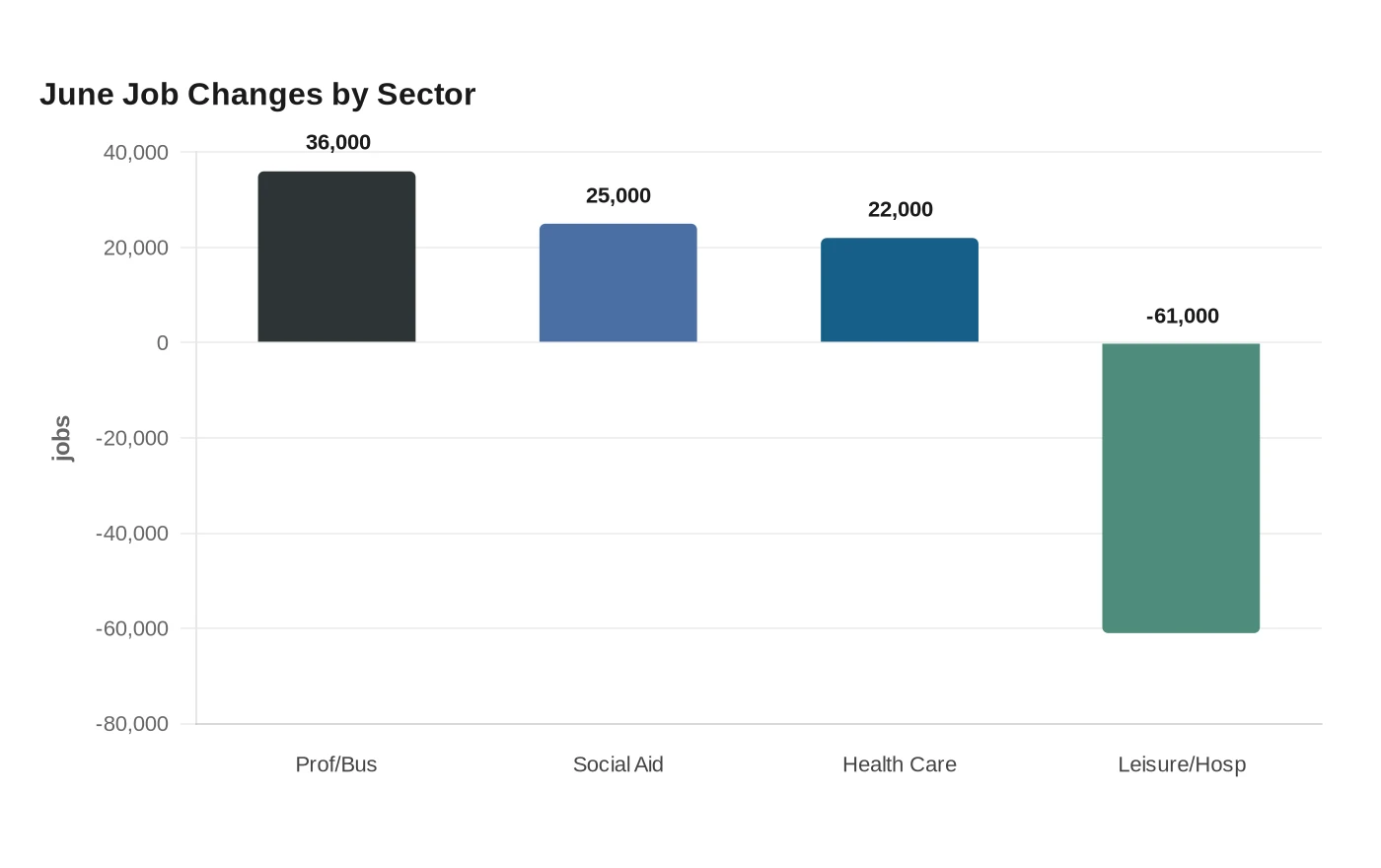
Job growth continued in a few service-heavy industries. Professional and business services added 36,000 jobs, social assistance added 25,000 and health care added 22,000. Leisure and hospitality lost 61,000 jobs, reflecting slower-than-usual seasonal hiring.
Markets initially read the report as reducing pressure for a near-term rate increase, with Treasury yields falling and futures rising after the data. For the Fed, the more important signal was the combination of weak hiring and stable wage growth. Warsh has said inflation has been running well above the central bank’s 2 percent goal for more than five years, and at the Federal Open Market Committee’s June 17 meeting the Fed held its benchmark rate at 3.5 percent to 3.75 percent. The latest labor data strengthened the case for keeping policy tight enough to press disinflation without having to worry that wages were about to reignite price pressures.
Sources
- [1]nytimes.com
- [2]bls.gov
- [3]cnbc.com
- [4]federalreserve.gov
- [5]reuters.com