Politics
Johnson pushes House to pass SAVE America Act before recess
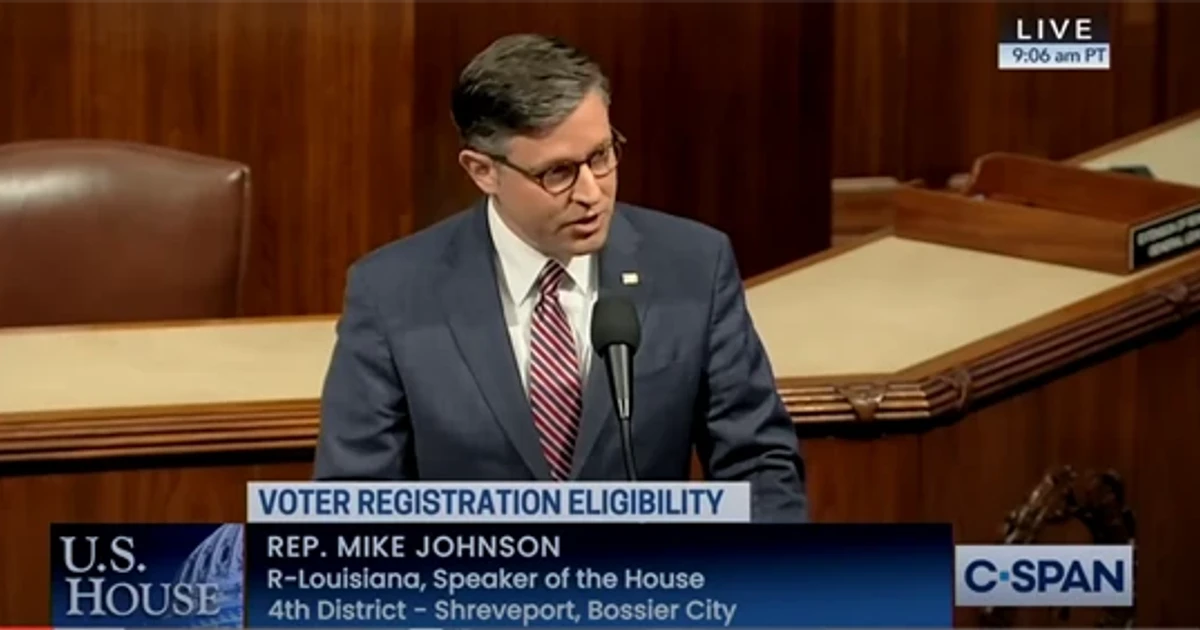
House Speaker Mike Johnson pressed lawmakers to pass the SAVE America Act before the House leaves Washington for its monthlong recess on July 27, putting a fight over voter-registration rules back at the center of the floor schedule. Congress.gov says the bill, also known as H.R. 22, would require documentary proof of U.S. citizenship when people register to vote in federal elections.
The push matters because the measure would add a new documentation step to voter registration in every state. Supporters cast that as a way to tighten eligibility checks and ensure only citizens are added to the rolls, while election officials would have to process and verify citizenship papers as part of the registration process.
Johnson has also searched for procedural paths to move the bill if a straightforward vote stalls. He said the House would pass the SAVE America Act "one more time" after Donald Trump's latest demands, and he has floated attaching it to a reconciliation package or to the National Defense Authorization Act. Border Report said Johnson planned the NDAA maneuver, underscoring how far House leadership is willing to go to keep the issue alive before recess.
The bill has already been through repeated rounds of House action. Campaign Legal Center says lawmakers advanced the SAVE Act in April 2025 and voted again on the SAVE America Act in February 2026, but the Senate has not acted on any of the proposals. That leaves the House pushing a policy the upper chamber has left untouched.
Opponents say the legislation would create a new burden for eligible voters who do not have immediate access to citizenship documents and for officials who would have to process those records. The ACLU called House passage of the SAVE America Act a "dangerous assault on democracy." The Brennan Center for Justice says states are already enacting policies that mimic parts of the bill, while the Institute for Responsive Government has mapped the state-by-state voter ID changes the measure would require. A February 2, 2026 explainer from the Bipartisan Policy Center laid out the effects on voters, states and election officials.
Sources
- [1]cbsnews.com
- [2]congress.gov
- [3]campaignlegal.org
- [4]thehill.com
- [5]borderreport.com
- [6]aclu.org
- [7]brennancenter.org
- [8]bipartisanpolicy.org
- [9]responsivegov.org
- [10]democracydocket.com