Politics
Judge Allows Florida's GOP-Backed Congressional Map to Stand
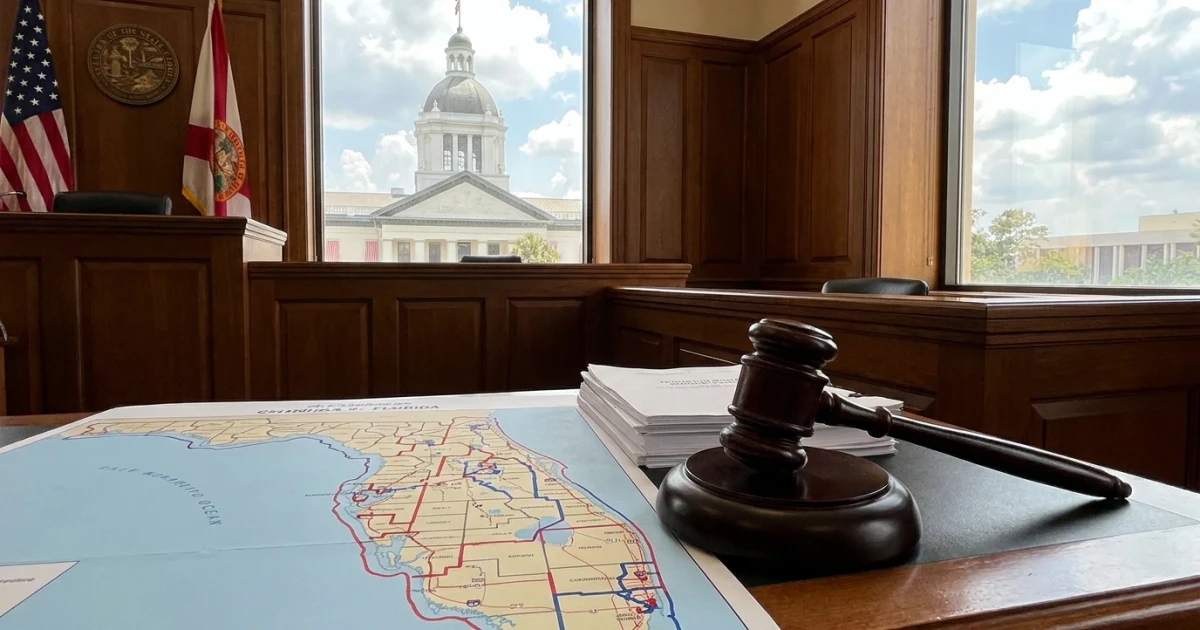
Florida’s controversial new congressional map, widely seen as favoring Republican candidates, will remain in effect for the upcoming elections after a judge declined to block its implementation. The decision marks a significant moment in the state’s ongoing redistricting battle, with potential impacts on the political balance in one of the nation’s most populous states.
Legal Challenge Fails to Halt Map
The legal bid to stop the GOP-drawn map was denied on Monday, according to the Miami Herald. Plaintiffs had argued the map was unfairly tilted to benefit Republicans and dilutes the voting power of minority communities. Despite these arguments, the judge’s ruling means that the map approved by the Florida Legislature earlier this year will be used for the 2026 congressional elections.
- Florida’s new map increases the number of Republican-leaning districts, according to analyses by the Cook Political Report.
- Official data from the 2020 Census guided the redrawing of district boundaries to reflect population changes.
Background on the Map’s Controversy
Florida’s redistricting process has drawn national attention due to its partisan overtones and the high stakes involved. The map, which was signed into law by Governor Ron DeSantis, was crafted by the Republican-controlled legislature. Critics have alleged that the redistricting process lacked transparency and ignored input from affected communities.
According to a Brennan Center analysis, the new map is projected to solidify Republican control over a greater share of Florida’s congressional delegation. The analysis notes that several competitive or Democratic-leaning seats were redrawn to favor GOP candidates, and majority-Black districts were particularly affected.
Implications for Florida and Beyond
With the judge’s ruling, Florida’s congressional landscape will likely shift further to the right. This decision comes as part of a broader trend in which state legislatures play a significant role in drawing electoral districts, as detailed in the National Conference of State Legislatures’ overview of redistricting processes.
- The official plan analysis shows increased Republican advantage in several key districts.
- Legal challenges to the map have been ongoing, with filings and opinions available from the Florida Supreme Court.
What Comes Next?
Though this latest court decision is a setback for opponents of the map, advocacy groups and some Democratic leaders have indicated they may pursue further appeals. The outcome of these challenges could still affect future election cycles, but for now, the judge’s ruling means the GOP-friendly map will shape Florida’s congressional races in 2026.
As the legal and political battles continue, the case highlights the ongoing debate over fairness in redistricting and its pivotal role in American democracy. Observers across the nation are watching Florida as a bellwether for how redistricting fights may play out in other competitive states.