Politics
Judge blocks Trump voter-roll database over privacy violations
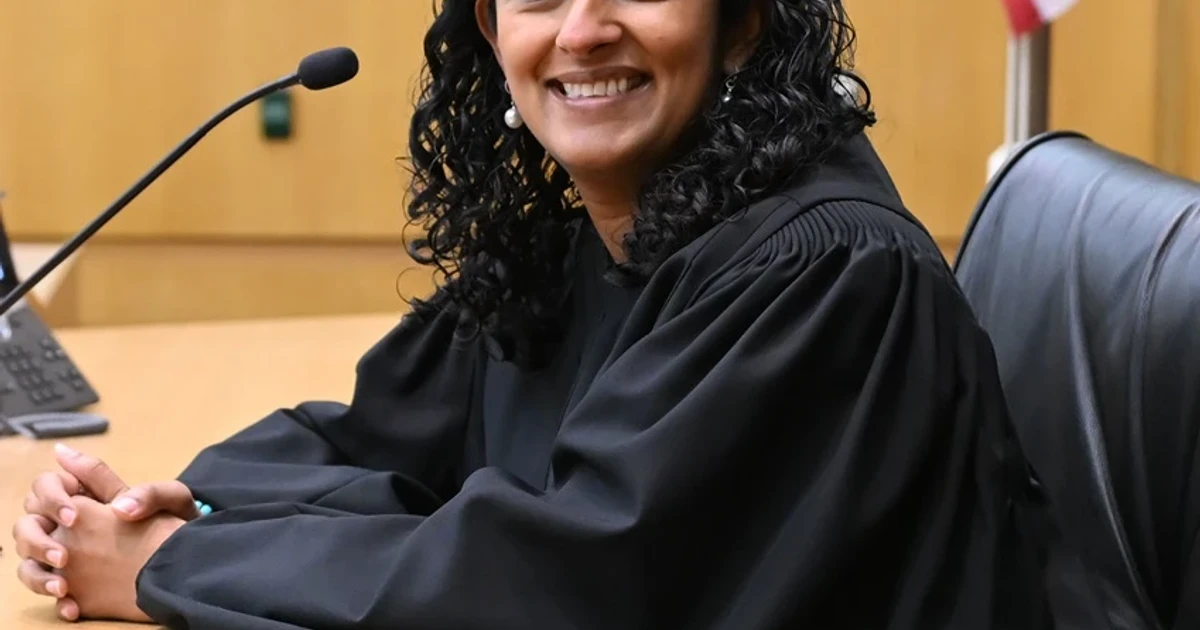
A federal judge in Washington blocked the Trump administration from using its revamped SAVE immigration database to check state voter rolls, ruling that the government had unlawfully centralized the private records of millions of Americans. U.S. District Judge Sparkle Sooknanan said the architecture crossed a legal line by pooling citizenship data, and, according to reporting, Social Security numbers and other sensitive information, for election use.
In a 75-page opinion issued in the U.S. District Court for the District of Columbia, Sooknanan said the administration violated the Social Security Act, the Privacy Act and the Administrative Procedure Act. She wrote that the government had "knowingly trampled on the privacy rights of American citizens," and concluded that the database structure threatened the right to vote by putting federal personal records into a centralized system for state roll checks.
The ruling cut off a key part of a broader Trump effort to expand the federal role in elections ahead of the November midterms. The SAVE overhaul was tied to a Trump executive order seeking a new proof-of-citizenship requirement for voter registration, and a later order, Executive Order 14399, was signed on March 31, 2026 and published in the Federal Register on April 3, 2026. That order directed the Department of Homeland Security and the Social Security Administration to compile state-by-state citizenship lists for election officials.
Voting-rights and privacy advocates said the system was built on unreliable citizenship data and risked disenfranchising eligible voters. The court record showed agencies knew the data was inaccurate, and the lawsuit said some states had already used the pool to wrongly remove U.S. citizens from voter rolls and even open criminal investigations. What was framed as an election-integrity tool had become, in the challengers’ view, a national data bank with consequences far beyond any single voting cycle.
The case was brought in a class-action lawsuit filed on Sept. 30, 2025 by the League of Women Voters, the League of Women Voters of Virginia, the League of Women Voters of Louisiana, the Electronic Privacy Information Center, Democracy Forward, Citizens for Responsibility and Ethics in Washington, Fair Elections Center, and five individual plaintiffs including Joan Porte, M. Christian Green and Laura Romero. The decision now places the administration’s election-overhaul agenda on hold while raising a larger question for federal governance: how much personal data Washington can aggregate before privacy law stops it.
Sources
- [1]cbsnews.com
- [2]usnews.com
- [3]lwv.org
- [4]federalregister.gov