Politics
Judge orders Trump officials to restore park signs on slavery, climate change
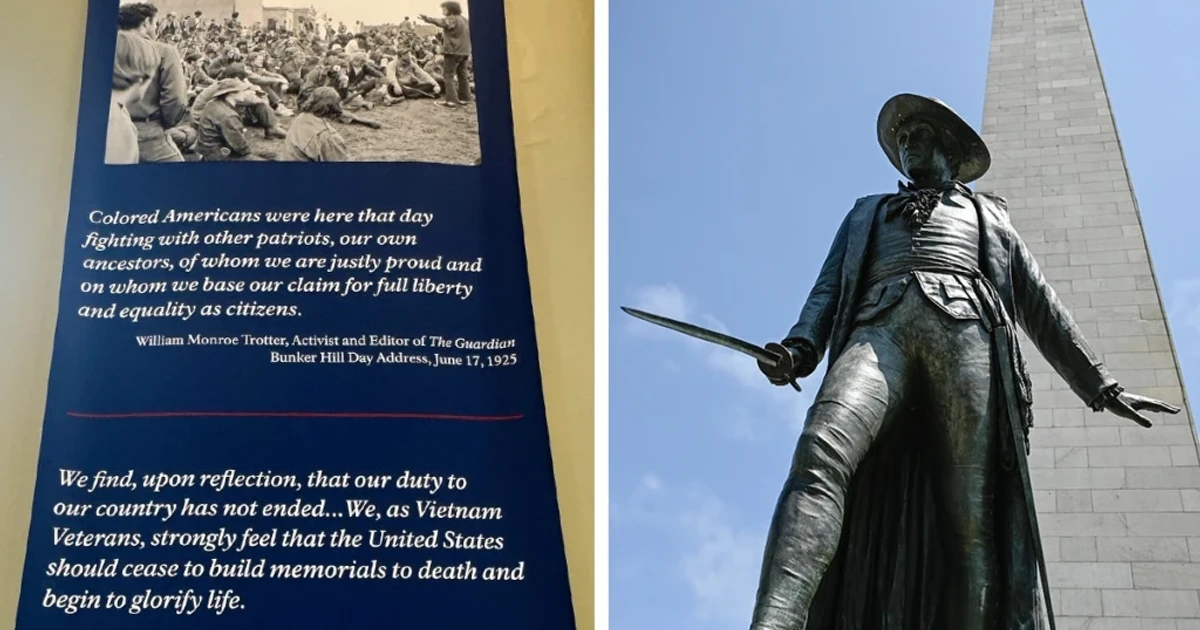
A federal judge in Boston ordered the Trump administration to put back national park signs and exhibits that had been removed because they did not fit the government’s preferred version of American history. U.S. District Judge Angel Kelley issued a preliminary injunction that gives federal officials 21 days to restore the materials and requires an update to the court within five days, then weekly after that.
The ruling puts a direct legal check on how federal parks tell the nation’s story, including whether they present slavery, climate change and civil rights as central facts or treat them as inconvenient details. The case was brought by a coalition of six organizations representing conservationists, historians, park rangers, designers and scientists: the National Parks Conservation Association, American Association for State and Local History, Association of National Park Rangers, Coalition to Protect America’s Parks, Society for Experiential Graphic Design and Union of Concerned Scientists.
The lawsuit, filed Feb. 17 in the U.S. District Court for the District of Massachusetts, said the policy had led to the removal or censorship of exhibits and interpretive materials at parks across the country. The National Park System has 433 units, and more than two-thirds are dedicated to history and culture, making the dispute as much about public memory as about park administration.
The policy at issue began with President Donald Trump’s March 27, 2025 executive order, which directed federal sites to reflect a more uplifting version of American history and attacked what the White House called a revisionist movement. Interior Secretary Doug Burgum followed with Secretary’s Order 3431 on May 20, 2025, putting that directive into practice inside the National Park Service.
Examples cited in the case included slavery-related material at Independence National Historical Park in Philadelphia, climate-change signage at Cape Hatteras National Seashore in North Carolina, and references to Indigenous history and civil rights at other sites. The complaint also pointed to places including Bunker Hill Monument, Cane River Creole National Historical Park, Castillo de San Marcos National Monument and Timucuan Ecological and Historical Preserve.
The Philadelphia fight had already produced a separate order from Judge Cynthia Rufe, who required restoration of 34 educational panels and video presentations at the President’s House Site, where an exhibit opened in 2010 and referenced the nine people enslaved by George Washington. Kelley’s ruling lands as the nation moves toward the July 4, 2026 semiquincentennial, sharpening the question of who controls the historical narrative inside federal spaces and whether parks exist merely as tourist scenery or as institutions with a duty to present the full record, even when it is uncomfortable.
Sources
- [1]news.google.com
- [2]nbcnews.com
- [3]ucs.org
- [4]democracyforward.org
- [5]whitehouse.gov
- [6]doi.gov
- [7]abcnews.com
- [8]pen.org
- [9]npca.org