Business
Judge Puts Nexstar-Tegna Merger on Hold Ahead of Trial
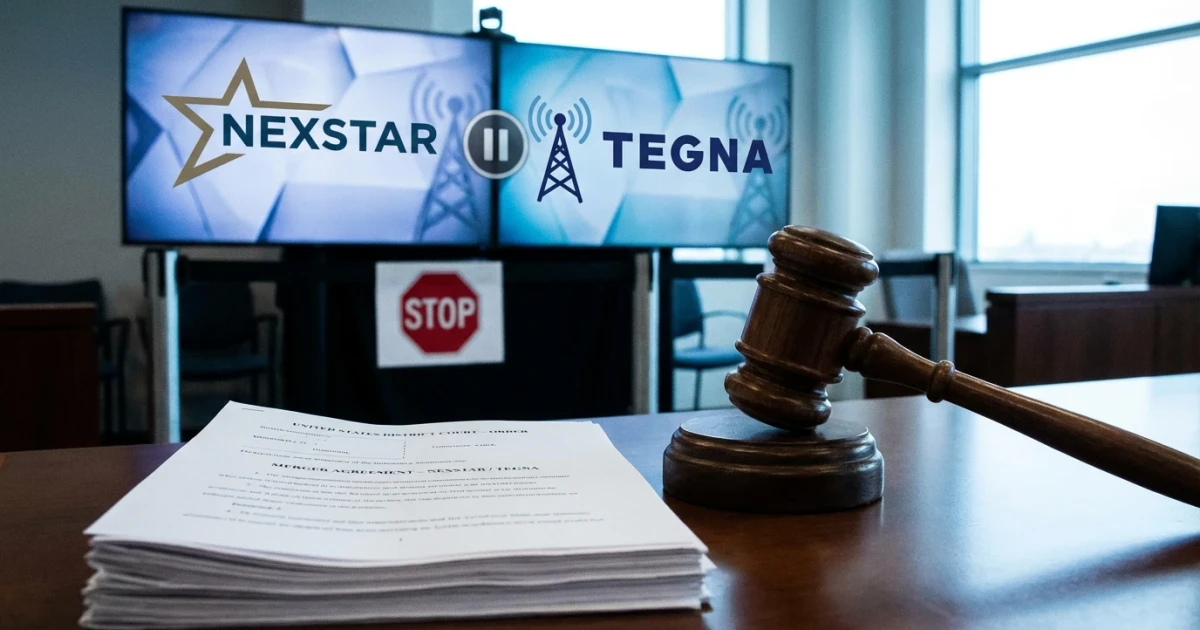
A federal judge has temporarily blocked Nexstar Media Group’s planned acquisition of rival broadcaster Tegna Inc., pausing one of the largest proposed mergers in the local television industry until a full trial can review its competitive and regulatory implications.
Background on the Nexstar-Tegna Deal
The definitive merger agreement between Nexstar and Tegna has attracted significant attention due to its potential to reshape the landscape of U.S. local television news. If approved, the merger would combine two of the country’s largest station groups, giving Nexstar control over a vast swath of local news outlets and dramatically increasing its market share.
- Nexstar is already the largest local TV station owner in the United States.
- Tegna operates dozens of stations in major and mid-sized markets across the country.
- The merger would give the combined company a dominant presence in multiple regional markets.
Judge’s Ruling and Rationale
As reported by NPR, a federal judge issued a temporary injunction halting the merger until the court can fully assess its impact. The judge’s decision reflects concerns about potential harm to competition in local TV markets, echoing broader regulatory scrutiny over media consolidation in recent years.
This injunction, while not a final decision, prevents the two companies from moving forward with the merger until the trial concludes. The legal proceedings are expected to focus on whether the deal would reduce competition, potentially leading to higher advertising rates, diminished local news coverage, or fewer choices for viewers.
Industry and Regulatory Context
The local television sector has seen a wave of consolidation in recent years, as station groups seek to expand their national reach and bargaining power. According to the Pew Research Center, local TV remains a crucial source of news for American audiences, but faces challenges from digital competitors and changing viewer habits.
- Data from Statista shows Nexstar and Tegna together would control a significant share of the market, potentially surpassing 30% of all U.S. local TV stations.
- The Federal Communications Commission (FCC) closely monitors such deals for compliance with media ownership rules designed to preserve competition and localism.
- Public interest groups and some lawmakers have raised concerns that further consolidation could erode the diversity of viewpoints and reduce coverage of local issues.
Next Steps in the Legal Process
With the merger on hold, both Nexstar and Tegna must prepare for a potentially lengthy trial. The court will weigh arguments from the companies, regulators, and possibly third parties such as advertisers, public interest advocates, and rival broadcasters. Central to the trial will be the question of whether the merger would violate antitrust laws or FCC regulations, as outlined in the Federal Register notice of the application process.
For now, the deal’s future is uncertain. The outcome could set a precedent for future media mergers and influence the regulatory framework governing local news ownership in the United States.
Analysis: What’s at Stake for Viewers and the Industry
The judge’s decision to halt the Nexstar-Tegna merger highlights ongoing debates about the balance between efficiency and diversity in local TV news. Proponents argue that larger station groups can invest more in technology and content, while critics warn that consolidation risks homogenizing coverage and reducing local accountability.
As the trial unfolds, stakeholders across the industry will be watching closely. The case could influence not only the fate of this high-profile deal, but also the direction of media regulation in an era of rapid change for American journalism.