Business
July jobs report expected to show steady unemployment, muted wage growth
The June jobs report showed 57,000 payroll gains and a 4.2 percent unemployment rate, a softer baseline for the next labor reading that economists expect to show steady unemployment and only muted wage growth. The Bureau of Labor Statistics released that June Employment Situation report at 8:30 a.m. ET on July 2.
That is the disconnect now hanging over the labor market. CEPR’s July jobs preview expected slower wage growth and a steady unemployment rate, while Morningstar said economists were looking for continued solid job gains and watching closely for any sign of a wage pickup. The issue is not just whether employers are still hiring. It is whether they are hiring without bidding up pay enough to change workers’ monthly budgets.

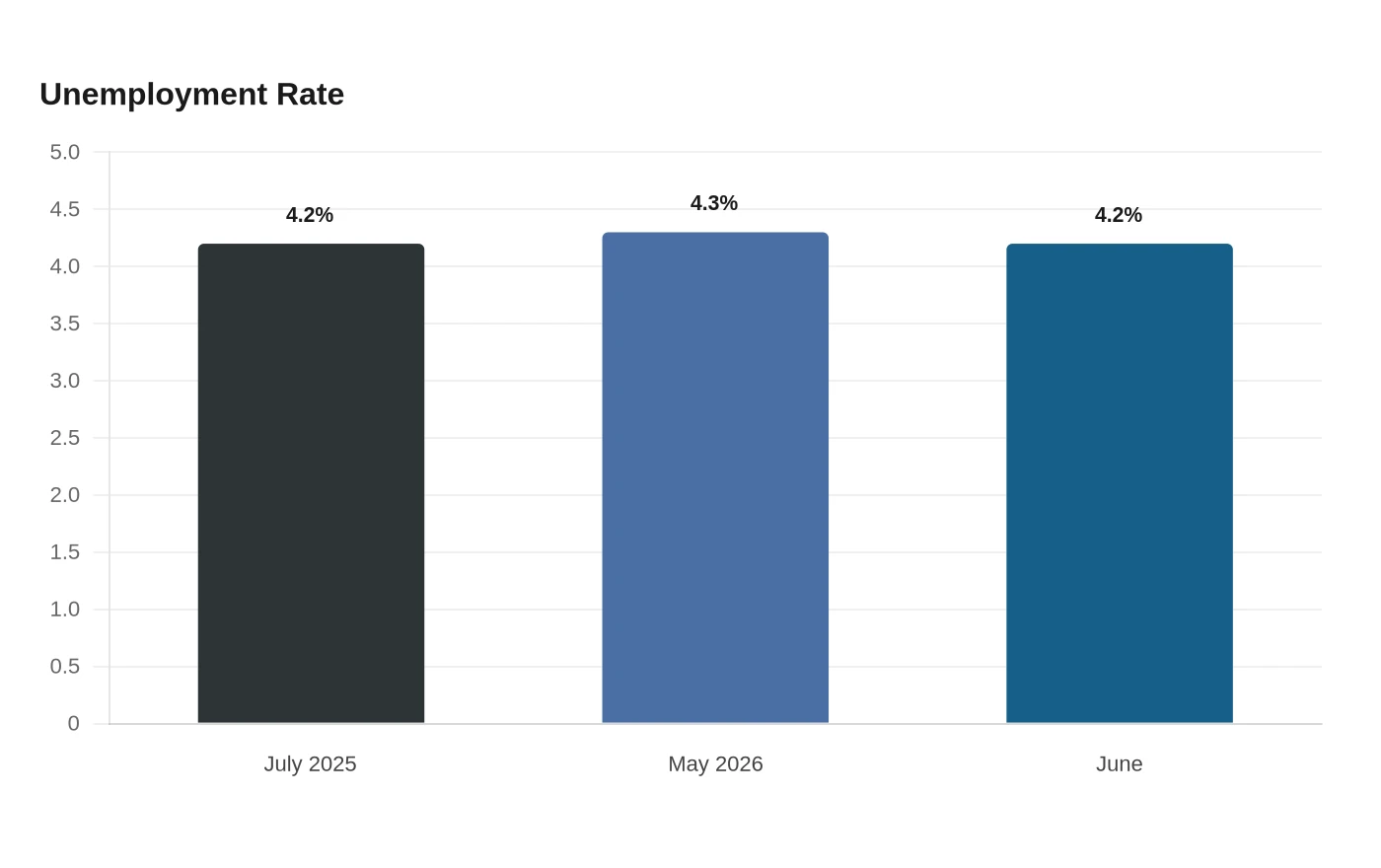
June gave the clearest evidence of that tension. CEPR said wage growth slowed to 3.5 percent year over year in the June report, even as total nonfarm payrolls still increased. Trading Economics said the labor force participation rate fell to 61.5 percent in June, the lowest since March 2021, while the unemployment rate edged down to 4.2 percent from 4.3 percent in May. That combination suggests a labor market that is still expanding, but not with the same force seen earlier in the recovery.

The comparison with spring makes the slowdown easier to see. CEPR described May 2026 as a month when the economy added 172,000 jobs and unemployment held at 4.3 percent. A month later, hiring had dropped to 57,000. CEPR also said unemployment had risen to 4.2 percent in July 2025 as job growth slowed sharply, a reminder that the headline unemployment rate can look stable even when hiring momentum is weakening underneath.
If July does bring a rebound in hiring, the more important question for the broader economy will be whether wage gains move with it. Stagnant pay limits household purchasing power, especially for workers whose hours, benefits or job security are not improving. For a consumer-driven economy, more jobs without stronger wages can still leave growth feeling thin, because the paychecks behind the headline are not keeping pace.
Sources
- [1]nbcnews.com
- [2]bls.gov
- [3]cepr.net
- [4]morningstar.com
- [5]tradingeconomics.com
- [6]kiplinger.com
- [7]economics.td.com