Business
June inflation report could move mortgage rates higher or lower

The Bureau of Labor Statistics will release the June Consumer Price Index on July 14 at 8:30 a.m. Eastern. Mortgage shoppers will get a fresh inflation test before the market settles on where borrowing costs are headed next, and the number could push Treasury yields, and then mortgage rates, higher or lower.
The Consumer Financial Protection Bureau says mortgage interest rates are closely linked to Treasury yields, especially the 10-year Treasury. When inflation cools, bond yields can ease and lenders can reprice loans lower; when inflation runs hot, yields can rise and keep mortgage rates elevated. The Federal Reserve still targets 2% inflation over the longer run using personal consumption expenditures inflation, not CPI.
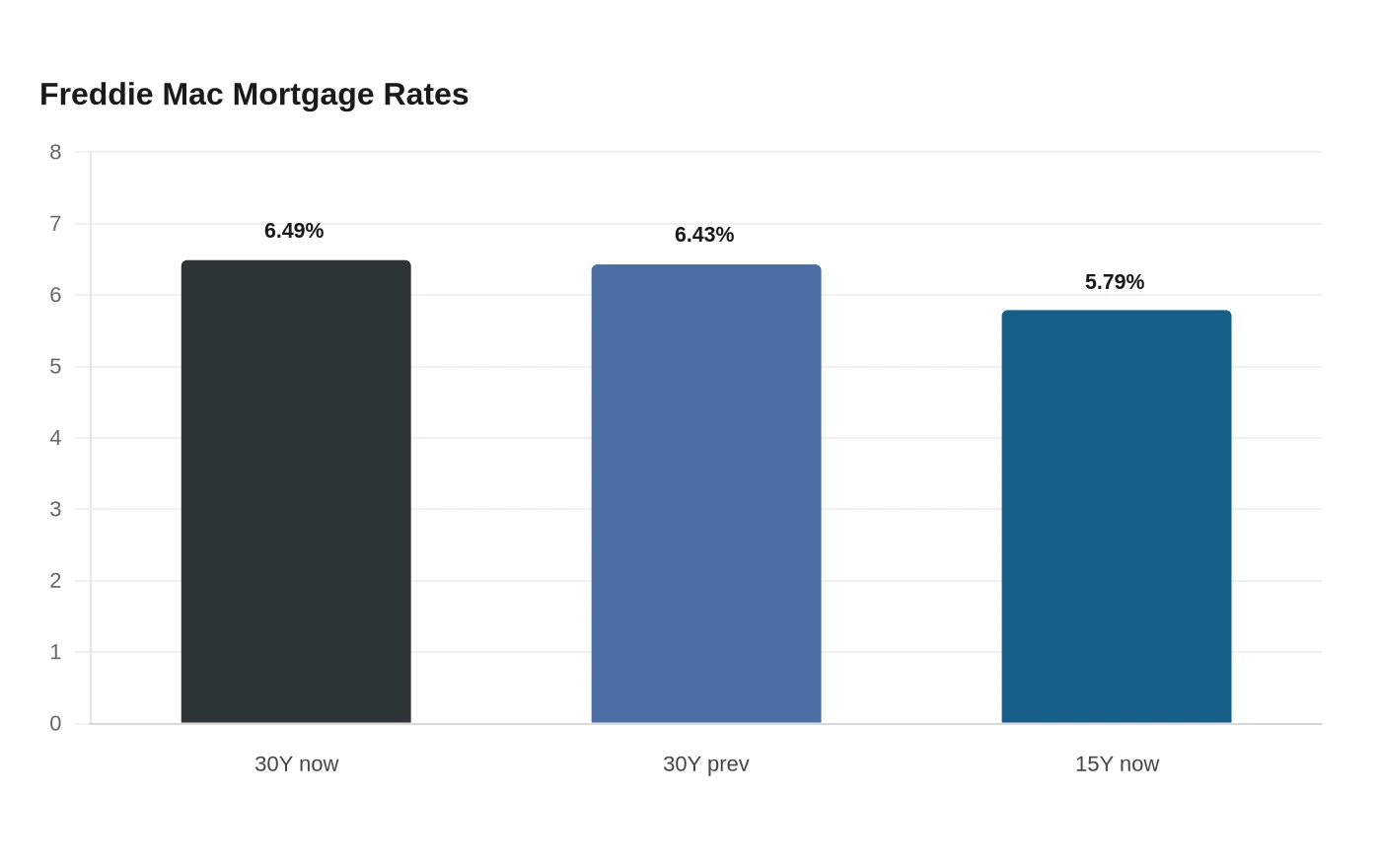
Borrowing costs are already sitting high enough to strain affordability. Freddie Mac's weekly survey put the average 30-year fixed-rate mortgage at 6.49% for the week ending July 9, up from 6.43% the week before. Freddie Mac's weekly survey put the 15-year fixed-rate mortgage at 5.79%. Freddie Mac's weekly survey reflects loan rates offered from the prior Thursday through Wednesday, so the July 14 CPI release will land after the latest weekly rate reading is already in the books.
Mortgage rates are expected to stay above 6% for much of 2026 even if inflation softens. Fannie Mae puts mortgage rates at 6.0% at the end of 2026. Realtor.com projects a 6.3% average for the year, and the Mortgage Bankers Association puts its forecast at about 6.5% over its forecast horizon. That would ease affordability pressures only slightly, and the CFPB has warned that higher rates combined with higher home prices have contributed to weak mortgage affordability.
For borrowers, the immediate question is whether the CPI report changes the tone of Treasury trading enough to move mortgage pricing in the next few sessions. A cooler print could relieve some pressure on the 10-year Treasury and shave some volatility from mortgage quotes. A hotter reading could keep rates pinned in the mid-sixes or push them higher. The next round of inflation data includes the PCE report the Fed watches more closely.
Sources
- [1]cbsnews.com
- [2]blsmon1.bls.gov
- [3]freddiemac.com
- [4]consumerfinance.gov
- [5]fanniemae.com
- [6]realtor.com
- [7]mba.org
- [8]federalreserve.gov