Science
June's Night Sky Brings Jupiter, Venus, and a Strawberry Moon
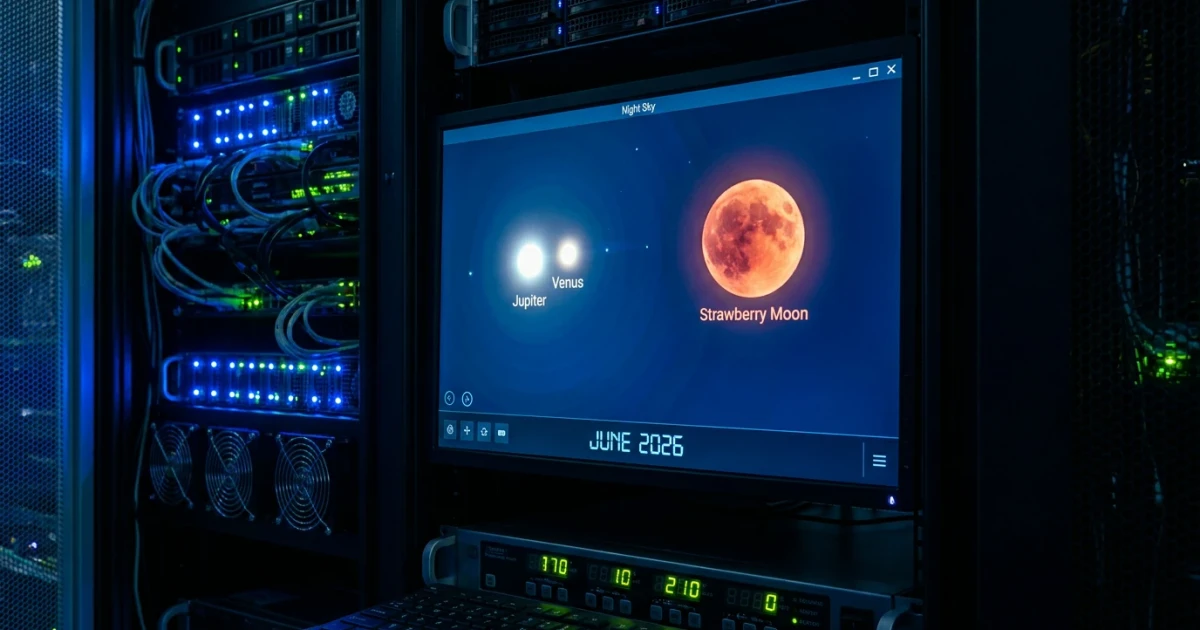
June 2026 is shaping up to be a remarkable month for skywatchers, with a series of notable astronomical events visible to the naked eye and through telescopes alike. Highlights include the close approach of Jupiter and Venus, as well as the much-anticipated 'Strawberry Moon.'
Major Planetary Conjunction: Jupiter and Venus Align
One of the most spectacular sights this month will be the conjunction of Jupiter and Venus. According to reports from Space and CBC, the two brightest planets in the night sky will appear exceptionally close together in the western sky just after sunset. This event, which occurs only every few years, provides a striking visual as both planets shine brightly against the twilit backdrop.
- Their closest approach is expected during the second week of June, with optimal viewing on clear evenings.
- Both planets will be visible to the naked eye, but binoculars or a small telescope will reveal even more detail.
- For those interested in precise timings and positions, the Heavens-Above All-Sky Chart provides real-time sky maps for your location and date.
Planetary conjunctions like this are not just visually stunning—they also provide an excellent opportunity for amateur astronomers to observe planetary disks and, in some cases, even the moons of Jupiter.
The Strawberry Moon: June’s Full Moon Event
Another highlight this month is June’s full moon, known as the Strawberry Moon. The name comes from Algonquin traditions marking the season of strawberry harvests.
- The Strawberry Moon will reach its peak illumination mid-month, offering a bright and colorful display.
- While the moon won’t actually appear pink or red, its low position on the horizon at moonrise can give it a warm, golden hue.
- Check the UK Hydrographic Office for official data on lunar events and eclipse timings in your region.
Other Night Sky Events and What to Watch For
Beyond the planetary conjunction and full moon, June 2026 features several other observable phenomena for astronomy enthusiasts:
- Meteor Showers: Early summer often brings minor meteor showers. Consult the Meteor Showers Online calendar for expected peak dates and best viewing times.
- Constellations: Classic summer constellations like Scorpius, Sagittarius, and Lyra will be prominent. The International Astronomical Union provides detailed star maps and official constellation boundaries.
- Variable Stars: For those with telescopes, the AAVSO database offers observation logs and light curves for variable stars visible this month.
Tips for Observing the June 2026 Night Sky
To make the most of June’s celestial events:
- Find a location with minimal light pollution for the clearest views.
- Arrive just after sunset for the best chance to see Venus and Jupiter together.
- Use an interactive sky map, like the Heavens-Above All-Sky Chart, to track the movement of planets and the moon.
- Bring binoculars for enhanced views, especially of planetary conjunctions and lunar details.
Looking Ahead
June 2026 offers a rare convergence of planetary and lunar phenomena. Whether you’re a casual skywatcher or a seasoned astronomer, the night sky this month promises memorable sights. For those interested in the science behind these events, a recent research paper outlines how planetary conjunctions and celestial mechanics are predicted.
For the latest updates on night sky events, consult regularly updated resources like Space and CBC, which provide guides on what to see and how best to observe these cosmic wonders.