Science
Juno Mission Sheds Light on Europa’s Ice Shell Thickness, Offering Clues to Jupiter’s Mysterious Moon
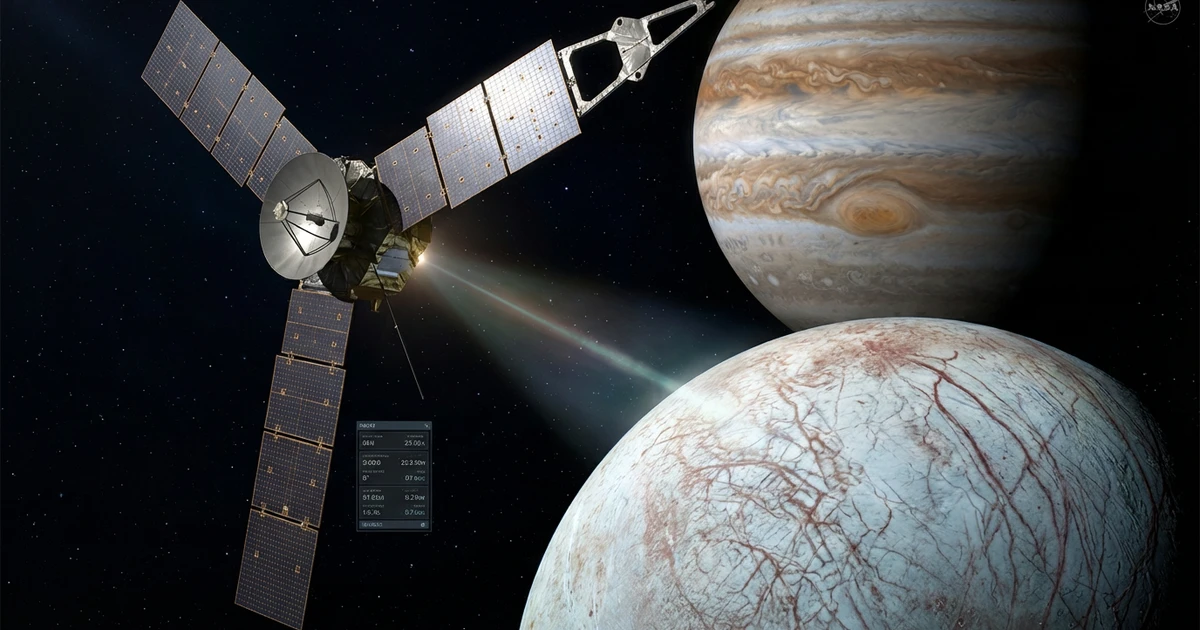
NASA’s Juno mission has achieved a major milestone by measuring the thickness of Europa’s ice shell, revealing new insights into one of the most intriguing moons in our solar system. The findings offer vital clues about the moon’s potential for harboring life and about the dynamic processes shaping its icy surface.
Breakthrough Measurements from Juno
The Juno spacecraft, launched in 2011 and currently orbiting Jupiter, has performed detailed radar scans of Europa during its flybys. The mission’s instruments have allowed scientists to directly measure the thickness of Europa’s ice shell for the first time. This achievement addresses longstanding questions about the structure and behavior of the moon’s frozen exterior, which covers a global ocean believed to be beneath.
Comparisons with Earth’s Polar Ice
Researchers have drawn comparisons between Juno’s radar scans of Europa and similar radar measurements taken of Earth’s Antarctic ice. By studying how radar signals interact with Earth’s polar regions, scientists have been able to refine their interpretations of data coming from Juno. This cross-planetary approach has helped confirm that the ice shell is dynamic and may be thinner in certain regions, which could be significant for future exploration missions.
- Juno’s radar detected variations in ice thickness across Europa’s surface, suggesting active geological processes.
- Earth-based radar studies of Antarctica have provided a model for understanding Europa’s ice shell dynamics.
Implications for Habitability and Future Missions
Europa’s subsurface ocean is considered one of the most promising places to search for life beyond Earth. Knowing the thickness of the ice shell is crucial for mission planning, especially for proposed landers or probes that aim to reach the ocean below. Thinner regions of ice could offer the best access points for future robotic explorers.
Understanding the ice shell’s structure also helps scientists assess how material might be exchanged between the surface and the ocean, potentially delivering energy and nutrients that could support life. The data from Juno will likely inform not only NASA’s upcoming Europa Clipper mission but also international efforts to study icy worlds throughout the outer solar system.
Looking Ahead: Expanding Our Knowledge of Icy Moons
These groundbreaking measurements from Juno mark an important step forward in planetary science. By leveraging radar technology honed on Earth, NASA has opened new possibilities for investigating the hidden oceans of distant moons. Continued analysis of Juno’s data, combined with future missions and cross-disciplinary research, will deepen our understanding of Europa and its potential as a cradle for extraterrestrial life.
For more on the Juno mission and upcoming explorations of Europa, visit the official NASA Juno page or follow developments on the NASA Europa Clipper mission site.
Sources
- [1]Phys.org