Science
Jupiter Probe Captures 3I/ATLAS as SETI Hunts for Signals
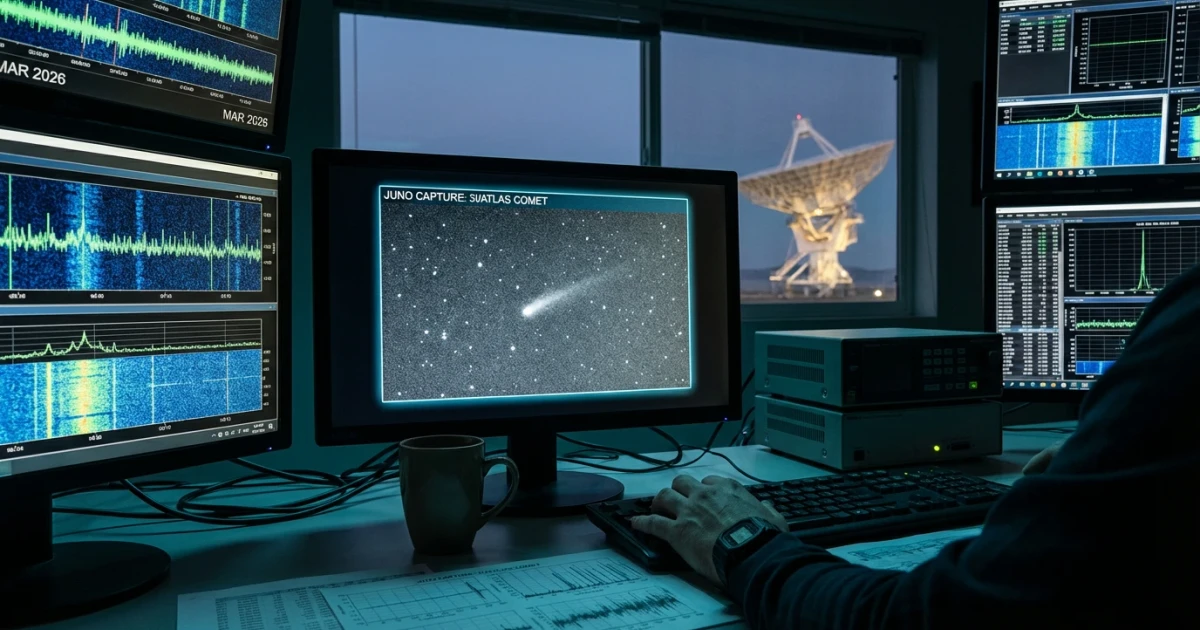
NASA's Juno spacecraft has delivered a first-of-its-kind video of 3I/ATLAS, the rare interstellar object currently passing through our solar system. Meanwhile, the SETI Institute has launched a technosignature search, analyzing data for potential signs of alien technology as this cosmic visitor sweeps past Jupiter.
Juno's Unique View of an Interstellar Visitor
NASA's Juno mission is known for its close-up studies of Jupiter, but this year its instruments turned toward a new target: 3I/ATLAS, the third confirmed interstellar object ever detected. Using its onboard cameras, Juno captured video and images of the comet as it made its closest approach to the giant planet. This unprecedented footage offers a rare look at an object formed in another star system, now on a fleeting visit to our cosmic neighborhood.
- The official Juno mission announcement highlights that 3I/ATLAS passed within millions of kilometers of Jupiter, providing a unique vantage point for observation.
- According to the JPL Small-Body Database, 3I/ATLAS is only the third object confirmed to originate from outside our solar system, after ‘Oumuamua and 2I/Borisov.
- NASA’s open data initiative ensures that all imagery, orbital data, and discovery metadata are shared with the global scientific community for further analysis and discovery.
SETI's Search for Technosignatures
With the arrival of 3I/ATLAS, the SETI Institute has prioritized the object in its hunt for technosignatures—potential evidence of extraterrestrial technology. Using a combination of radio telescopes and optical instruments, SETI is scouring the data for signals that might indicate an artificial origin or activity associated with the comet.
- The latest preprint research describes SETI’s observational methods, including monitoring for narrowband radio emissions and unusual light curves.
- So far, SETI has not announced the detection of any technosignatures from 3I/ATLAS, but analysis is ongoing as new data streams in from Juno and ground-based observatories.
- All search results, both positive and negative, are being added to NASA’s open data repository on interstellar objects, allowing independent verification and study.
How Open Data Is Fueling Discovery
A key factor in the rapid progress of research on 3I/ATLAS is NASA’s commitment to open data. From initial discovery circulars to ongoing observation logs and Juno’s imagery, scientists worldwide have direct access to raw and processed data. This transparency accelerates the search for new insights into the composition, behavior, and possible artificial origins of interstellar objects.
- Every new data release enables astronomers to refine orbital models and physical characteristics, enhancing our understanding of how such visitors travel between stars.
- Citizen scientists and research teams can access the same datasets as NASA, fostering a collaborative approach to discovery.
What Makes 3I/ATLAS Special?
Unlike its interstellar predecessors, 3I/ATLAS is being observed with a wider variety of instruments, including a planetary probe. Its passage near Jupiter offers scientists a chance to observe how the planet’s gravity influences an object from another star system. The object’s trajectory, velocity, and composition are all under close scrutiny as researchers look for both natural and potentially artificial anomalies.
Looking Ahead
As 3I/ATLAS continues its journey through our solar system, observations from Juno and Earth-based telescopes will provide more data for both conventional astronomical study and the ongoing SETI technosignature search. While no evidence of alien technology has yet emerged, the collaborative global response—powered by open data and cutting-edge science—demonstrates how much can be learned from even brief encounters with our galactic neighbors.