US News
Justice Department seizes deepfake porn domains under TAKE IT DOWN Act
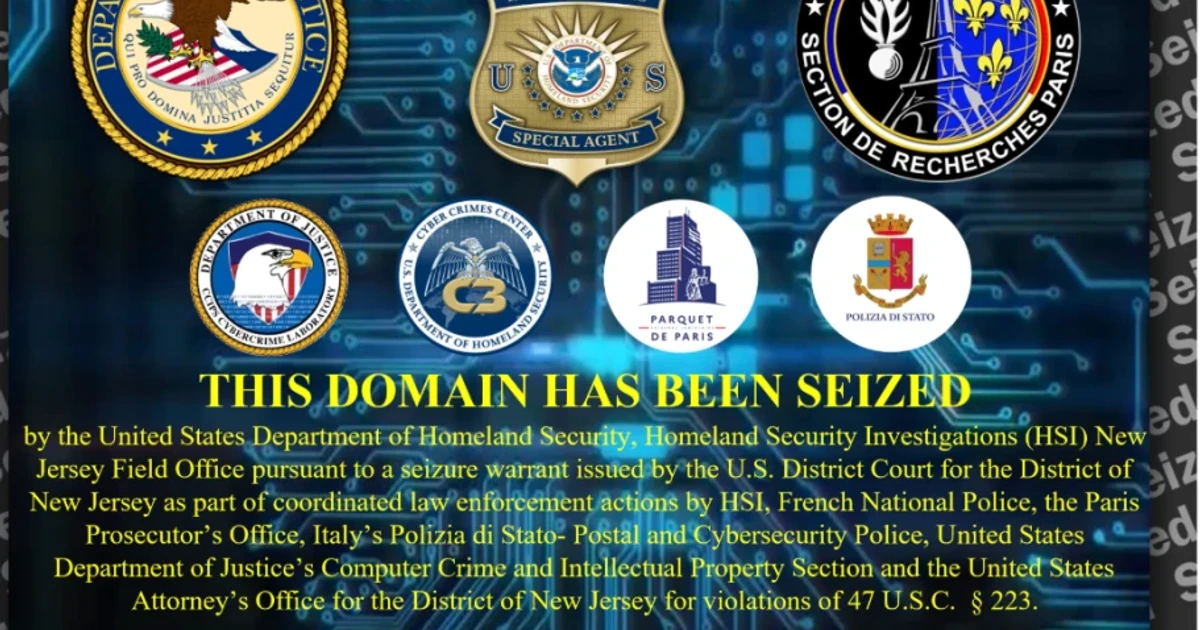
Federal agents have moved from warnings to takedowns, seizing CFAKE.com and SOCFAKE.com after investigators said the sites were pumping out thousands of digitally forged nude and sexual images of famous women without their consent. The action is the clearest test yet of whether Washington can disrupt a market built on AI-generated humiliation faster than operators can rename domains and reappear elsewhere.
The Justice Department and Homeland Security moved against the sites on June 12, using the TAKE IT DOWN Act as the legal basis for the seizure. The District of New Jersey said the domains were used to publish hundreds of thousands of deepfake pornographic images and videos. In the probable-cause affidavit, the targets were described broadly: politicians, first ladies from multiple countries, royalty, journalists, television presenters, athletes, entertainers and others.
That breadth matters. The case shows federal authorities treating nonconsensual AI image abuse not as a niche internet nuisance, but as criminal conduct tied to privacy invasion, sexual exploitation, reputation harm and digital fraud. It also marks a shift in enforcement strategy. Instead of relying only on platform moderation or private takedown requests, the government is now reaching for direct seizure authority against the infrastructure behind the abuse.
The operation also appears to have depended on international coordination. Related reporting said Italian police alerted U.S. officials, and French authorities arrested Cyrille B., a 47-year-old French national, in Nice on June 10. French investigators also seized about $48,000 in cryptocurrency from his residence, while their case identified 300,000 images, 7,000 videos and 14,000 individuals. The scale suggests a cross-border content machine, not a one-off scheme.
The legal backdrop is still new. President Trump signed the TAKE IT DOWN Act on May 19, 2025. Its criminal provisions took effect immediately, while covered-platform notice-and-removal requirements kicked in on May 19, 2026, and the Federal Trade Commission began enforcing those platform rules in late May 2026. The White House has cast the measure, championed by Melania Trump, as a bipartisan response to deepfake abuse.
Federal prosecutors are already using it. The Justice Department said a Columbus, Ohio man became the first person convicted under the law, and the U.S. Attorney's Office for the Eastern District of New York announced charges in June against two people accused of publishing AI deepfake pornography. The June 12 seizure now stands as a live precedent: sites built to exploit real women with synthetic sexual imagery can be hit directly, and quickly, by federal authorities.
Sources
- [1]justice.gov
- [2]cyberscoop.com
- [3]ftc.gov
- [4]whitehouse.gov