Science
JWST Offers First Glimpse of Weather on Distant Gas Giant
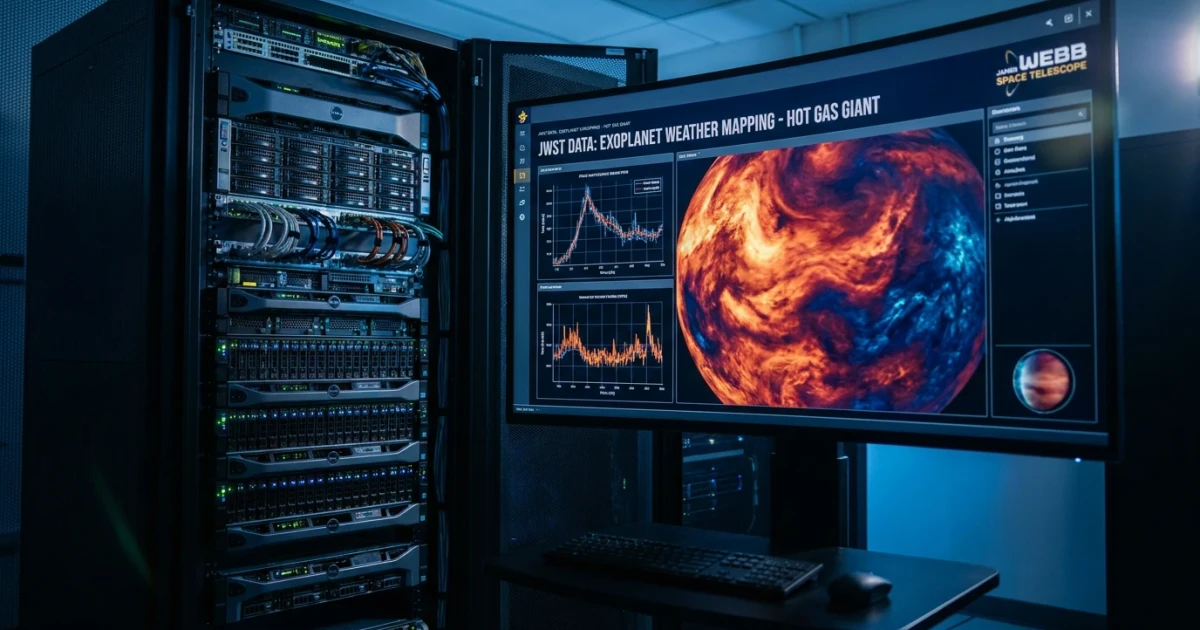
The James Webb Space Telescope (JWST) has delivered a groundbreaking weather report from a distant world, mapping atmospheric conditions on a hot gas giant located 700 light-years away. Scientists now have unprecedented insights into the turbulent skies and exotic sunsets of this far-off exoplanet, thanks to JWST’s advanced instruments and observation strategy.
Unveiling Alien Weather Patterns
The exoplanet, a massive gas giant orbiting close to its star, was the subject of detailed monitoring by JWST’s science instruments. The telescope captured data that allowed researchers to map the planet’s weather, marking the first time such a feat had been accomplished for a world so distant.
- JWST observed the exoplanet over its full orbit, tracking temperature changes and cloud formations across its day and night sides.
- The results showed dynamic weather systems, including massive sand clouds swirling in the intense heat.
- Sunset on this alien world is described as unusually clear, with minimal haze blocking light, offering scientists a window into the planet’s deep atmosphere.
How JWST Mapped a Planet’s Atmosphere
Using its sophisticated instruments, JWST monitored the planet’s light as it passed in front of and behind its star. This technique, known as phase curve observation, allowed astronomers to detect how temperatures and cloud cover changed in real-time. Data from the NIRCam, NIRSpec, and MIRI instruments revealed the chemical composition and heat distribution across the planet’s atmosphere.
This comprehensive approach enabled researchers to:
- Map temperature contrasts between the planet’s scorching day side and cooler night side
- Identify the presence of silicate (sand) clouds high in the atmosphere
- Characterize the clarity of sunsets, which can reveal the makeup and depth of atmospheric layers
Why This Discovery Matters
This achievement marks a major advance in exoplanet science, as it enables scientists to study worlds outside our solar system in detail previously reserved for planets much closer to Earth. The findings shed light on how hot gas giants evolve and interact with their host stars, and they demonstrate JWST’s potential for future weather mapping on a variety of exoplanets.
Understanding the climate and weather on distant worlds not only helps astronomers learn about planetary systems far from our own, but also provides critical context for interpreting atmospheric signatures that could one day signal the presence of life.
What’s Next for JWST Exoplanet Research
As JWST continues its mission, astronomers expect to use similar techniques to probe the atmospheres of smaller, possibly rocky planets. By refining these methods, future studies may unlock even more secrets about weather, climate, and the potential habitability of other worlds in our galaxy.
This first-of-its-kind weather map highlights how JWST is expanding our understanding of the cosmos, one distant planet at a time.