Sports
Knicks Finals run turns New York streets into celebration battlegrounds
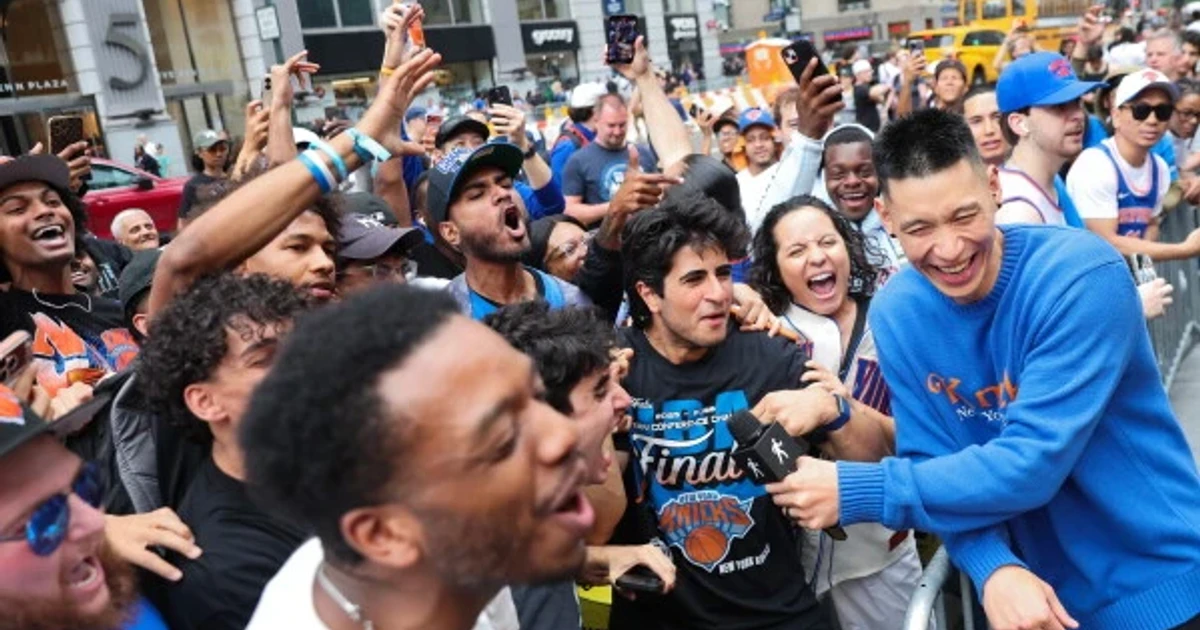
The Knicks’ run to the NBA Finals did more than revive a dormant basketball brand. It briefly turned New York City’s streets into a contested public square, where fans tried to celebrate in the open and police moved to contain that energy around Madison Square Garden.
That tension defined the scene outside MSG. The New York Police Department barred spontaneous gatherings around the arena during the Finals, citing security concerns, and set up a perimeter that stretched for several blocks. Bars and restaurants inside that zone faced strict capacity limits, and an approved watch party for up to 1,000 fans outside MSG was later canceled. For many Knicks supporters, the rallying cry was simple: “We outside.”
The conflict over space became part of the story itself. Knicks owner James Dolan publicly criticized the city’s restrictions, while the Madison Square Garden Co. accused officials of turning the area into a “police state” to keep fans from celebrating. The politics of crowd control landed at the center of a moment that, for a few nights, made Manhattan feel less like a place of managed commerce and more like a shared civic stage.
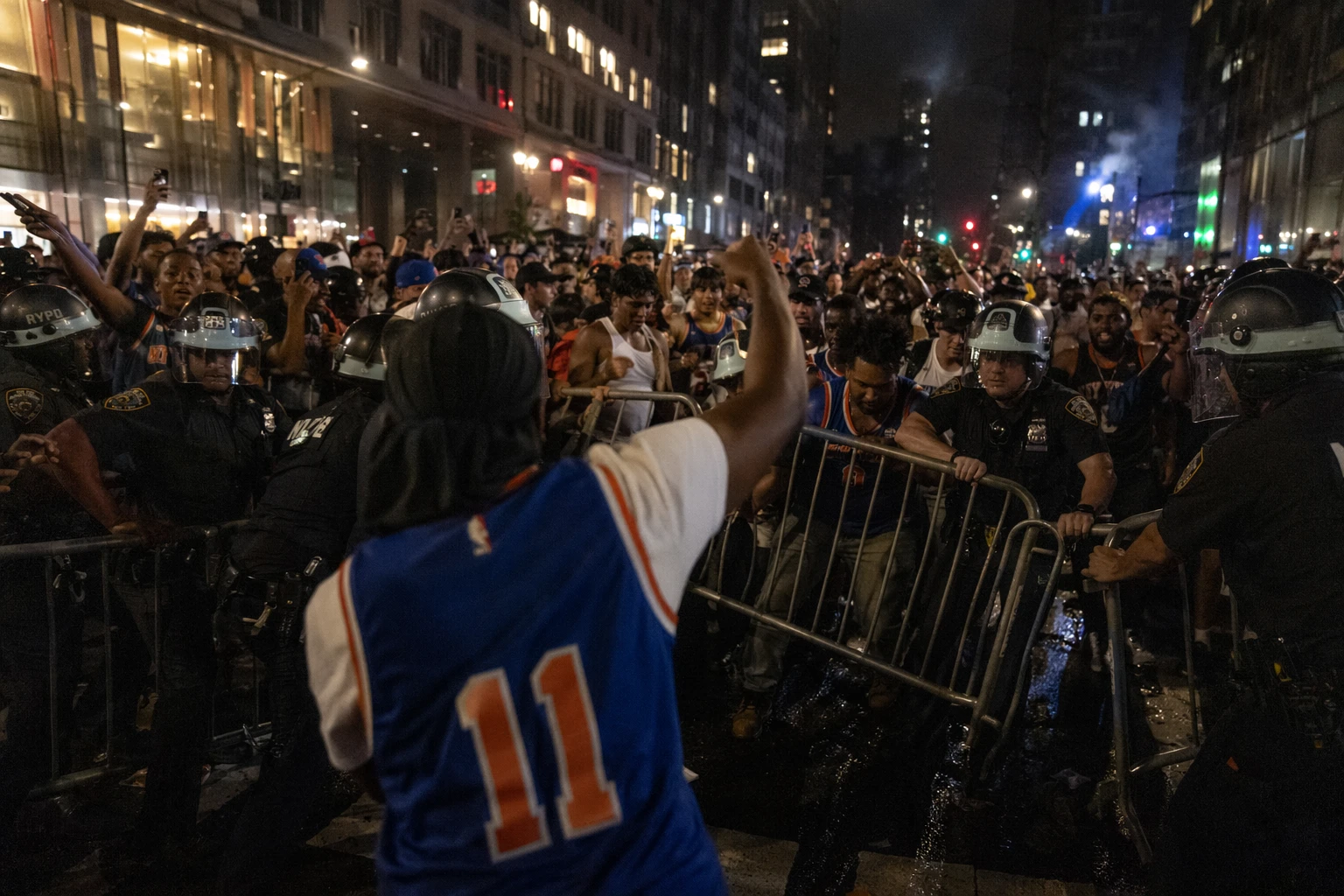
That intensity carried special weight because the Knicks’ 2026 Finals home games were the franchise’s first in New York since 1999. Game 3 in New York brought back a kind of scene the city had not seen in generations, and Game 4 produced the kind of release that only a long title drought can magnify. After the comeback win, Taylor Swift and the Haim sisters, Alana Haim and Este Haim, were reported dancing with fans, a reminder that Knicks celebrations now spill from the court into the crowd and out into the street.
The franchise’s own history explains why the reaction was so large. The Knicks have won two NBA championships, in 1970 and 1973, and the long gap since those titles has made each new push feel freighted with memory. The team also leans into celebration as part of its identity through the Knicks City Dancers, who have been performing at timeouts and intermissions since 1991 and are described by the team as having 35 years of history.
In a city marked by high costs, political fracture and constantly contested space, the Knicks’ Finals run offered something rarer: an unscripted burst of shared joy. For a few nights, the argument over who gets to stand where said as much about New York as the basketball did.
Sources
- [1]nytimes.com
- [2]espn.com
- [3]nba.com