Science
Lab Study Suggests Martian Microbes Could Survive Journey to Earth
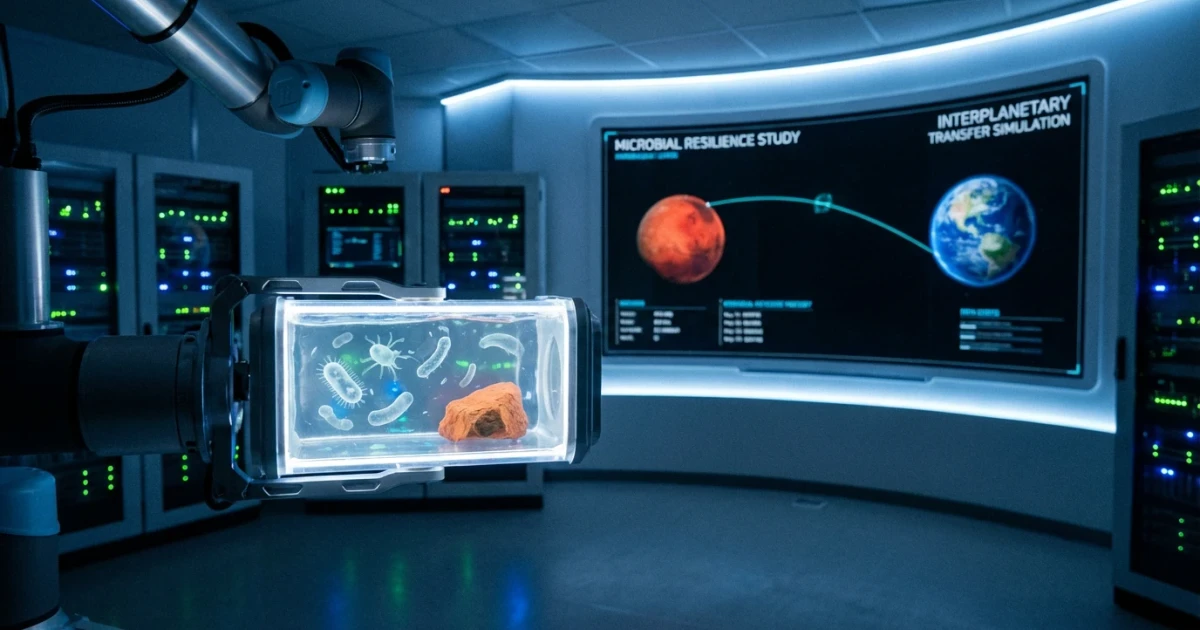
New laboratory results have intensified the debate over the risks and possibilities of life spreading between planets, as recent experiments suggest certain Martian microbes could potentially survive a journey to Earth on board asteroids or spacecraft.
Testing the Limits of Life in Space
According to The New York Times, researchers were motivated by the question: what are the true limits of life? The experiment exposed microbial samples—chosen for their ability to endure harsh environments—to simulated space conditions, mimicking the freezing cold, vacuum, and intense radiation found between planets.
- Microbes were subjected to conditions similar to those found on asteroid surfaces or Mars-to-Earth transfer trajectories
- The study focused on extremophiles, organisms capable of surviving in extreme heat, cold, and radiation
- Results showed that a subset of these microbes remained viable after exposure, suggesting some life could survive interplanetary journeys
Implications for Planetary Protection
These findings raise important questions for planetary protection protocols. If Martian life can survive the rigors of space travel, there is a greater chance that organisms could be transported between planets—either naturally, via asteroids, or through human and robotic missions.
Space agencies like NASA and the European Space Agency have long maintained strict guidelines to prevent contamination of Earth and other planets. The prospect of hardy microbes enduring space travel means current protocols may need to be re-examined, especially as sample return missions from Mars move forward.
Supporting Evidence from Prior Research
This new experiment builds on a body of research, including the European Space Agency's EXPOSE experiments on the International Space Station, which tested the survival rates of various microorganisms in open space. Those experiments found that some extremophiles, such as Deinococcus radiodurans, can survive months or even years under space conditions when shielded from UV radiation.
The results are also consistent with data compiled in the Survival of Microbes in Space review, which documents multiple cases of microbial survival in vacuum, cold, and radiation.
Risks and Opportunities for Mars Exploration
While these findings highlight a potential risk—unintentional transfer of alien microbes to Earth—they also present opportunities. If Martian organisms can survive space travel, it strengthens the case for the panspermia hypothesis, the idea that life could spread between planets via rocks and debris ejected by impacts.
The research underscores the need for careful sample handling and stricter biosecurity as robotic and human missions plan to bring back samples from Mars. It also offers valuable insight for astrobiologists searching for signs of life elsewhere in the solar system, informing which environments and organisms may be most promising for study.
Looking Ahead
As Mars sample return missions approach, the implications of this work will be scrutinized by scientists and policymakers alike. The possibility that life can traverse the gulf between worlds—whether as a risk or as a tantalizing clue about the origins of life—will continue to shape the future of space exploration.