World
Landslide in southwest China kills at least eight, rescuers search for missing
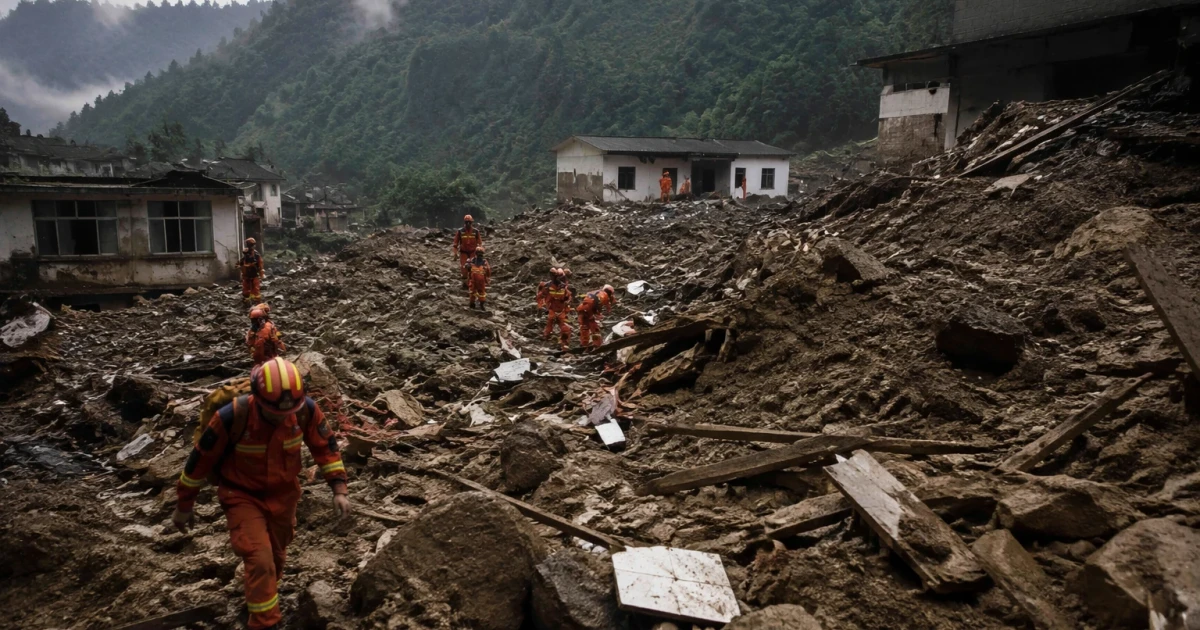
Rescue crews in Pengshui County were digging through mud, broken masonry and debris after a landslide buried homes on the outskirts of Chongqing, killing at least eight people and leaving 34 missing. The slide struck around 9:08 a.m. on Friday, July 17, as heavy rain continued to lash southwestern China and threatened to trigger more slope failures.
Local officials announced the death toll and missing-person count at a press conference as emergency workers searched the wreckage. Some people were pulled alive from the rubble, but the rain made the operation more dangerous and slowed access to the affected area.
The disaster hit a mountainous part of Chongqing where steep terrain and saturated soil can turn summer downpours into lethal landslides. Buildings and roads in the area were vulnerable to collapse, forcing responders to focus not only on finding survivors but also on stabilizing the site so crews could keep working in unsafe conditions.
More than 1,100 people were evacuated from the area as a precaution, underscoring how quickly the danger spread beyond the immediate impact zone. Residents in nearby communities watched as rescuers used heavy machinery and manual digging to clear blocked routes and search for anyone still unaccounted for.
The slide came after days of severe weather in Chongqing. Torrential rain in the city on July 11 killed six people, and a ReliefWeb flash covering central China said heavy rainfall had affected the region, especially Chongqing, since July 10, triggering floods and landslides with casualties. The sequence of events left little time for the ground to drain before the latest failure.
Chongqing’s exposure is shaped by both geography and development. Its hilly districts, seasonal monsoon rains and dense settlement patterns make slope failures harder to contain and rescues harder to carry out once roads are blocked and hillsides begin to move. The repeated strikes on the municipality have kept attention on slope monitoring, warning systems and evacuation planning as heavy rain becomes more disruptive.
Sources
- [1]apnews.com
- [2]reuters.com
- [3]inquirer.com
- [4]aljazeera.com
- [5]reliefweb.int
- [6]frontiersin.org