World
Latvian Government Falls After Dispute on Drone Incursions
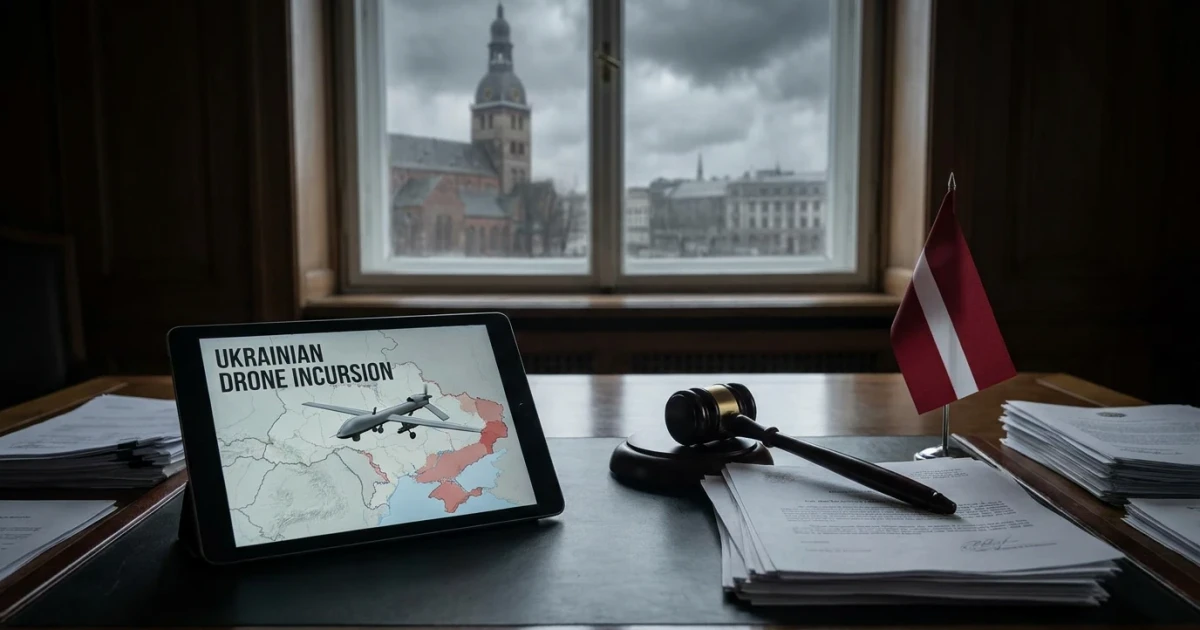
Latvia’s government collapsed this week after internal disagreements erupted over how to address a series of Ukrainian drone incursions into Latvian airspace. The political crisis culminated in the resignation of Prime Minister Evika Siliņa, raising questions about the country’s stability at a critical time for regional security.
Coalition Split Over Drone Response
According to reporting from The Washington Post and BBC, tensions within the Latvian ruling coalition had been simmering as opposition lawmakers and some government partners criticized what they saw as an inadequate response to repeated airspace violations by drones linked to the conflict between Ukraine and Russia. The most recent incidents, which reportedly involved unmanned aerial vehicles entering Latvian territory, intensified calls for a stronger government stance and more robust air defenses.
Latvia, a NATO member and a Baltic state bordering Russia, has been on heightened alert since the onset of the war in Ukraine. The country’s strategic position and proximity to the conflict have made issues of airspace security especially sensitive. The resignations come as NATO air policing activities in the region have intensified, with member states emphasizing collective defense and rapid response to potential threats.
Government Resignation and Political Fallout
Prime Minister Evika Siliņa announced her resignation after coalition talks broke down, citing irreconcilable differences over national security policy. As reported by The Washington Post, the disputes centered specifically on the handling of Ukrainian drone breaches, with some partners accusing the government of being slow to implement necessary countermeasures.
The collapse of the coalition leaves Latvia in a period of political uncertainty. The country must now form a new government or possibly face early elections, as outlined in the official Saeima election process. Latvia’s parliament will play a central role in determining the next steps, as the constitution requires the president to task a new leader with forming a majority coalition.
Security Concerns and Regional Implications
Latvia has recorded several incidents of drone activity along its eastern border in recent months, prompting concerns among citizens and policymakers alike. While details on the specific breaches remain limited, experts note that the Baltic states have become increasingly vigilant about countering unmanned aircraft systems, given the risks posed by cross-border surveillance and potential sabotage.
- Latvia’s airspace has been breached multiple times, with officials attributing some incidents to drones originating from or related to the Ukraine conflict.
- NATO allies have stepped up patrols and provided technical assistance to bolster Latvia’s air defenses.
- Public opinion in Latvia, as reflected in recent political debates, strongly favors a more assertive government response to security threats.
The resignation of the prime minister and the government’s collapse could temporarily disrupt efforts to enhance airspace security, at a time when regional tensions remain high. Latvia’s neighbors—Estonia and Lithuania—are also closely watching developments, mindful that instability in one Baltic state can quickly affect the security calculations of the others, as detailed in the Baltic Defence Review and the European Parliament’s security briefing.
Next Steps for Latvia
As Latvia searches for a new governing coalition, the central issue will remain how to balance effective security measures with the need for political stability. The country’s population of just under 1.9 million expects decisive leadership in the face of ongoing regional challenges. The next government will be under pressure to prioritize air defense modernization and maintain close cooperation with NATO partners.
While the immediate fallout is political, the broader implications underscore the growing impact of drone warfare and hybrid threats on European democracies. With new leadership, Latvia will be closely watched for its ability to restore confidence and reinforce its role on NATO’s eastern flank.