Politics
Lindsey Graham’s most fiery Face the Nation moments remembered
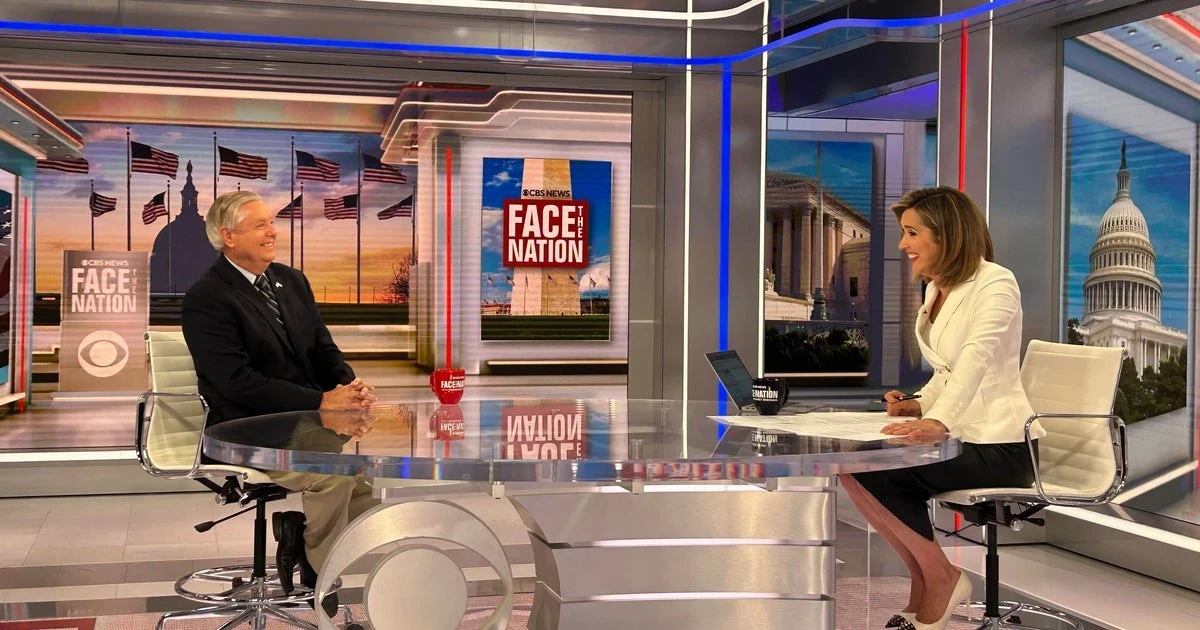
Lindsey Graham turned Face the Nation into one of the most reliable stages for hard-edged Republican foreign-policy messaging, appearing nearly 100 times over 28 years and returning as recently as June 21, 2026 to talk through U.S.-Iran diplomacy and the Strait of Hormuz. CBS News has long described him as a fiery, passionate presence, and the network’s own tribute broadcast on July 12, 2026 showed how closely his television life had become tied to the program’s identity.
A Sunday fixture across multiple CBS eras
The reach of Graham’s run is larger than the public transcript archive suggests. CBS News posts Face the Nation transcripts online from 2008 through 2025, while earlier broadcasts sit in CBS Footage Requests, which is why Graham’s appearances stretch back well before the easy-to-search record. The paper trail already shows him on the program in 2004, when he was a senator from South Carolina and a member of the Armed Services Committee.
On May 16, 2004, Graham appeared with Sen. Carl Levin and journalist Seymour Hersh. Later that year he returned on Sept. 26, 2004 to discuss the war in Iraq and the 2004 presidential campaign alongside Sen. Edward Kennedy, then came back again on Nov. 14, 2004 with Rep. Jane Harman on a broadcast hosted by Bob Schieffer. Those early bookings established the pattern that would define the next two decades: Graham was not just a guest, he was a recurring argument.
From Iraq debates to presidential politics
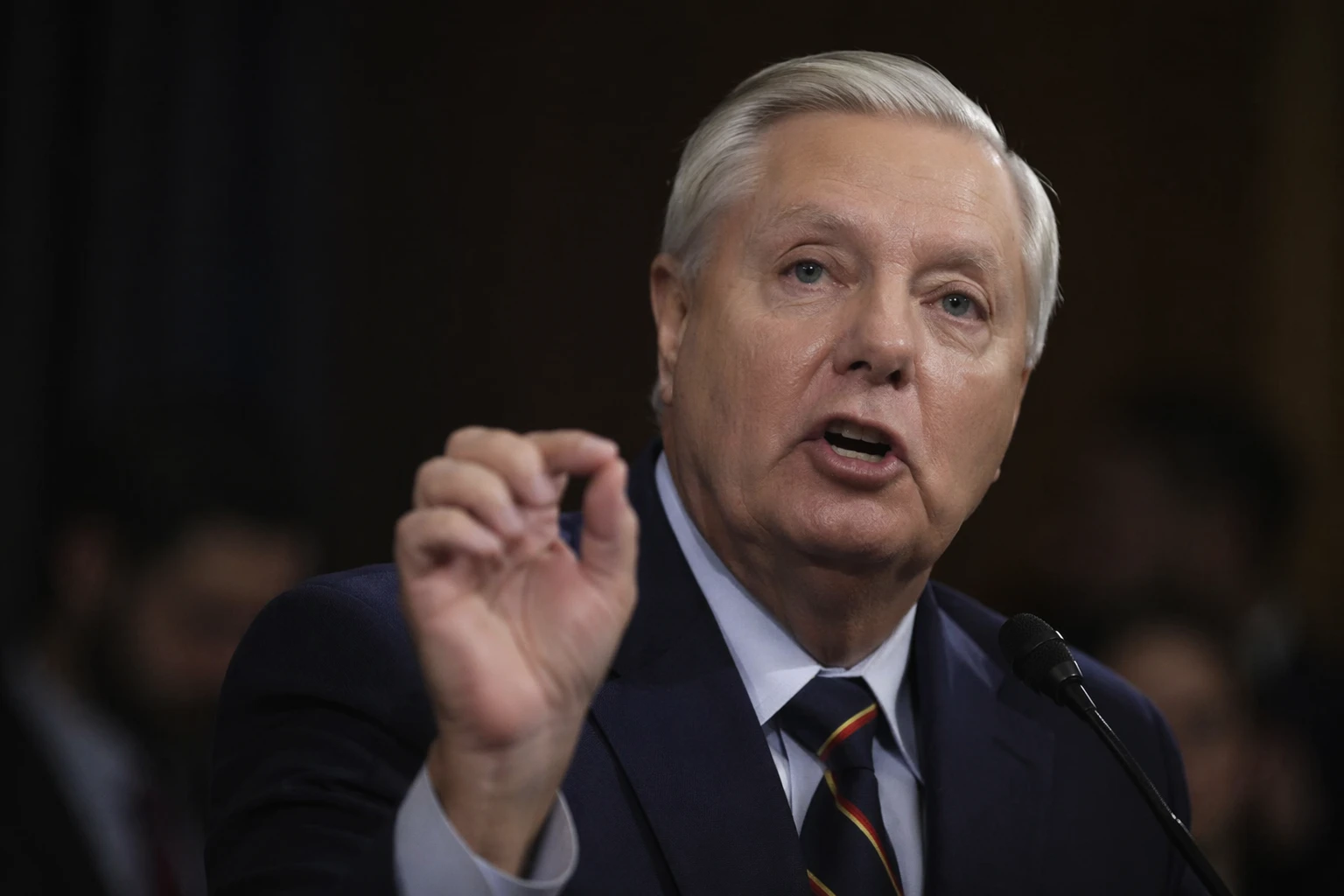
The 2004 appearances show Graham in the post-9/11 debate over Iraq, where he helped frame Republican national-security politics in the language of resolve and military credibility. By 2015, that same instinct had shifted to a different battlefield, with Graham on Face the Nation on Feb. 1, April 5 and June 14 as he tried to straddle presidential ambition and the party’s fight against ISIS. CBS’s June 14, 2015 program noted that he would discuss both his presidential campaign and President Obama’s plan to fight ISIS, a combination that captured how closely his own political future was tied to foreign policy.
His Feb. 1, 2015 appearance placed him among a crowded political roundtable that included Sen. Dick Durbin and former Secretary of State James Baker, while the April 5 broadcast kept him in the mix as another of the day’s featured guests. That sequence mattered because Graham was using Sunday television not only to attack Democratic policy, but also to test a Republican identity built around military strength, executive skepticism and the politics of national security. His campaign was short-lived, but the television role endured.
Iran, North Korea and the Trump years
By 2019, Graham’s Face the Nation appearances had become a venue for direct warnings aimed at both foreign adversaries and President Trump. On June 30, 2019, he joined the program from Istanbul, Turkey, where he discussed North Korea, immigration and China. In the same broad period, he warned that Trump should prepare the “strongest signal possible” to Iran if Tehran exceeded nuclear limits, a line that showed how aggressively he still pressed the case for deterrence.
That message fit the larger Republican shift of the Trump era. Graham remained hawkish, but his appearances increasingly reflected a party in which loyalty to Trump, alarm over Iran and suspicion of global instability often sat side by side. On Face the Nation, he translated that tension into television-ready confrontation, pushing foreign-policy arguments that were both institutional and personal, and often sounded more like a floor speech than a Sunday chat.
Ukraine, institutions and the final stretch
Graham’s later appearances kept him at the center of major national-security disputes, especially Ukraine. On July 13, 2025, CBS aired an interview with Graham and Sen. Richard Blumenthal after the two returned from Europe, where they had met Ukrainian President Volodymyr Zelensky. The pairing mattered: a Republican and a Democrat appearing together after a transatlantic trip turned the segment into a picture of institutional foreign policy at a moment when Congress was still wrestling with the costs and commitments of the war.
His June 21, 2026 appearance brought the arc back to the Gulf, with the conversation focused on U.S.-Iran diplomacy and the Strait of Hormuz. Even at the end of his run, Graham was still being used by CBS as a voice on the problems he had helped define for nearly three decades: war, terror, Iran, North Korea, Ukraine and the presidency itself. The July 12, 2026 broadcast, devoted in part to remembering him after his death, with Sen. Tim Scott among the guests paying tribute, marked the end of a political television career that had been as combative as it was durable.
Graham’s Face the Nation record is a map of Republican messaging from the Iraq era to the Trump years and beyond. The constant was not style alone, but subject matter: the hardest questions in American power, carried back to Sunday television again and again.
Sources
- [1]cbsnews.com