Entertainment
Lionsgate rides Michael and hits to revive its standalone studio business
By July 6, Michael had grossed $991.4 million worldwide, with $371.2 million domestic and $620.1 million international, including $24.4 million from Japan. For Lionsgate, the film became a test case for whether a post-Starz studio can still make money by backing projects bigger rivals considered too risky and turning that risk into global event status.
A standalone studio trying to prove the model
Lionsgate completed its separation from Starz on May 7, 2025, began trading on the New York Stock Exchange under LION, and more than 99% of voting shareholders backed the split. The studio releases 30 to 40 films a year, including about a dozen wide theatrical releases, while managing a 20,000-plus title library. Lionsgate expects to make money not by chasing only giant tentpoles, but by mixing theatrical releases with a large catalog that can keep generating cash long after opening weekend.
The latest numbers show the strategy is working better than it did before the separation. For the fiscal fourth quarter ended March 31, 2026, Lionsgate reported $906.5 million in revenue, $117.5 million in operating income, $165.4 million in adjusted OIBDA and $190.4 million in free cash flow. CEO Jon Feltheimer said the library had delivered $1 billion in trailing 12-month revenue for three straight quarters, while also pointing to The Housemaid and Michael as titles strengthening the brand and improving forward visibility. The motion picture segment alone generated $651.9 million in revenue and $187.1 million in profit, helped by The Housemaid, Now You See Me: Now You Don't and library sales.
How Michael became the project bigger studios avoided
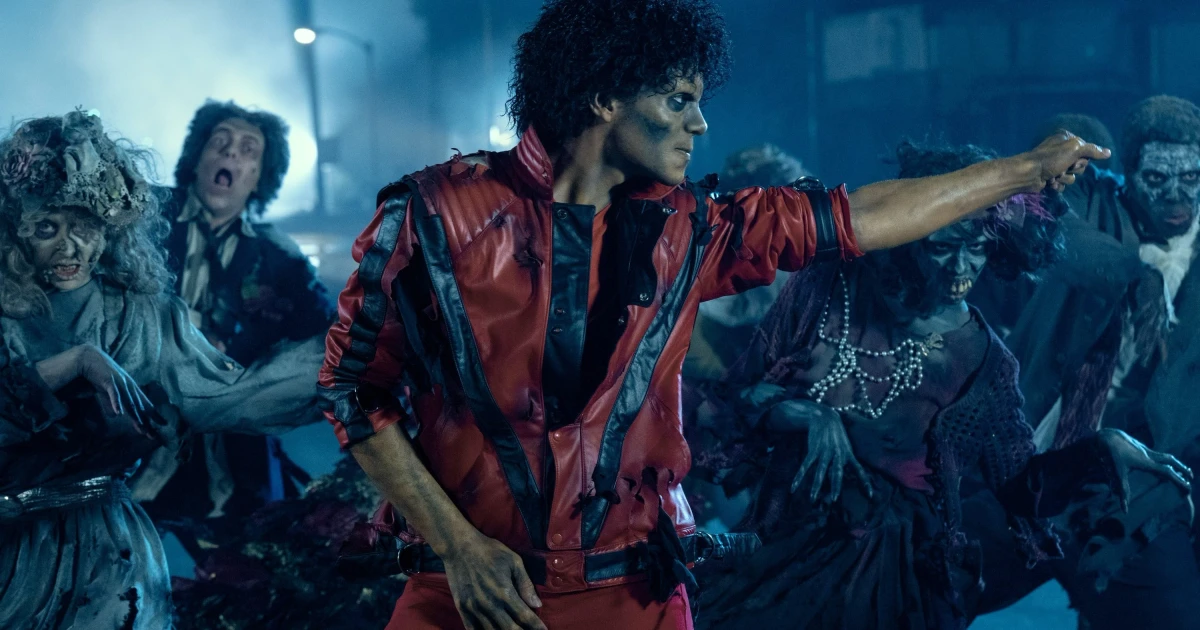
Michael arrived through a path that says as much about Hollywood risk management as it does about box office. The film, directed by Antoine Fuqua and starring Jaafar Jackson as his uncle Michael Jackson, was first slated for April 2025, then moved to October, and finally set for April 24, 2026. Lionsgate handled the U.S. and Canada, Universal handled most of the rest of the world and Kino Films took Japan, while IMAX support helped frame it as a global theatrical event rather than a niche prestige title.
The marketing campaign was unusually aggressive and unusually digital. Variety put Lionsgate's spend at about $60 million over years of promotion, and the @michaelmovie account had 20,000 followers before the studio posted its first poster or trailer. Major studios passed on the rights because of the PR risk around Jackson’s legacy, and a legal clause tied to a settlement forced a third-act overhaul that pushed the release back by a year.
From opening weekend to franchise math
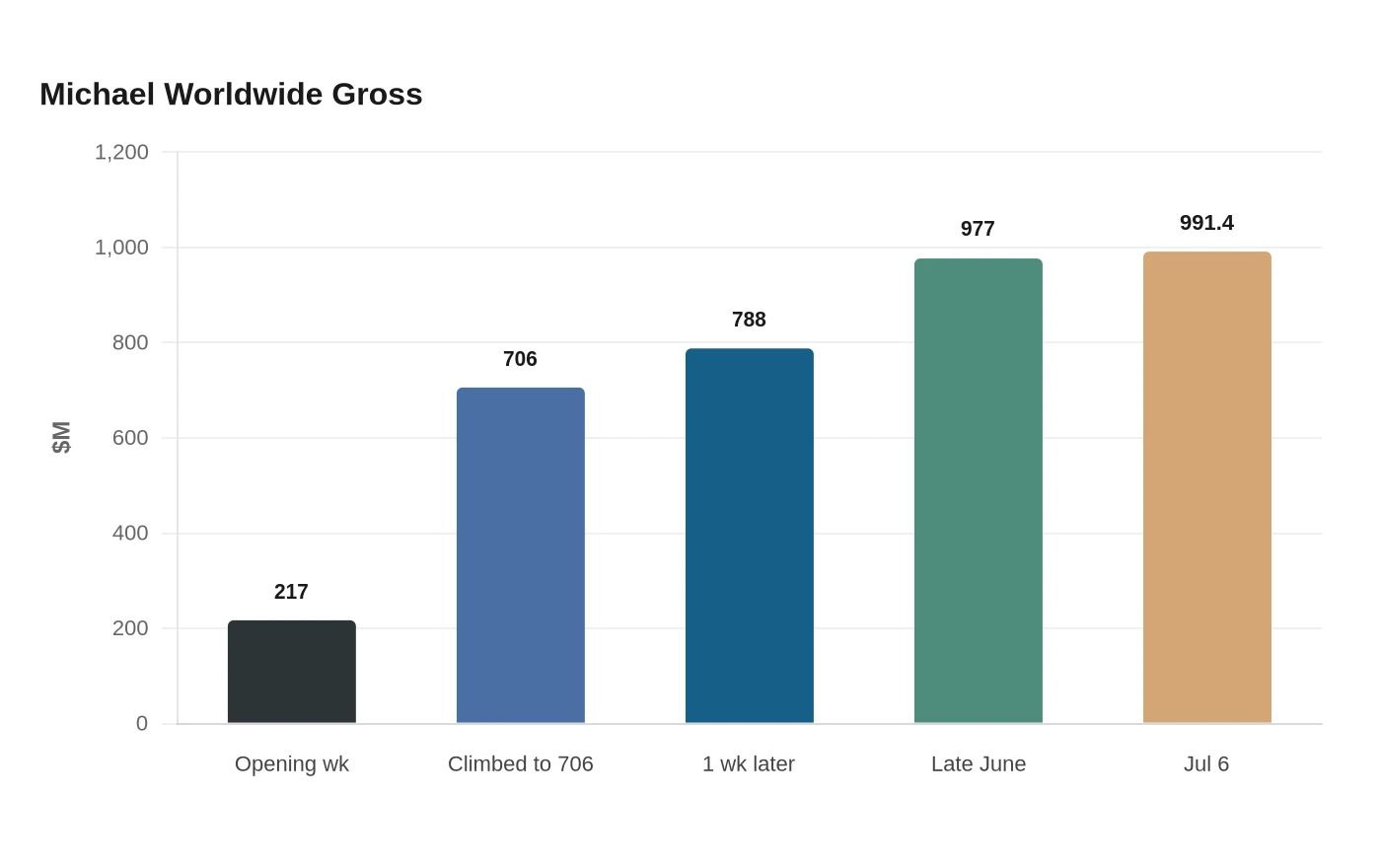
Michael opened to $97 million domestically and $217 million worldwide, the best launch ever for a biopic, then climbed to $283 million in North America and $706 million globally as repeat viewings and word of mouth held up. By mid-May it had crossed $700 million worldwide, a week later it was at $788 million, and by late June it had reached $977 million, overtaking Oppenheimer to become the highest-grossing biopic in history.
Lionsgate has already moved from one-hit accounting to sequel planning. A follow-up is in development, and Screen Daily put the share of the second film drawn from footage shot during the first production at 25% to 30%, after Antoine Fuqua had delivered 3.5 hours of material.
What Michael says about Hollywood’s risk appetite
Michael shows the market still rewards a film that can break through without a pre-sold comic-book or sequel identity. Bigger studios passed because Jackson’s legacy carried reputational and legal risk, but Lionsgate leaned into that opening and used a fan-driven campaign to reach audiences before the usual marketing cycle even started.