Entertainment
London marks the American Revolution with archives, plaques and exhibitions
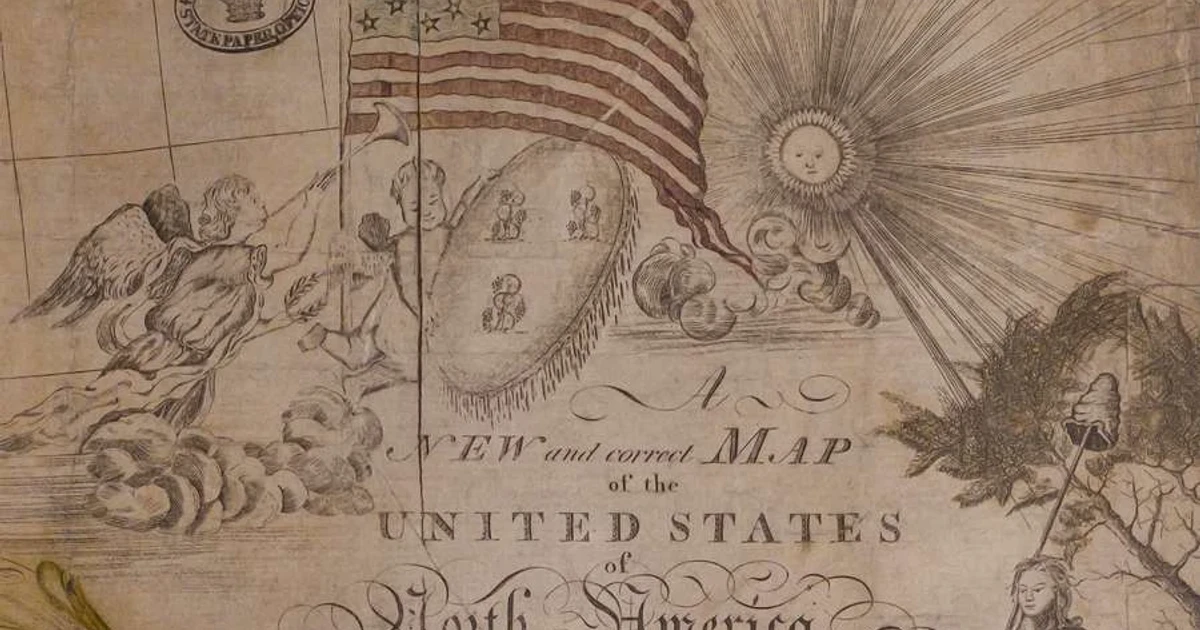
The British capital still keeps the American Revolution in its filing cabinets, on its walls and on its streets. As the 250th anniversary of the signing of the US Declaration of Independence arrives in 2026, London institutions are using the milestone to show how independence looks when seen from the imperial capital Britain once governed.
The Revolution looks different from Kew
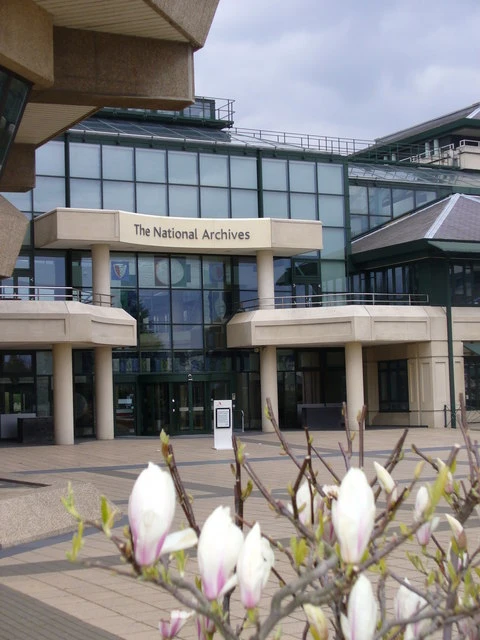
The clearest entry point is The National Archives at Kew, where the free exhibition Revolution 250: America’s Independence Story 1763-1783 runs from 24 June to 29 November 2026. The display pulls together original maps, correspondence, first-hand accounts and reports, including a rare original Dunlap broadside printed on the night of 4 July 1776. That object alone gives the show unusual force: it places one of the Revolution’s defining documents inside the British institution that preserved the records of the crisis it helped to document.
The National Archives frames the story in deliberately dual terms. The American Revolution, it says, was not only the birth of the United States but also “as much a British story as an American one.” That point matters because the archive’s holdings were assembled by the machinery of empire itself, which means the colonial conflict survives not only in American memory but in British paperwork.
The paper trail of imperial power
For anyone trying to understand how the break with Britain unfolded, The National Archives’ American Revolution research guide shows where the administrative trail begins. The records were originally created by British government departments including the Colonial Office, War Office, Admiralty and Treasury, the exact institutions that carried imperial policy, military coordination and colonial finance.
That makes Kew more than a museum stop. It is a working map of how London watched, managed and finally lost the colonies. The guide also turns the anniversary into a practical research tool, giving the Revolution a documentary spine that runs through government correspondence, military reporting and financial records rather than through patriotic myth alone.
Guildhall places America inside the City
London’s City institutions are marking the same anniversary with a separate free display at Guildhall. America and London, curated by The London Archives, looks at the political, cultural and diplomatic links between the City of London and the United States across more than two centuries. The setting is fitting: Guildhall has long stood at the heart of the City’s civic life, and the display uses that institutional backdrop to show that the transatlantic relationship did not end in 1783.
The City of London Corporation is presenting the display as part of the anniversary commemorations, and the framing is broader than a simple Revolutionary War story. The exhibition traces how London and America stayed connected through trade, politics, elite networks and public memory, making the city’s archives part of the history of independence as well as its aftermath.
Benjamin Franklin still anchors the street-level story
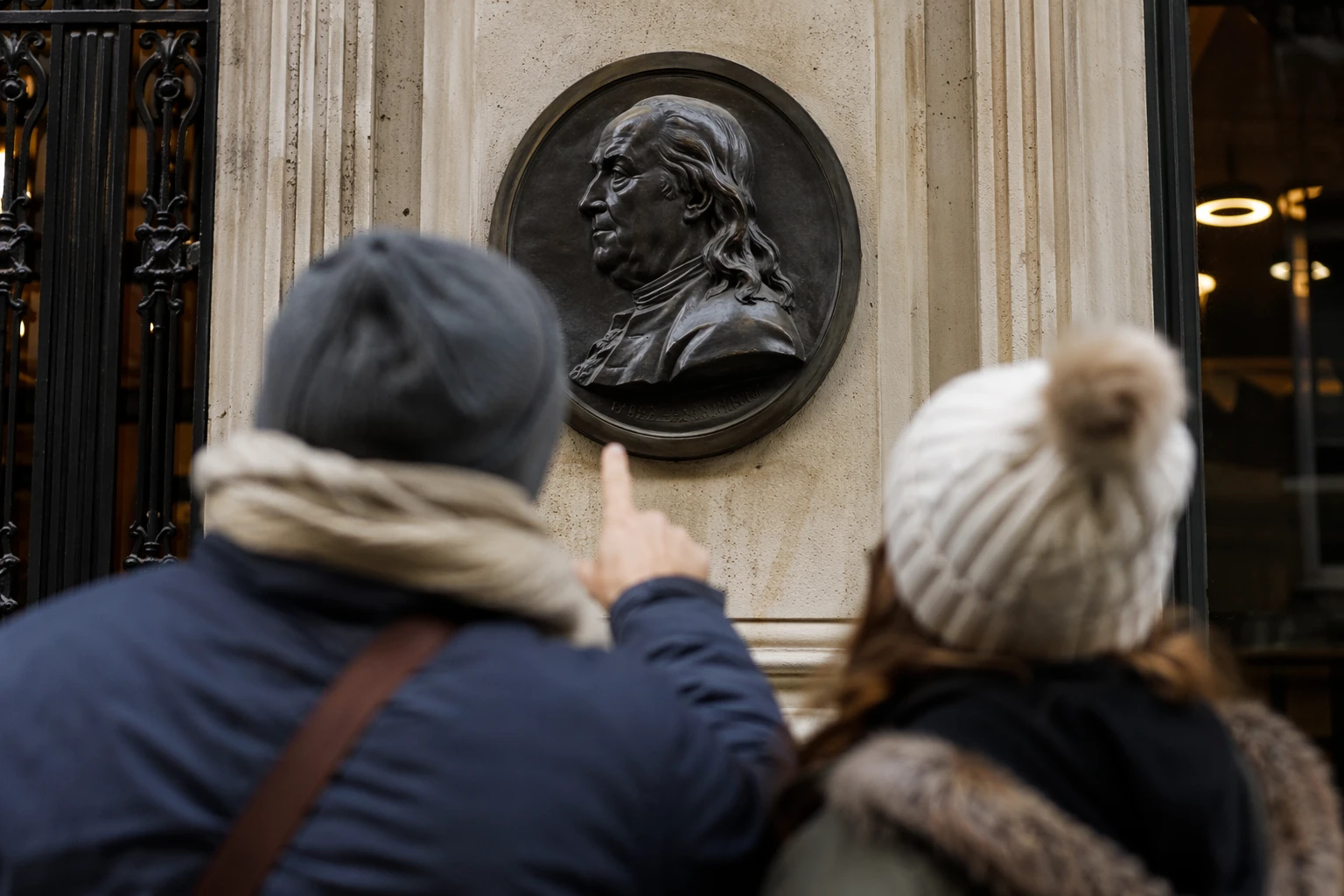
The most recognizable revolutionary name in London remains Benjamin Franklin, and English Heritage marks his presence at 36 Craven Street with a blue plaque. Franklin stayed there in 1757-62 and again in 1764-72, years that place him in the city during the tensions that would later explode into revolution. The address gives London’s story a human scale: before he became a symbol of American independence, Franklin lived, worked and argued in the rooms of the capital that would eventually lose the colonies.
That plaque is part of a much larger citywide tradition. London’s blue plaques scheme began in 1866 and is thought to be the oldest of its kind in the world, linking buildings to the people who shaped them. In revolutionary history, that means London can be read almost as a street atlas of colonial politics, with Franklin among the figures who left their mark on the city’s built landscape.
How to read London’s Revolution story
Taken together, these sites show that London is not treating the anniversary as a novelty travel theme. The exhibitions and plaques highlight three different layers of the same history: the documents held at Kew, the civic and diplomatic networks centered on Guildhall, and the personal footprint left by Franklin and other figures across the city. That combination makes the capital a useful place to study the arguments and institutions that shaped independence before the break became final.
For a trip focused on the Revolution’s British dimension, the route is clear:
• Start at The National Archives for the free Revolution 250: America’s Independence Story 1763-1783 exhibition at Kew, open 24 June to 29 November 2026. • Move to Guildhall for America and London, the free Heritage Gallery display curated by The London Archives. • Finish at 36 Craven Street, where Franklin’s blue plaque places one of the Revolution’s central personalities back inside the city that helped form him.
The result is a 250th anniversary narrative that does more than celebrate independence. It shows how London preserved the records, buildings and names that still explain why the Revolution happened and how Britain saw it while it was unfolding.