World
London swimmers eye canals and ponds as pools become scarce
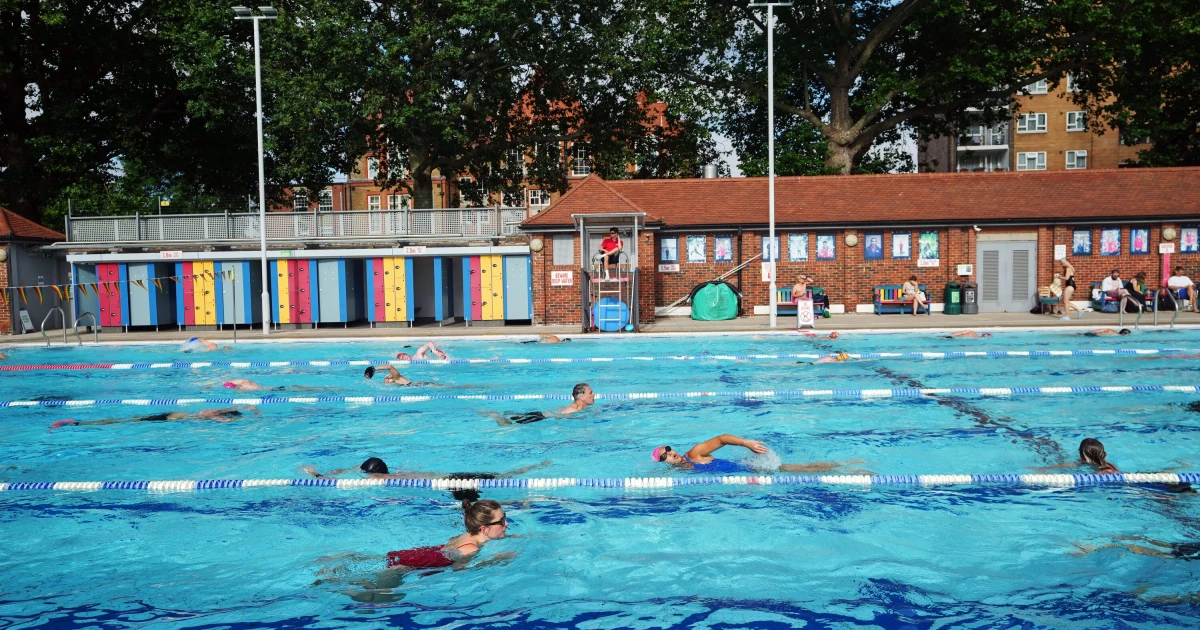
London’s hottest weeks are putting a simple question at the center of urban life: where can people cool off safely when pools are full, expensive, or too few? In that scramble, outdoor water has become both a relief valve and a fault line, with some swimmers heading to officially managed sites and others drifting toward ponds and canals that are not always safe.
Heat, demand and the strain on cooling
The pressure is not abstract. The Met Office says England had its warmest June on record in 2025, the UK had its fifth warmest July on record, and summer 2025 was officially the warmest summer on record for the UK. That kind of heat sharpens demand for pools, lidos, open-water sites and any other place that can provide a few hours of relief, while also exposing how unevenly that relief is distributed across London.
The result is a city where access to cooling is shaped by income, geography and infrastructure. Some places can absorb heat with managed swimming provision and regular testing; others leave people improvising, which is where the safety questions begin. In a capital already balancing crowded public space with rising temperatures, swimming has become less of a leisure niche and more of a practical adaptation issue.
Where Londoners can swim now
City Hall has already funded a small set of open-water swimming locations, including the Royal Docks, West Reservoir and Beckenham Place Park. Those sites matter because they are part of the city’s safer, more formal swimming network, with water quality regularly tested rather than left to chance.
That network also connects to a broader swimming ecosystem. Swim England London says many venues host race nights and timed swims, while one of the largest mass-participation open-water events in the UK is Swim Serpentine in Hyde Park each September. In other words, London’s outdoor swimming is not just about wild dips and weekend recreation, but about organised activity, club use and event-based demand that intensifies during the warm season.
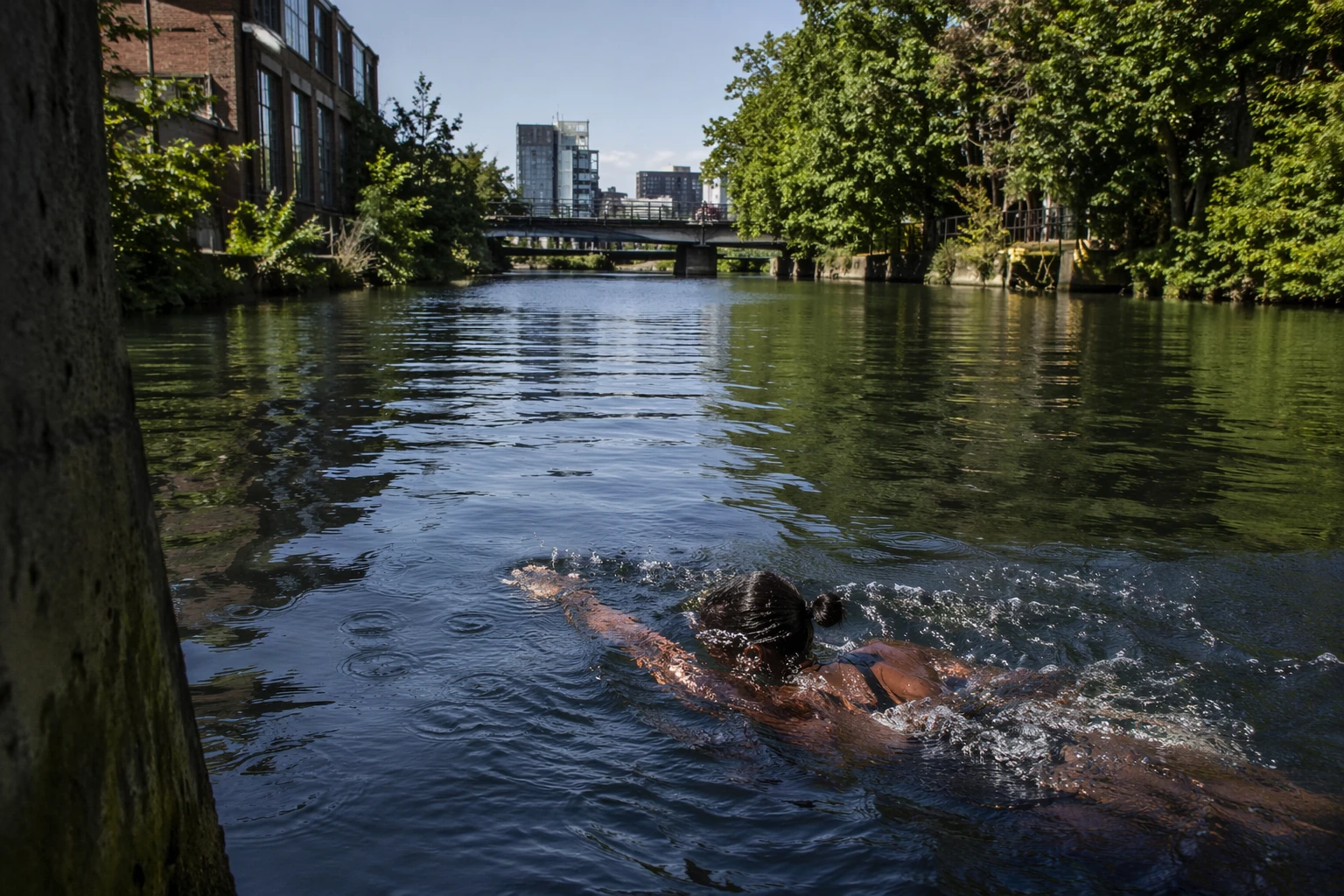
The lure, and limits, of informal waters
The attraction of ponds and canals is easy to understand when pool space is scarce. But the very waters that offer access can also expose the city’s planning gaps. City Hall says the tidal Thames is not safe to swim in, a blunt reminder that not every visible stretch of water is usable simply because it exists.
The guide produced by the Mayor’s office in September 2024 lists possible future swimming locations including Serpentine, Canary Wharf, Greenland Dock, Hackney Marshes, Teddington, Roding and Albany Reach. Yet City Hall also notes that some of these places are currently too polluted and unsupervised to be safe, which shows how far aspiration can sit ahead of reality. That gap is exactly where informal swimming grows most quickly: people go where the water is, even when the city has not finished making it safe.
Water quality concerns are not hypothetical. Independent reporting in 2025 highlighted sharp increases in E. coli at the Serpentine Lido between 2023 and 2024, and the Hampstead Heath Mixed Ponds also saw a rise over the same period. Even so, the Serpentine still met minimum bathing-water standards, which is the kind of narrow margin that makes monitoring essential and complacency risky.
The policy race behind the swim
The institutional response has started to catch up. The Mayor of London launched an Outdoor Swimming Guide in September 2024, designed to show where Londoners already swim outdoors and where it may be possible in future. City Hall has said the four sites in the guide are indicative ambitions, not fixed openings, and that any real delivery will depend on feasibility, partners and water-quality improvements.
The London Assembly Environment Committee pushed the debate further in September 2025, calling for a clearer plan to make London’s rivers swimmable. Its proposal set out four new bathing-water sites by 2028 and six more by 2034, along with a delivery plan that would make the ambition measurable rather than rhetorical.
That matters because Sadiq Khan’s manifesto commitment was to make rivers in London swimmable within ten years. The promise now runs through a system of testing, site selection, water treatment and cooperation across agencies and landowners. The political challenge is no longer whether the city should aim for swimmable rivers, but whether it can turn that pledge into infrastructure that works in a hotter London.
What this means for a hotter city
London’s summer heat is turning swimming into a test of public capacity. When outdoor cooling becomes scarce, the city’s inequities become visible in who can reach a tested site, who settles for an informal stretch of water, and who has no practical option at all.
The future of swimming in London will be decided by whether the capital can move from scattered safe sites to a connected system of usable, supervised water. Until then, the scramble for canals, ponds and lidos will remain a climate story as much as a leisure one, revealing how quickly access to relief becomes a question of planning, standards and political follow-through.
Sources
- [1]nytimes.com
- [2]london.gov.uk
- [3]metoffice.gov.uk
- [4]independent.co.uk
- [5]swimming.org