Business
Lost Lantern blends straight bourbon from all 50 states for 250th anniversary
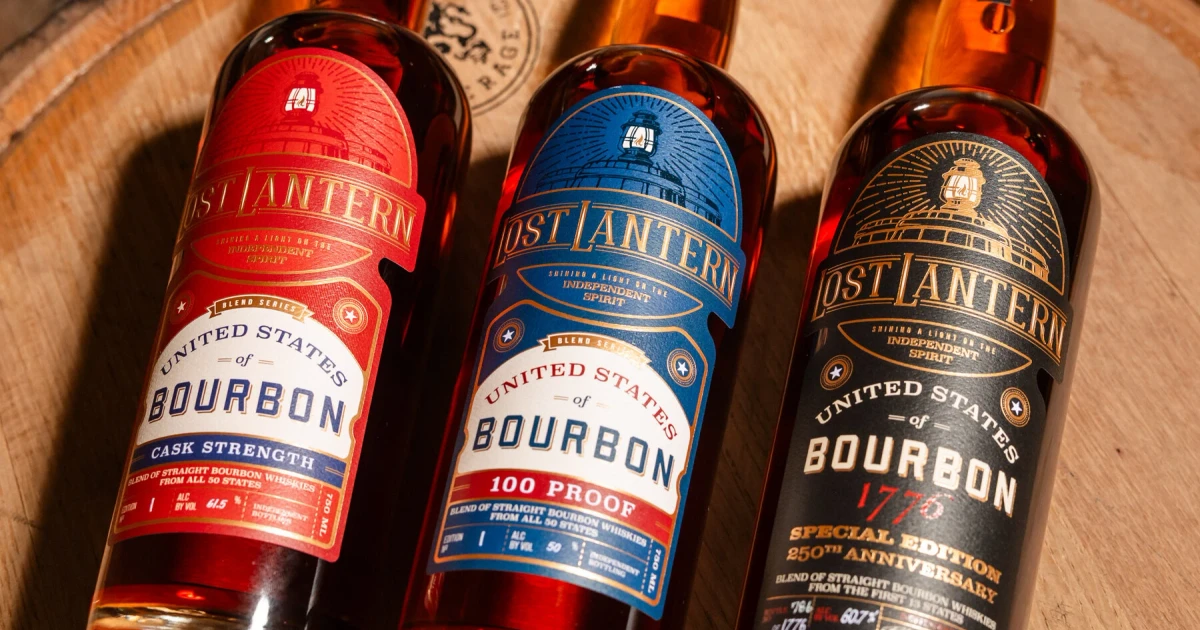
Lost Lantern Whiskey has turned bourbon’s most stubborn myth into a national map. Its United States of Bourbon is billed as the first-ever blend of straight bourbon whiskies from all 50 states, with every component distillery named right on the label, a move that makes the bottle as much a roll call as a release.
The Vermont-based company is using the 250th anniversary of the Declaration of Independence as the frame for that ambition. Alongside the flagship blend, Lost Lantern created a United States of Bourbon 1776 Edition for the 250th anniversary in 2026, limiting that bottling to 1,776 bottles. The symbolism is blunt: bourbon is being marketed not just as Kentucky’s signature spirit, but as an American one.
That national story would not be possible if bourbon were confined to Kentucky, and it is not. Bourbon can be produced anywhere in the United States, which has helped open the category to distillers far beyond the traditional center of the industry. Lost Lantern’s release pushes that fact to its logical conclusion, gathering straight bourbons from coast to coast and presenting them as a single expression of American whiskey.
The project also reflects the way Lost Lantern has built its business. Cofounders Nora Ganley-Roper and Adam Polonski began laying the groundwork with an eight-month road trip in 2018 and 2019, visiting more than 100 distilleries across the United States. The company says they kept traveling afterward to source whiskey, and that they personally vet and visit the distilleries they work with. Lost Lantern is based in Vermont and operates a tasting room in Vergennes, Vermont, underscoring how far the bourbon trade has moved from its old geographic assumptions.
Lost Lantern says United States of Bourbon is its widest-ranging blend of American whiskey ever created, and it is available in both 100 Proof and Cask Strength expressions. The release lands at a moment when craft distilling has spread well beyond Kentucky, but also when heritage and branding still matter enormously. In that sense, the bottle reads as both patriotic novelty and a marker of a real shift: bourbon’s identity is no longer regional alone, even if Kentucky still anchors the category’s image.