Science
Love in a New Light: How Invisible Patterns Are Transforming Animal Courtship
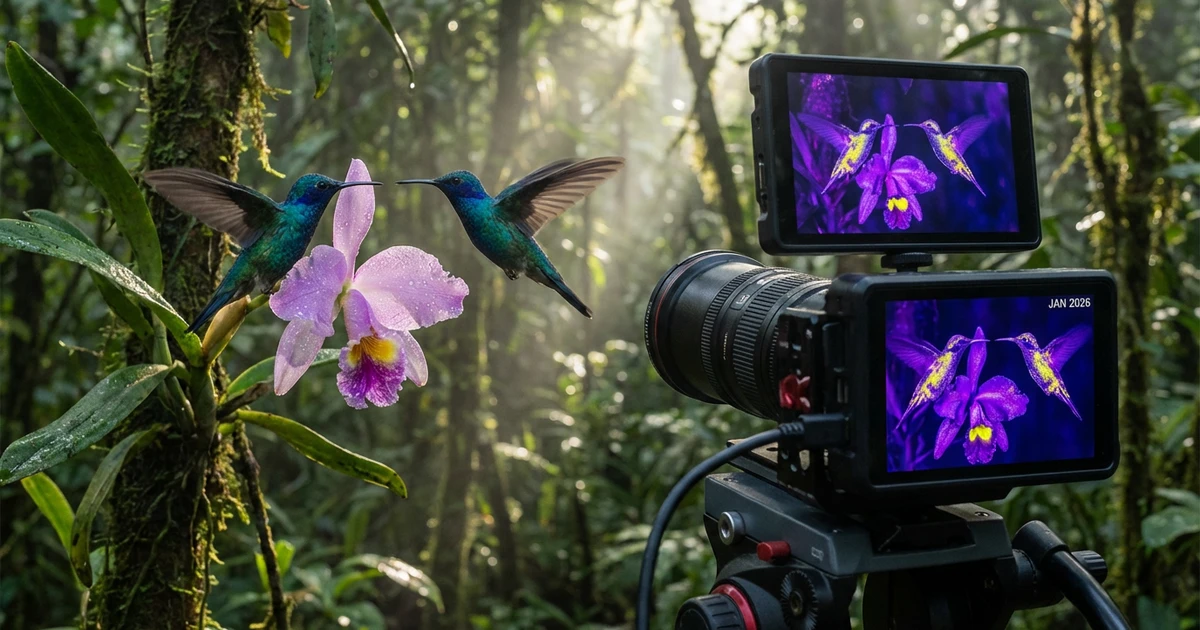
Flirting in the animal kingdom just got a lot more intriguing. Recent scientific discoveries have unveiled that many species engage in complex courtship by displaying patterns and colors invisible to the human eye—a phenomenon that is reshaping our understanding of how animals attract potential mates.
The Hidden World of Animal Attraction
While humans perceive only a narrow band of the light spectrum, many animal species see the world in a vastly different way. Birds, fish, and insects are among those capable of detecting ultraviolet (UV) or infrared patterns on their peers—signals that have evolved as subtle yet powerful displays during mating rituals. These patterns, invisible to humans, serve as a form of communication, allowing individuals to showcase their health, genetic fitness, or readiness to breed without alerting predators.
Dazzling Displays Beyond Human Sight
The discovery of these hidden signals was made possible through advances in imaging technology. Specialized cameras and filters now allow scientists to capture how animals appear to each other, revealing a tapestry of stripes, spots, and flashes previously unknown to researchers. For instance:
- Male birds often display vibrant UV-reflective feathers, which look dull to humans but glow to potential mates.
- Butterflies and moths sport intricate wing patterns visible only under UV light, playing a key role in mate selection and species recognition.
- Fish use iridescent patterns that shimmer in the right lighting conditions, functioning as covert flirting signals in the underwater world.
Evolutionary Advantages and Survival
By keeping these signals hidden from predators, animals gain a significant evolutionary advantage. While a bright red breast or bold wing pattern could attract unwanted attention, patterns visible only to mates reduce the risk of predation while still enabling effective courtship. This dual function of invisibility and attraction highlights the sophistication of animal communication and sexual selection.
Implications for Science and Conservation
The revelation that so much animal interaction occurs outside the human visual spectrum is prompting scientists to revisit longstanding theories of evolution and behavior. Understanding these hidden signals can improve conservation efforts, as it becomes clear that human-driven environmental changes—such as artificial lighting or pollution—might inadvertently disrupt these delicate communication systems.
As technology continues to advance, researchers anticipate uncovering even more secrets about how animals use light and color to communicate, compete, and survive. The discovery of these invisible flirting patterns not only changes how we view the animal kingdom but also deepens our appreciation for the complexity and beauty of life on Earth.
For further information on the science of animal courtship and visual signals, explore resources from The New York Times and scientific journals focused on animal behavior and evolutionary biology.