Business
Lower jet fuel costs may not lead to cheaper airfares, experts say
U.S. airlines spent $6.66 billion on jet fuel in May 2026, an 83.9% jump from $3.62 billion a year earlier, even though the per-gallon cost dipped 0.5% from April to $4.09. The Bureau of Transportation Statistics said carriers used 1.627 billion gallons that month, down 0.6% from May 2025, which points to price pressure rather than a surge in flying as the main driver of the higher fuel bill.
That is why lower fuel costs have not turned into cheaper tickets. Airlines have kept demand strong enough to raise fares and trim capacity instead of cutting prices quickly, while hedging contracts can delay the effect of lower fuel on bottom lines. BTS said the average U.S. domestic air fare rose to $428 in the first quarter of 2026, up 4.7% from $409 in the fourth quarter of 2025. The agency also said fare data since July 1, 2025, have been based on a new 40% ticket-sampling system under OD40, replacing the old 10% sample.
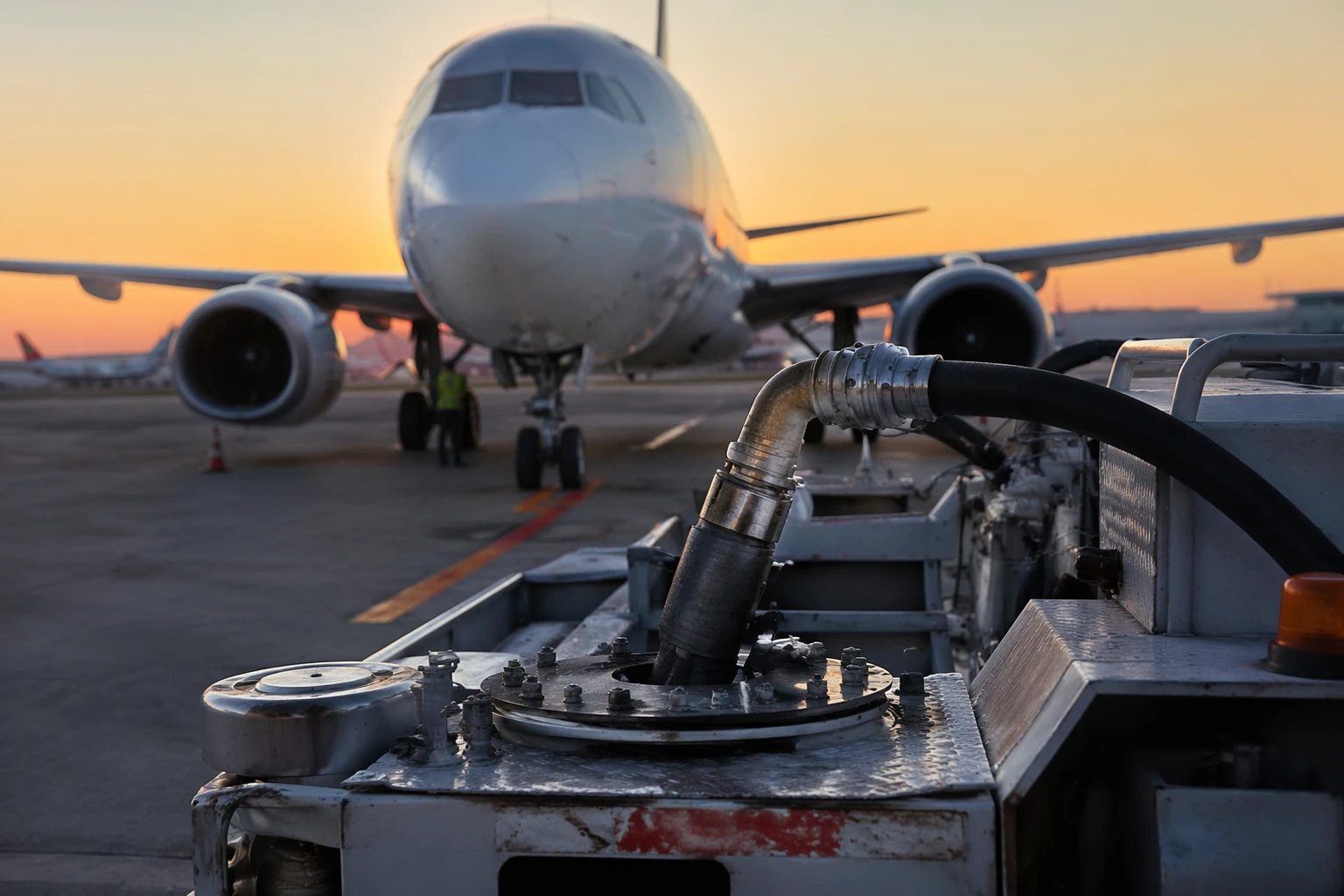
Pricing remained firm even in the cabin where travelers are most sensitive to cost. In April, domestic economy tickets averaged $570, up 21% from a year earlier, while premium-seat prices averaged $1,444, up 17%, as travelers kept booking and airlines expected customers to absorb higher fuel costs by late 2026 or early 2027. That willingness to pay matters because airlines sell a finite number of seats on each route, and when demand stays strong, carriers can protect revenue by adjusting capacity and fares before they pass savings through to customers.
The broader inflation backdrop is still hot for travelers. The U.S. Travel Association said travel prices rose 9.8% year over year in May 2026, airline fares were up 26.7%, and fares were still 17.3% above May 2019 levels. The Bureau of Labor Statistics says airline fares have been part of the Consumer Price Index since December 1963, and the category carried a relative importance of 0.881 in December 2025, making it a small but visible piece of inflation that consumers notice quickly when they book a trip.
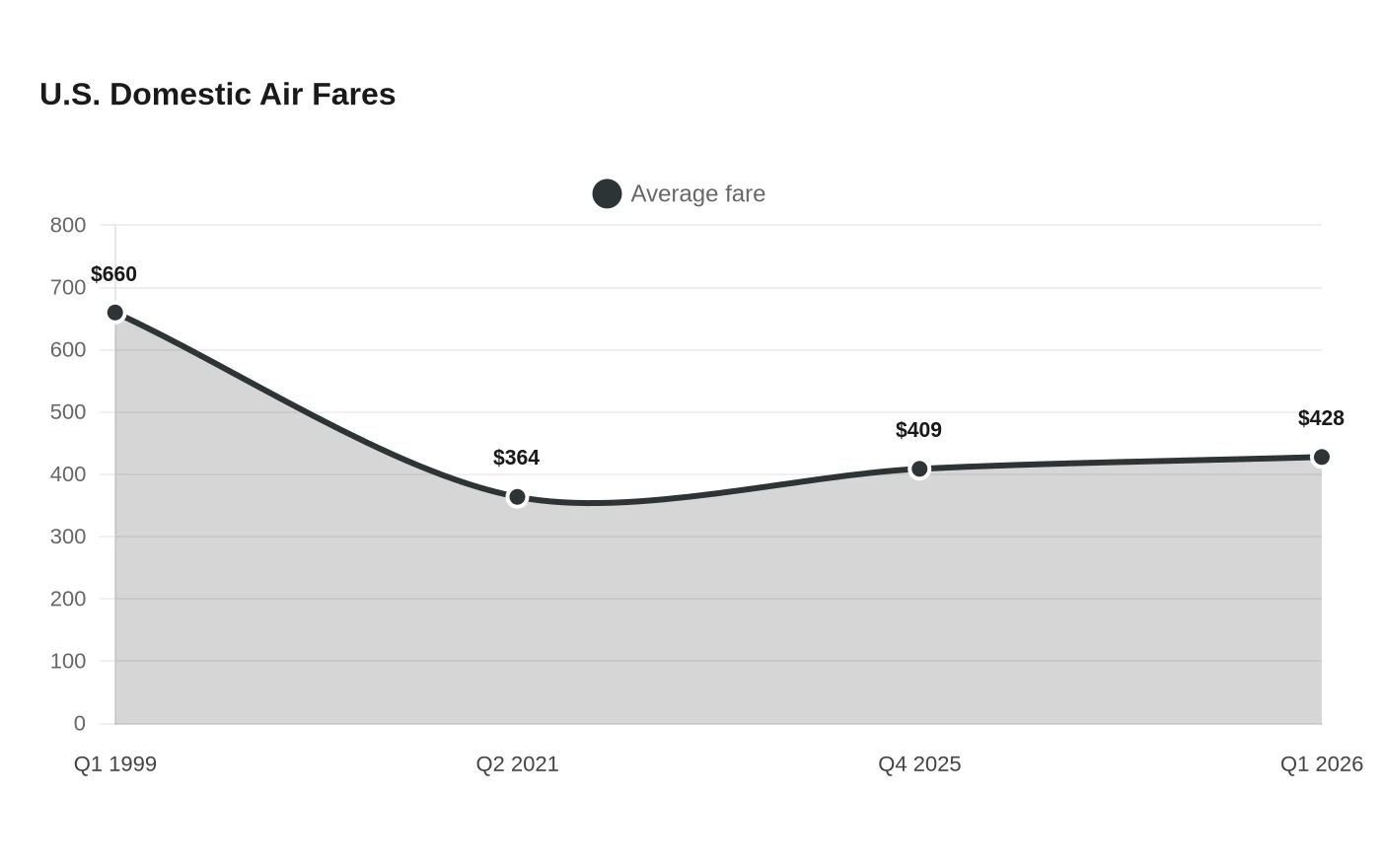
Even with the recent run-up, fares are not yet at their inflation-adjusted extremes. BTS said the first-quarter 2026 average fare of $428 was still well below the record first-quarter level of $660 in 1999, but above the recent low of $364 in the second quarter of 2021. That gap shows how quickly airline pricing can move up and how slowly it tends to come back down, even when fuel prices ease.
Sources
- [1]cbsnews.com
- [2]bts.gov
- [3]ustravel.org
- [4]cnbc.com
- [5]bls.gov