Technology
Lunar helium-3 mining gains traction as demand and prices soar
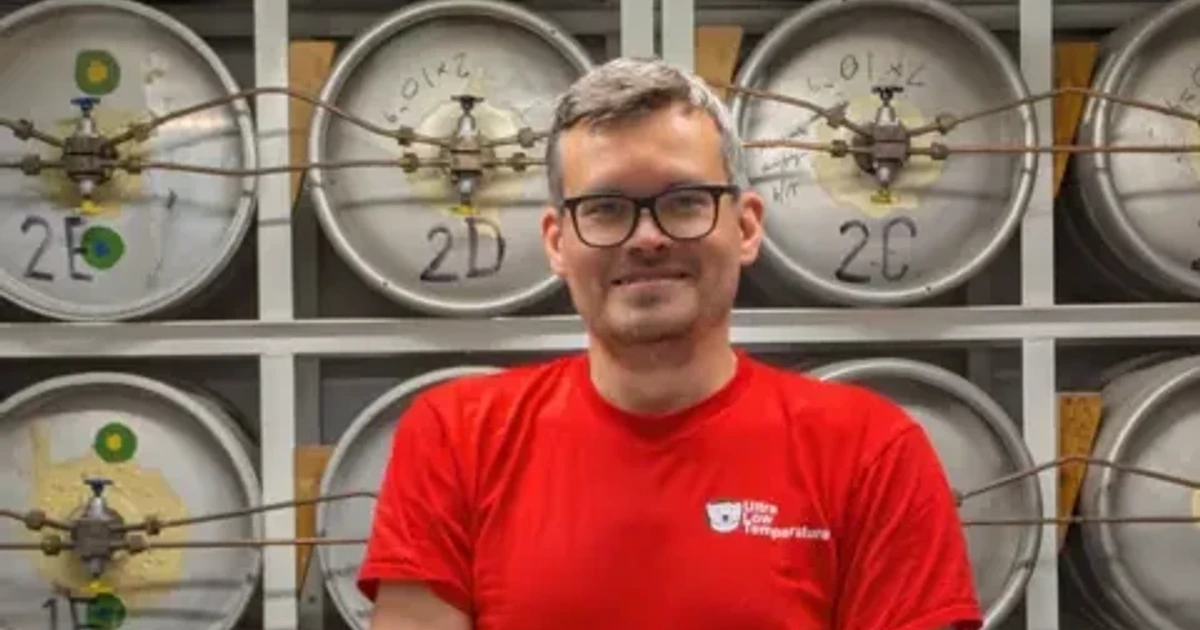
Helium-3 has become a perfect emblem of space-age optimism: rare, strategic, and tied to the dream of clean fusion power. But the harder reality is that the Moon does not automatically become a mineable asset just because the material is valuable on Earth, and the jump from lunar regolith to a commercial supply chain remains enormous.
What helium-3 is, and why it matters
Helium-3 is a stable isotope of helium with two protons and one neutron. The U.S. Department of Energy says it is already useful in neutron-detection equipment for homeland and national security, in cryogenics, quantum information science, in medical diagnostic procedures, and in fusion energy research. That mix of current uses and future promise is what makes it so attractive: it is not just a science curiosity, but a material with real industrial and public-sector demand.
That said, the most talked-about future use remains hypothetical. Some researchers and companies view helium-3 as a potential fuel for fusion reactors, but helium-3 fusion has not become a commercially proven energy industry. That gap between laboratory possibility and bankable power plant is the center of the lunar mining debate.
Why the Moon keeps coming up
NASA has been circling this idea for decades. At a Lunar Helium-3/Fusion Power Workshop in Cleveland, Ohio, on April 25 and 26, 1988, 45 experts from fusion, mining, and lunar communities gathered to ask whether extracting helium-3 from lunar regolith could support terrestrial fusion and justify the cost of missions. The question has outlived several space-policy cycles because the Moon offers one clear advantage: it has been bathed in solar wind for more than four billion years.
NASA later said the lunar regolith may contain at least a million tons of helium-3. That estimate is what keeps the concept alive, but quantity alone is not enough. A resource can be large in theory and still be commercially awkward if it is scattered too thinly to extract efficiently.
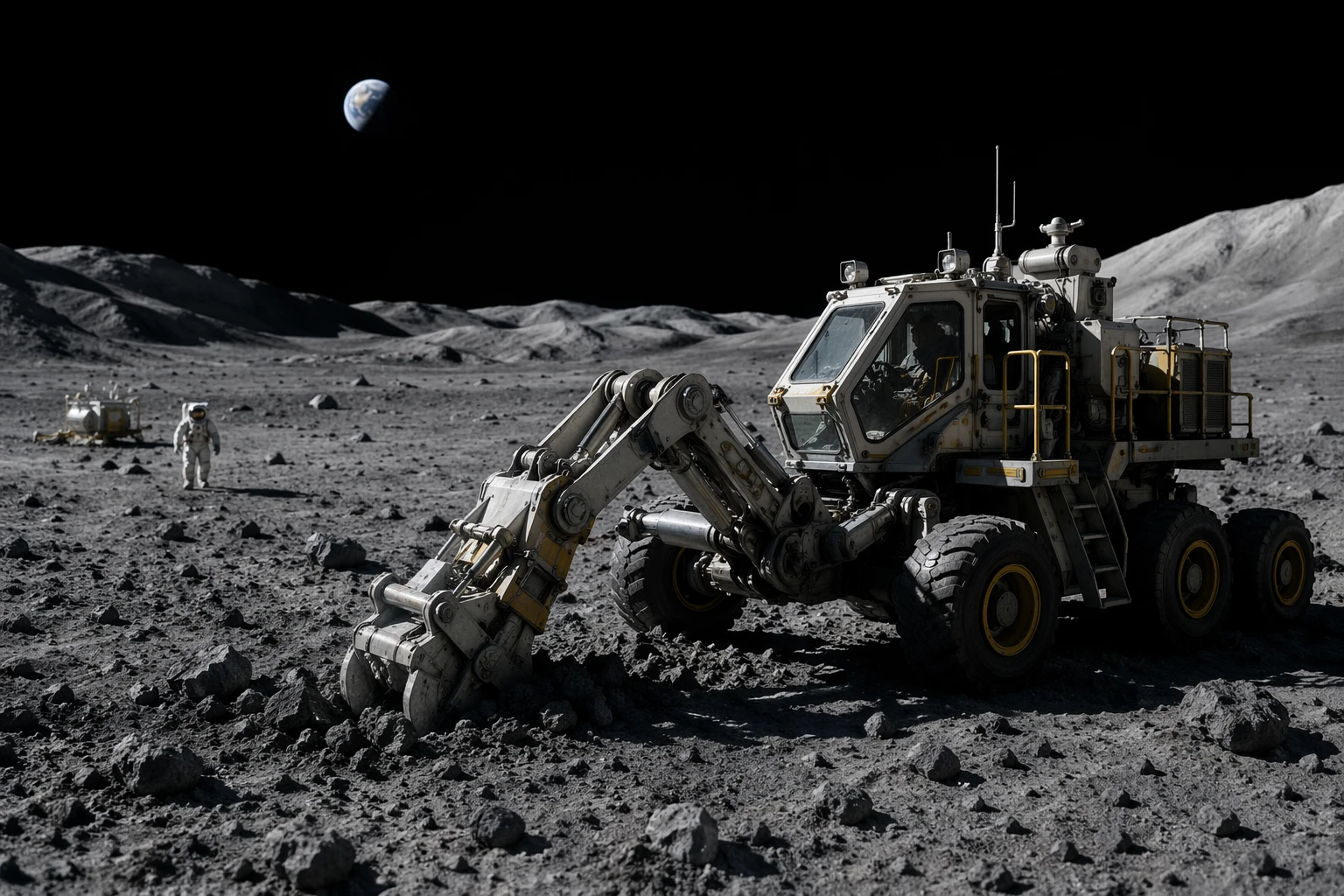
Apollo samples are still the backbone of what is known about lunar helium-3. The material returned by Apollo missions in the 1960s and 1970s, including samples collected by Apollo 17 astronaut and geologist Harrison H. Schmitt, shows that helium-3 abundance correlates with titanium content, especially ilmenite, and with regolith maturity and exposure to solar wind. Schmitt, now cofounder and executive chairman of Interlune, is also the only geologist to have visited the Moon, which gives the company an unusual blend of lunar science and commercial ambition.
The geology is real, but it is uneven
The Moon is not a uniform helium-3 deposit. A U.S. Geological Survey study says abundance depends on soil maturity, solar wind fluence, and titanium content, because ilmenite retains helium better than other lunar minerals. A 2007 scientific study based on Apollo samples found a linear relationship between 3He abundance and solar wind flux, optical maturity, and TiO2 content. In plain terms, some lunar soils are far better targets than others, and that variability makes exploration essential before anyone talks seriously about production.
The scale problem is equally important. One NASA-associated paper says that if regolith contains 20 ppb helium-3, about 66 kg could be captured in a year. Another estimate cited in the literature says the top 3 meters of Mare Tranquillitatis may contain at least 5,000 tonnes of recoverable helium-3 in high-grade areas. Those numbers do not contradict each other. They show the same basic reality: concentration is extremely low, so production only works if enormous volumes of soil are processed with high efficiency.
That is where the economics turn unforgiving. Every lunar mining plan has to solve launch costs, lander mass, power generation, excavation, dust handling, heating, gas separation, storage, and return to Earth, all while operating in a remote environment. When the target is measured in parts per billion, the system has to be cheap, durable, and highly automated just to make the extraction step plausible.
The commercial push is getting more concrete
Interlune is the clearest sign that helium-3 mining is moving from concept to business pitch. The company was founded in 2020 by former Blue Origin executives Rob Meyerson and Gary Lai, along with Harrison H. Schmitt, and it says it aims to be the first company to commercialize natural resources from space, starting with lunar helium-3. NASA awarded Interlune a $6.9 million contract in 2026 to develop a system that can extract gases such as helium-3 and hydrogen from lunar soil and rocks.
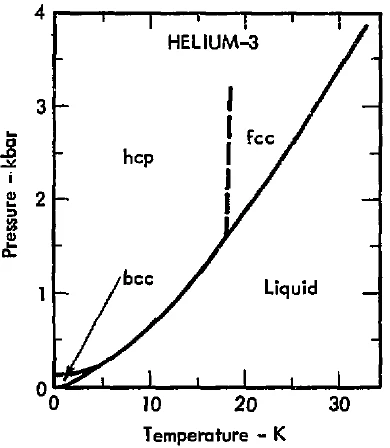
The company’s plan is to use multispectral imaging on Astrolab’s FLIP rover to estimate helium-3 quantities and concentration in regolith, helping refine resource maps from orbital and surface data. That matters because a mining company cannot operate on broad optimism alone. It needs to know where the valuable material is, how deep it sits, and whether a site can support repeated extraction with enough yield to matter.
Interlune says it expects to return industrial quantities of lunar helium-3 to Earth for commercial and government customers in the 2030s. That is an ambitious timeline, but it still leaves the central problem intact: a useful mining system is not the same thing as a profitable market. If the end customer is a future fusion reactor that does not yet exist at scale, the business case remains speculative even if the extraction hardware works.
Earth supply is not the emergency that hype suggests
The present terrestrial supply picture is more stable than the moon-mining narrative implies. The DOE says U.S. helium-3 supply comes from tritium decay at the Savannah River Site in South Carolina, which is the sole U.S. producer of helium-3 gas. DOE and the National Isotope Development Center say demand once reached as high as 70,000 liters per year in 2008, but mitigation efforts reduced projected federal demand to less than 6,000 liters per year.
DOE also says inventory management should meet federal demand for decades to come. That is a crucial reality check: the federal market is managed, not in visible crisis. So the strongest near-term case for lunar helium-3 is not that Earth has already run out, but that governments and companies want strategic optionality for a future market that may or may not materialize.
The hard truth is that lunar helium-3 is scientifically plausible, technically challenging, and economically unproven. The Moon may well hold a strategic resource, but until fusion buyers exist at commercial scale and extraction proves it can beat the cost of bringing hardware across 384,000 kilometers of space, the most credible use of this idea is not mass mining. It is mapping, testing, and a very cautious rejection of fantasy dressed up as inevitability.
Sources
- [1]bbc.com
- [2]isotopes.gov
- [3]energy.gov
- [4]osti.gov
- [5]nasa.gov
- [6]interlune.space
- [7]ntrs.nasa.gov
- [8]usgs.gov
- [9]geekwire.com