World
Lviv church holds daily funerals as Ukraine's war toll mounts
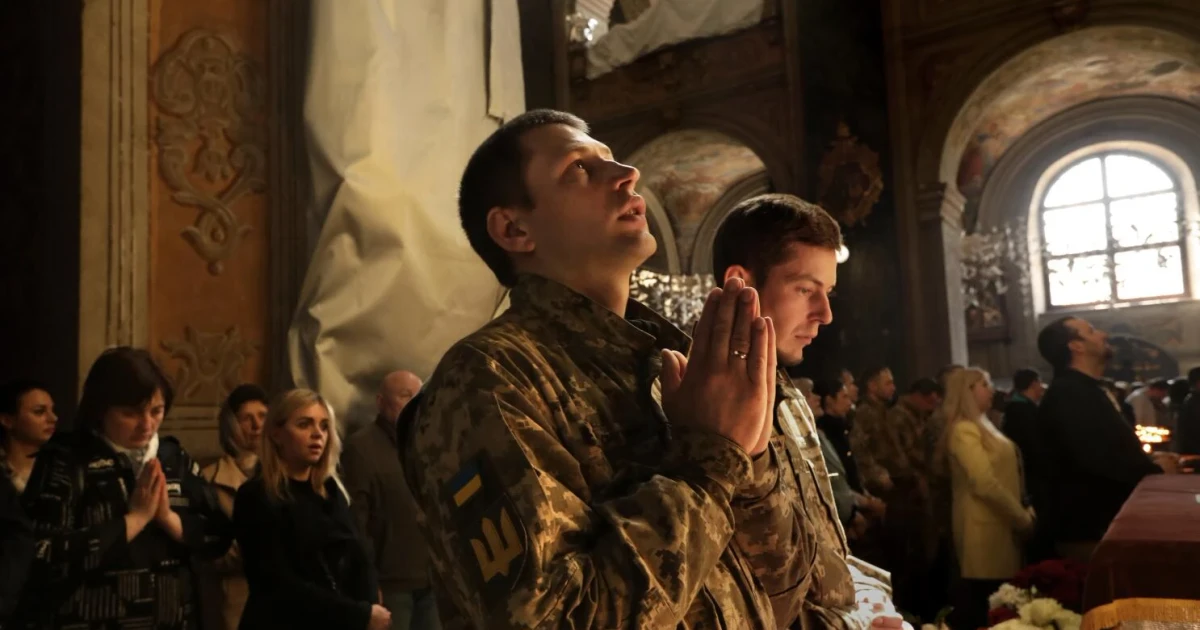
Nearly every day, around 11 a.m., the doors of Saints Peter and Paul Garrison Church opened in central Lviv for another military funeral. Soldiers killed in Russia’s full-scale invasion were carried inside for rites that had become so frequent they now marked the hour as much as the grief.
The church has been run since 2010 by military chaplains of the Ukrainian Greek Catholic Church and serves as the main church of Ukraine’s military chaplaincy. Since February 2022, it has regularly hosted funerals for fallen soldiers, with services led by priests including Taras Mykhalchuk and Father Nestor Kyzyk. What had once been an exception had become a routine of war, repeated with the steady cadence of bells, prayers and the folding of flags.
Outside, the mourning spilled into the city. Funeral processions with military honors moved through Lviv carrying the bodies of dead soldiers home for burial, making loss visible in the same streets where people bought bread, caught trams and passed the old stone facades of the center. In the city’s main square, the longtime trumpeter Yaroslav Simkiv has played the mournful tune “Il Silenzio” for those processions, saying the young dead would have been the future of Ukraine.
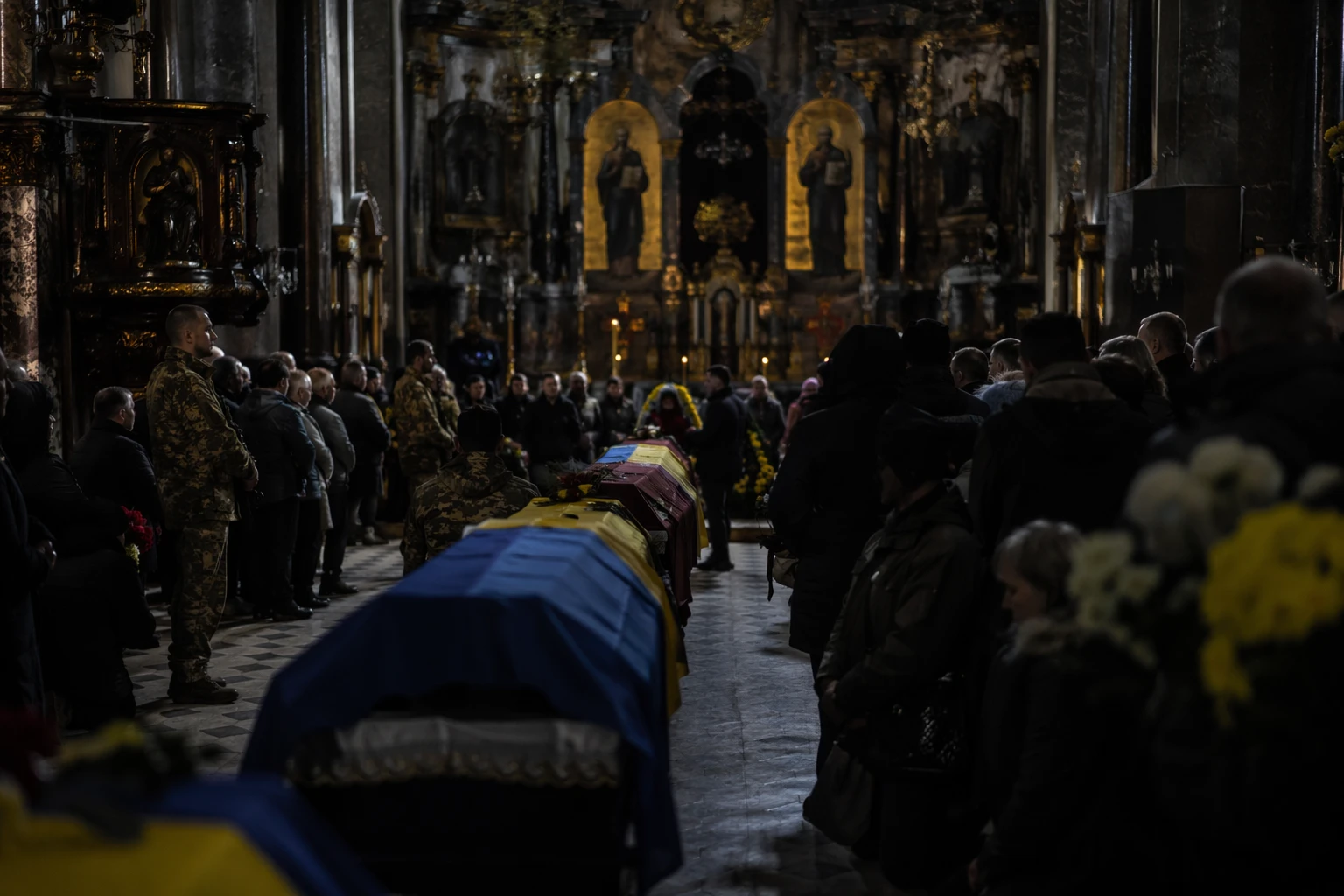
The scale of loss is etched in Lychakiv Cemetery, where Lviv began burying fallen soldiers in March 2022 in the Field of Honor, also known as the Field of Mars. Lychakiv was officially opened in 1786, and the Field of Mars had been used for military burials since World War I, linking this war’s dead to earlier generations of conflict. By late 2025, city officials said the main military burial area had reached capacity, and Reuters reported that about 1,000 soldiers had already been buried there.
Lviv opened a new burial area within Lychakiv Cemetery in December 2025, a sign that the city’s wartime mourning infrastructure had to keep expanding as the casualties mounted. At Saints Peter and Paul, the daily funerals and the fixed 11 a.m. rhythm showed how quickly sacrifice had been absorbed into public life, even as each casket, each procession and each prayer remained an individual measure of Ukraine’s losses.
Sources
- [1]nytimes.com
- [2]prismnews.com
- [3]timesofisrael.com
- [4]rferl.org
- [5]theworld.org
- [6]frontliner.ua