Technology
Mach raises $300 million as it races to mass-produce weapons

Mach Industries has raised $300 million at a $1.8 billion valuation while running six weapons programs at once, a pace that puts Ethan Thornton’s startup squarely inside the Pentagon’s push for faster weapons production. The new funding, closed in early June, lifted total capital raised to roughly $485 million as the company tries to move from prototypes to factory output on a scale that defense rivals have rarely achieved.
Thornton, who dropped out of MIT at 19, built an early hydrogen-powered prototype with parts from Home Depot and Amazon before abandoning the approach. Hydrogen, he later said, was “just a bad bet in general.” The company’s latest portfolio is far broader: a vertical-takeoff strike aircraft, a long-range anti-ship missile, two stratospheric systems, a cheap surface-to-air interceptor designed to kill drones, and a newly announced Navy logistics-and-strike aircraft that is 40 feet long, weighs roughly 4,000 pounds, carries a 1,000-pound payload, and can fly more than 1,000 miles.
That breadth is also the risk. Thornton says Mach has won around 13 government contracts, most of them in the middle stage of defense procurement, after initial design and onto a government range but before full-rate manufacturing, a tier he says fewer than 10 programs industry-wide have ever reached. Mach is now aiming to push three of its six programs into rate manufacturing this year, with production scaling from hundreds of units a month to hundreds of thousands at a factory the company plans to stand up soon.
Thornton’s urgency traces back to Burnet, Texas, where he grew up in a town of about 6,500 people in a family with deep military ties. Around 2017 or 2018, while still in his early teens, he became “really, really concerned” about China and what he saw as an approaching great-power conflict. That fear hardened into a conviction that unmanned systems would reshape warfare and that the U.S. was moving too slowly.
Mach’s growth has been as fast as its ambitions. The company had about a dozen employees in its first year and roughly 350 by June 2026, with a 115,000-square-foot manufacturing site in Huntington Beach, California, plus design and production sites elsewhere. Thornton said Mach will bring on four new production facilities by the end of 2026.
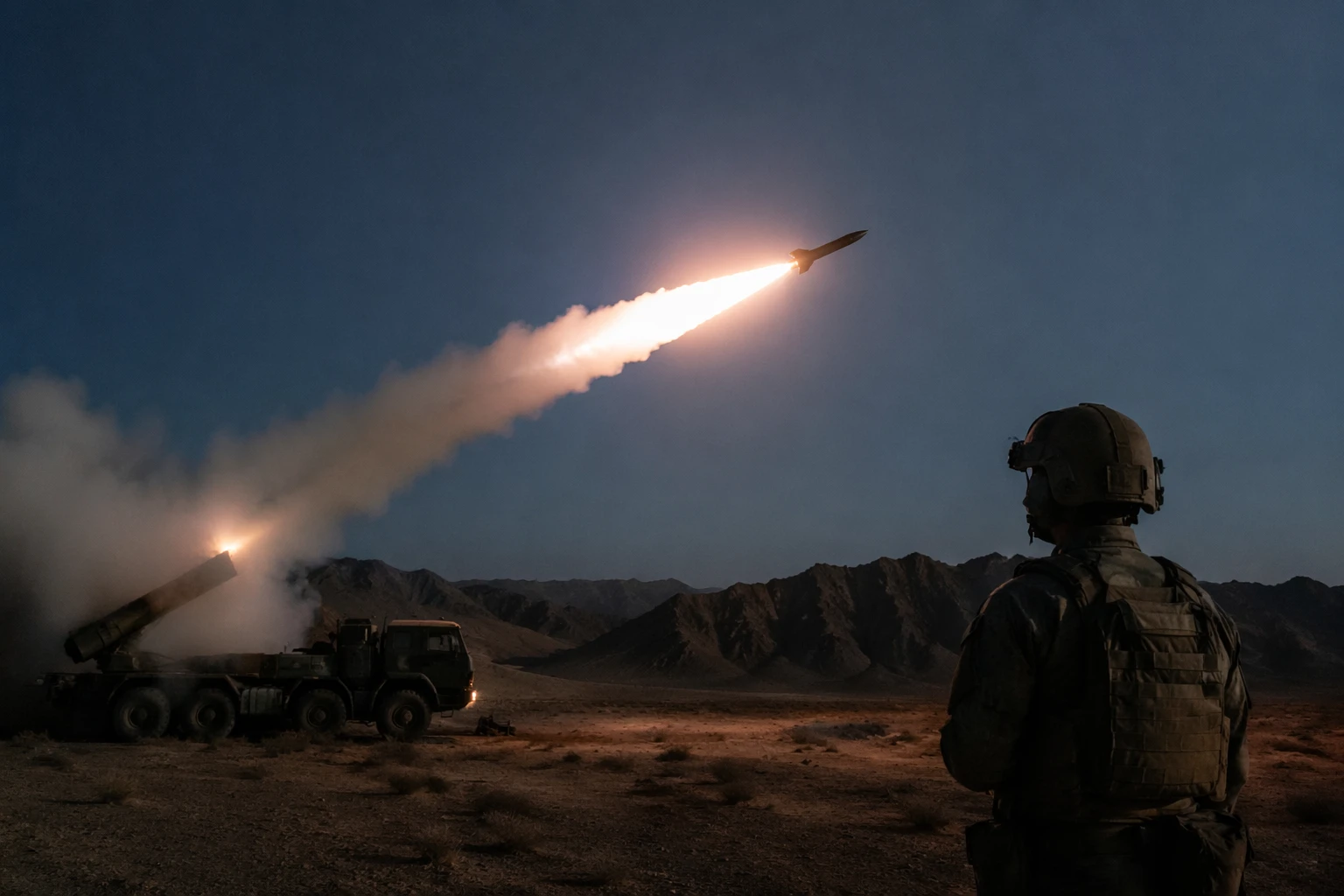
The Pentagon relationship is no longer theoretical. In March 2025, the Army Applications Laboratory tapped Mach to develop Viper, a vertical-takeoff strategic strike cruise missile that the Army said needed a warhead exceeding 22 pounds and a range of 180 miles. Thornton said Mach flew one vertical takeoff test in January 2025 and planned near-weekly testing after that. The company wants to give soldiers something that blends the range of a High Mobility Artillery Rocket System, the speed of a cruise missile and the precision of a Hellfire munition, but the bigger question is whether Mach’s all-at-once strategy becomes a new model for defense production or a warning about how much the national-security pipeline can absorb at once.