Politics
Maine primary winners may take up to a week under ranked-choice voting

Maine’s June 9 primary did not end with winners in sight. The Republican and Democratic governor races, along with the Democratic primary in Maine’s 2nd Congressional District, were headed into ranked-choice tabulation, a process that can stretch results for days because no candidate is declared until someone wins a majority of first-choice votes.
That delay is built into the system. If no candidate receives more than 50% on the first count, ballots are sent to a central tabulation site in Augusta for additional rounds. Candidates at the bottom are eliminated one by one, and their ballots are reassigned to the next-ranked choice still in the race until one contender crosses the majority threshold. In Maine, where absentee ballots may be processed up to seven days before Election Day but only ballots received by 8 p.m. on Election Day are counted, the final tally can take time even before the ranked-choice rounds begin.
The counting is being handled without Shenna Bellows. Bellows, a Democratic candidate for governor, is not participating in the tabulation of any June 9 primary results. Chief Deputy Secretary of State Kate McBrien and Deputy Secretary of State Julie Flynn are overseeing the count instead, a safeguard meant to keep the process separate from one candidate’s campaign.
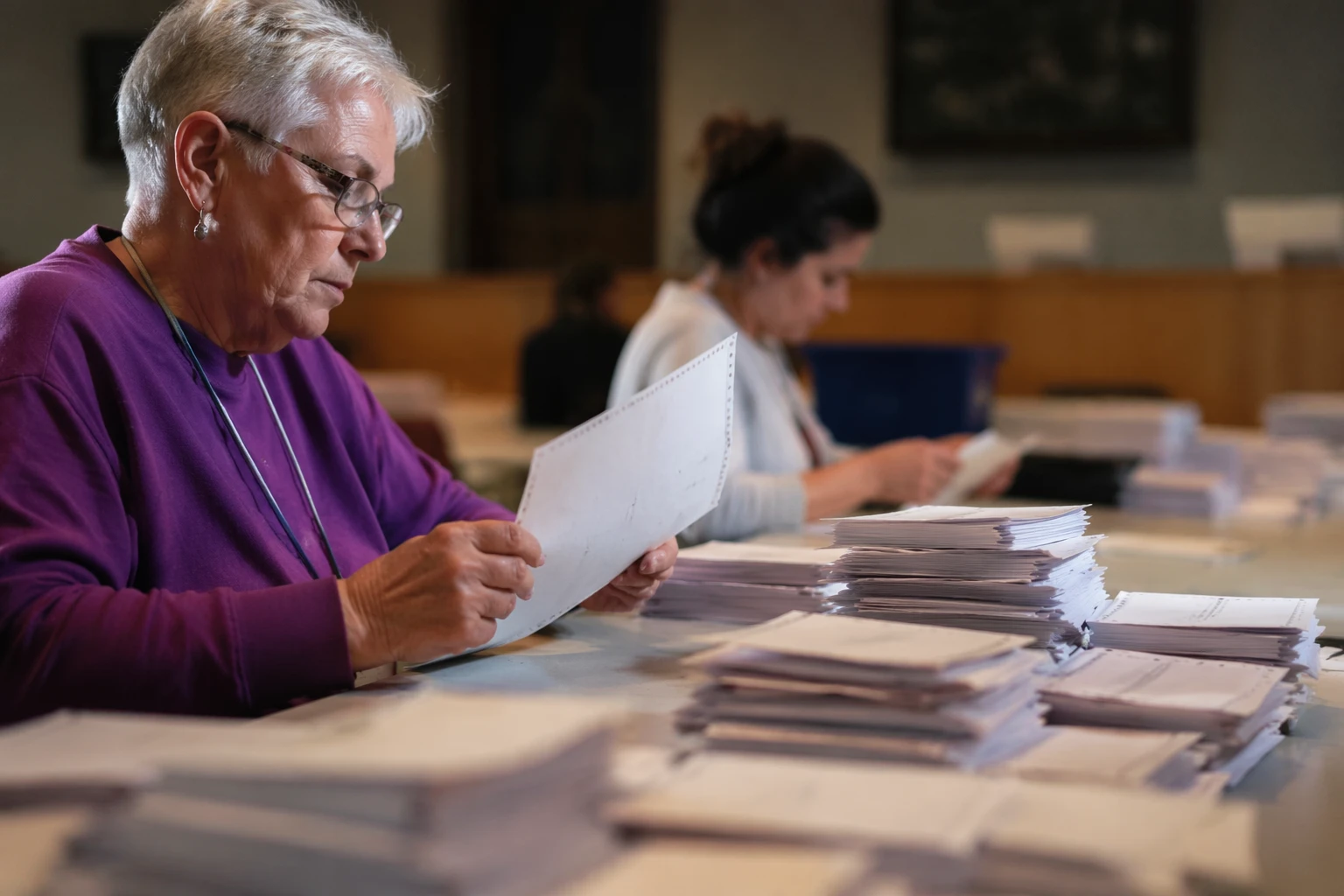
The scope of the election makes the logistics even heavier. Maine’s Division of Elections supervises contests across 500 municipalities and prepares 1,800 separate ballot types. The June 9 primary also includes races for governor, U.S. Senate, U.S. House and the Legislature, adding to the number of ballots that must be checked, sorted and moved through ranked-choice rounds before final winners are certified.
Maine voters approved ranked-choice voting in 2016, and this is the 11th time it has been used in a statewide primary. The system has become politically consequential well beyond primary night. In the 2023 referendum election, the Associated Press first reported results 15 minutes after polls closed, but tabulation continued until 3:21 a.m. with about 91% counted. A 2024 U.S. House race later went to a recount after a razor-thin margin, another reminder that in Maine, close contests are often resolved by process rather than speed.

For Maine, the long count is not a flaw in the system. It is the system, built to produce a winner with majority support rather than a hurried call.
Sources
- [1]nytimes.com
- [2]newscentermaine.com
- [3]www1.maine.gov
- [4]maine.gov
- [5]apnews.com
- [6]mainepublic.org