World
Malaysia’s crocodile hunters face deadly attacks in Sarawak rivers
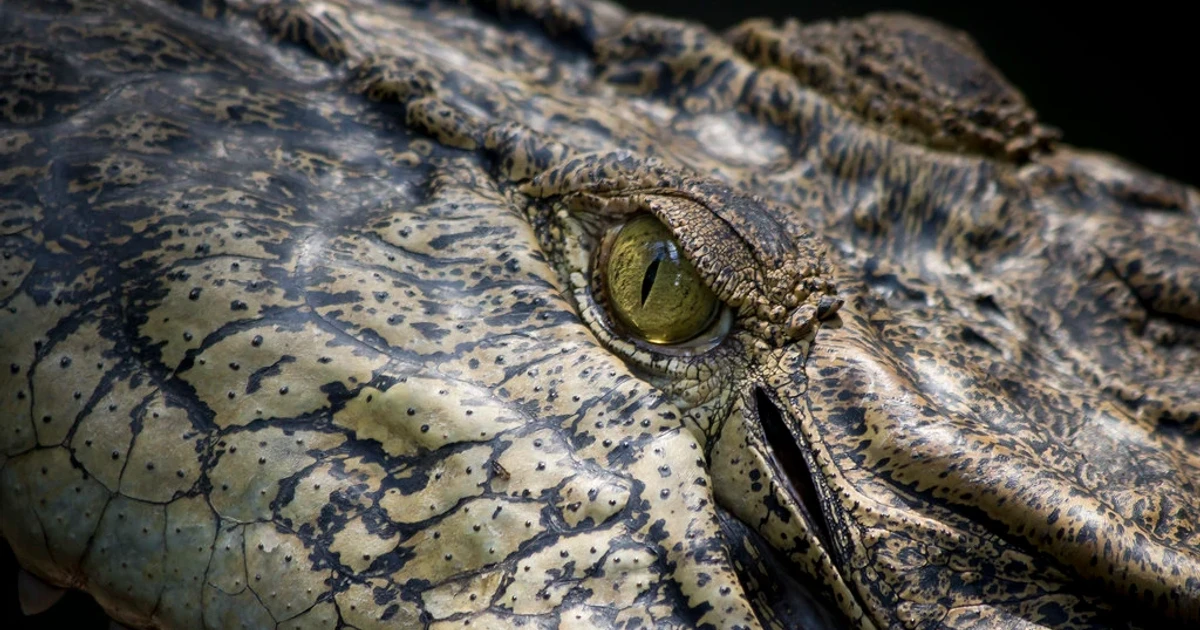
On Sarawak’s rivers, the men called in after crocodile attacks work in boats, in darkness and often in the same stretches of water where residents fish, travel and children play. Reuters’ Aug. 7 photo feature captures that danger at close range: after five fatal attacks in one indigenous community this year, licensed hunters have been sent out to track crocodiles along waterways that are part of daily life.
Hunting after deadly encounters
The shift from avoidance to active hunting is stark. Reuters reported Aug. 3 that villagers in one indigenous community in Sarawak once followed an unspoken rule: leave the crocodile be, and it will leave you alone in return. That taboo has frayed after repeated attacks, and licensed hunters now work with authorities to relocate or eliminate crocodiles when the threat becomes too immediate to ignore.
The scale of the violence helps explain the pressure. Between 2023 and 2025, crocodiles attacked 33 people in Sarawak and killed 22, a toll that turns every river crossing, fishing trip and commute into a public-safety issue. In communities built around mangrove-lined waterways, the predator is no longer just part of the landscape, but a direct hazard that can shape local decisions about where people swim, fish and travel.
How the hunters work
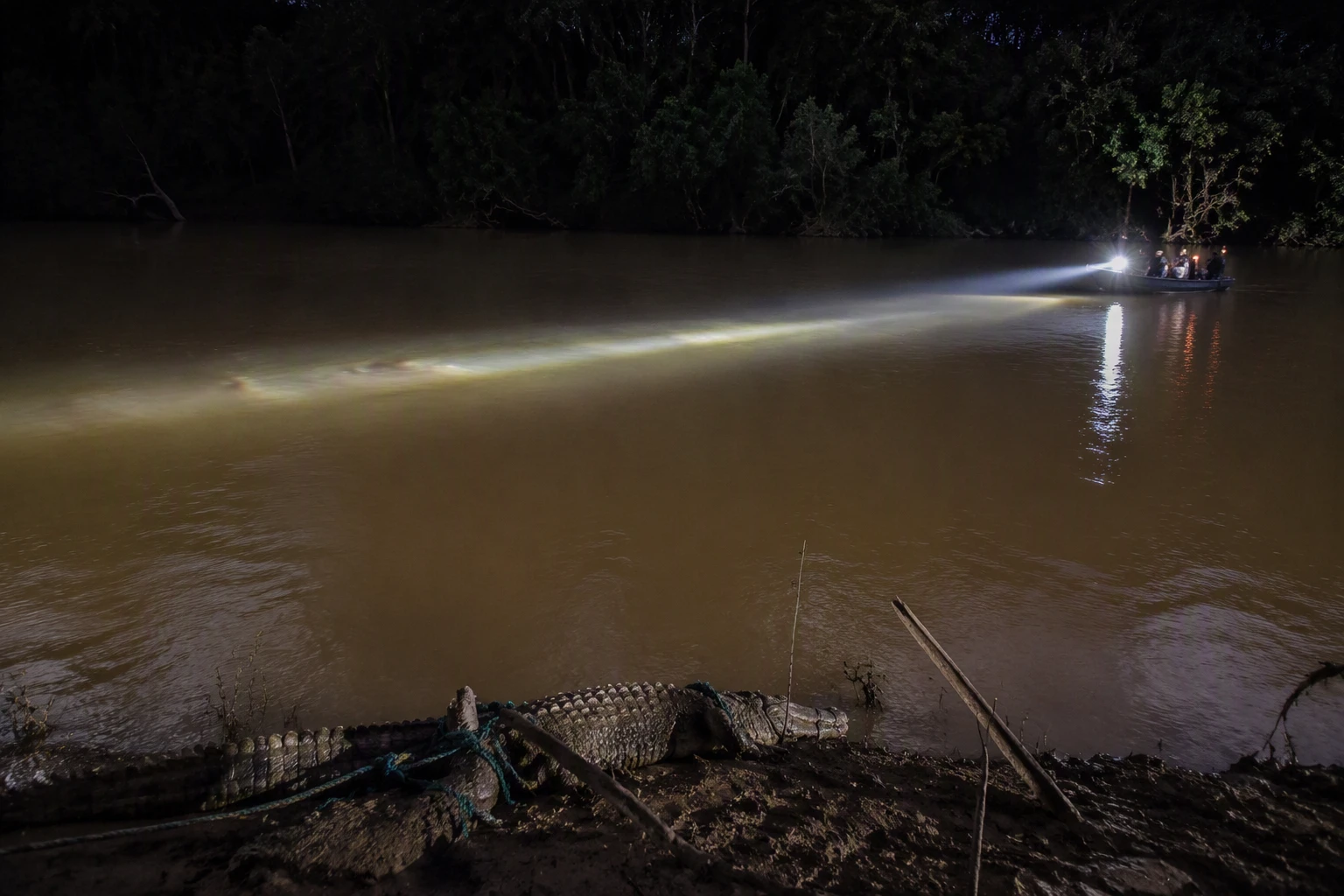
Reuters video coverage shows the hunts as a night operation, with searchlights sweeping across Sarawak’s rivers while licensed hunters track crocodiles in the dark. The work depends less on sophisticated equipment than on boats, hand tools, experience and knowledge of tides and currents, because the animals move with the water and often surface where visibility is worst.
A Reuters photo caption places one of those operations on the Kemena River in Bintulu, Sarawak, with a July 17 image showing a crocodile taken down during a hunting operation and a July 18 image showing a hunter inspecting a crocodile carcass. Those details matter because they show the work as more than a dramatic encounter: the hunt is a process, from locating the animal to securing and handling it afterward. A Reuters company page also notes that hunted crocodiles are kept in a freezer room before being sold to customers, adding a commercial dimension to what is framed publicly as a safety response.
A taboo that weakened
The human side of the conflict is rooted in changing social norms as much as in wildlife behavior. A 2022 academic study on human-crocodile conflict in Sarawak covered a 21-year period from 2000 to 2020 and found crocodiles caused a relatively high number of fatalities in local communities, while also noting that the animals carry important cultural value in riverine life. That mix of respect and fear is part of why the issue is so difficult to resolve cleanly.
In practice, the old balance has been upset by repeated deaths. Once the community taboo against harming crocodiles began to fail, the response became more direct: hunters, permits and removal operations. The result is a sharp shift in how people relate to a predator that was once managed through custom as much as through enforcement.
What the numbers show
Sarawak is not dealing with an isolated episode. A 2023 study on Borneo estimated 135 to 164 crocodile attacks in Sarawak, roughly twice Sabah’s 70 cases, pointing to a regional pattern rather than a single local crisis. On the Sabah side, a Wildlife Department survey from 2017 to 2019 identified 2,886 crocodiles in ten rivers, a reminder that large populations can coexist with dense human settlement along waterways.
The pressure is also visible outside Borneo. A separate search result from the South China Morning Post said more than 300 crocodiles had been captured in Peninsular Malaysia since 2024. Taken together, those figures show a national management problem that runs from Sarawak to Sabah and into Peninsular Malaysia, with different river systems producing the same basic policy challenge: protect people without treating every crocodile as a target.
Why management remains uneven
Sarawak Forestry Corporation introduced a Crocodile Management Plan in 2016, but the record of implementation suggests how hard it is to turn policy into effective control. One result says nearly 100 permits were issued for crocodile culling, yet the outcome was described as negligible. Another says 70 crocodile-hunting permits were issued in Sarawak, but many were inactive, which points to a gap between formal authorization and consistent field operations.
That gap matters because crocodile conflict is driven by more than animal numbers. Habitat loss, changing river use and human encroachment all raise the odds of dangerous encounters, especially where settlement expands into wetlands and mangrove channels. If management relies only on removing individual crocodiles after an attack, the underlying pressure remains in place, and the same rivers keep producing the same emergency.
The Sarawak hunts show a familiar wildlife-management dilemma. Immediate public safety can demand fast removal or culling, while conservation and ecosystem health argue against treating every dangerous encounter as a reason for maximum control. In Malaysia’s river communities, that tension now runs through daily life, and the hunters moving through the dark are only the most visible part of a much larger conflict.
Sources
- [1]reuters.com
- [2]npublications.com
- [3]webagris.upm.edu.my
- [4]researchgate.net
- [5]facebook.com
- [6]dayakdaily.com
- [7]sarawaktribune.com
- [8]scmp.com