Health
Maps Reveal Scope of 2026 Ebola Outbreak in Congo
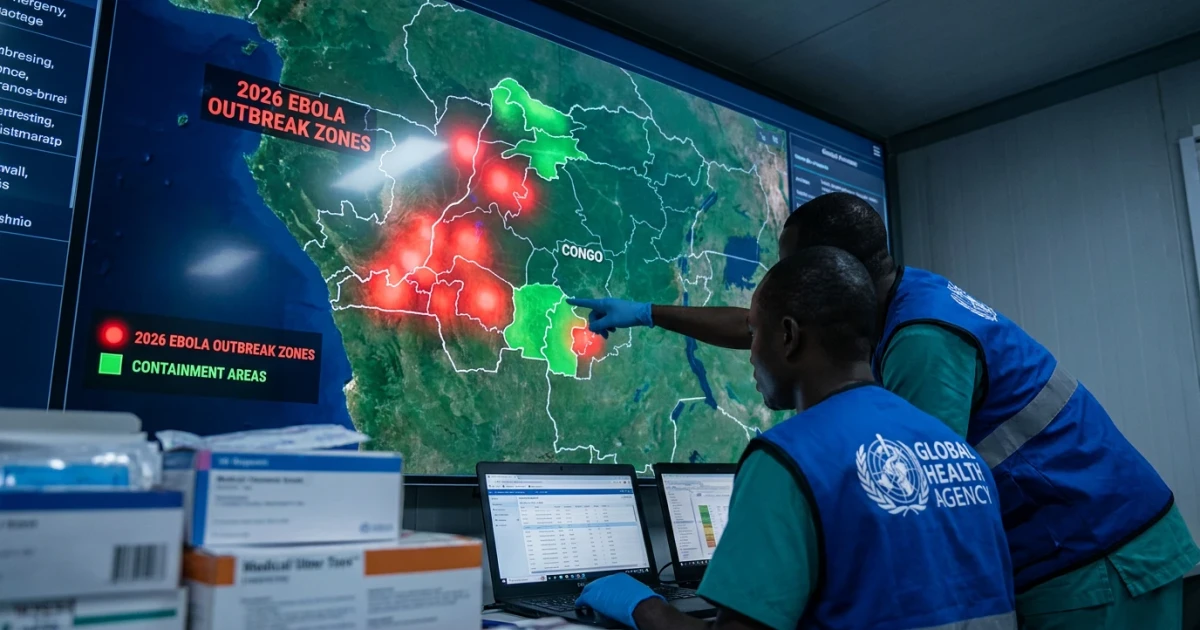
Global health officials are closely monitoring the ongoing 2026 Ebola outbreak in the Democratic Republic of the Congo, as new maps and data highlight the virus’s spread and the urgent need for improved diagnostics and containment measures. The outbreak, which began earlier this year, has drawn international attention due to its rapid proliferation across several provinces and the challenges faced in curbing its transmission.
The Spread of Ebola in 2026
Detailed maps released by the World Health Organization and reported by USA Today chart the gradual but persistent expansion of Ebola cases in Congo. The virus, first detected in remote rural communities, has since appeared in several urban centers, raising concerns about the potential for wider regional transmission. Updated data illustrates a pattern consistent with past outbreaks, where proximity to transportation routes and population density have accelerated the spread.
- According to CDC outbreak records, Ebola outbreaks in Congo have historically varied in size, but the current situation is notable for its geographic reach.
- Interactive tools on Our World in Data allow the public to visualize case counts, mortality rates, and affected regions over time.
Challenges in Diagnostics and Response
Efforts to contain the outbreak have been complicated by a lack of adequate testing capacity in affected regions. As highlighted by USA Today, only a limited number of health facilities possess the necessary diagnostic tools to confirm Ebola cases promptly. This gap hampers the swift isolation of patients and the tracing of contacts, both of which are critical in stopping the chain of transmission.
Global agencies, including the United Nations Office for the Coordination of Humanitarian Affairs, have mobilized resources to support local health authorities. However, logistical constraints, ongoing conflict, and public mistrust remain formidable obstacles. Past experience, outlined in the peer-reviewed literature, underscores the importance of community engagement and effective risk communication in outbreak control.
Impact on Communities and Global Risk
The impact of the outbreak extends beyond immediate public health concerns. Economic activity in affected areas has slowed, schools and markets have closed, and cross-border movement has been restricted. Health officials are working to balance containment efforts with the need to maintain essential services and avoid exacerbating hardship among vulnerable populations.
International partners are also monitoring the risk of Ebola spreading to neighboring countries, given previous instances where cross-border transmission complicated outbreak response. Enhanced surveillance at border crossings and increased laboratory support are being prioritized to prevent a wider regional crisis.
Looking Ahead
As the situation develops, real-time data and mapping will remain essential tools for guiding the outbreak response. The global health community continues to call for greater investment in diagnostic infrastructure and local health systems to prevent future outbreaks from reaching similar proportions. The lessons learned from the 2026 Ebola outbreak in Congo will likely inform preparedness strategies for years to come.