Business
Mark Reuss reflects on GM legacy, electrification and competition
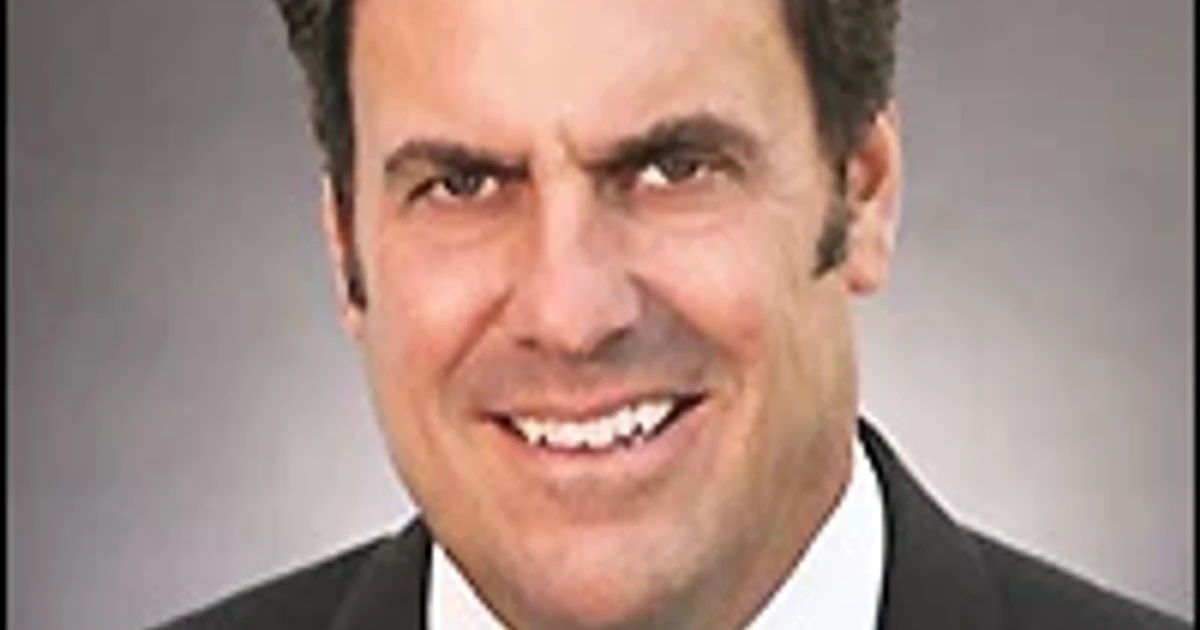
Mark Reuss’s rise at General Motors reads like a family story and a stress test at the same time. He inherited a role once held by his father, Lloyd Reuss, but he also inherited a company being pushed to prove it can compete in an electric market that rewards speed, cost discipline and clear technical bets.
A GM career that began before the C-suite
Reuss did not arrive at the top as an outsider brought in to reset the company. Vanderbilt University’s School of Engineering said he began his GM career as a student intern in 1983, and other profiles describe him as a mechanical engineer born and raised in Detroit. That background matters because GM has long been shaped by engineering culture, product development discipline and a strong internal promotion pipeline.
GM named Reuss president on Jan. 3, 2019. In that promotion, the company kept him in charge of the Global Product Group and Cadillac, added responsibility for the Quality organization, and said he would lead the automaker’s electric and autonomous vehicle efforts. GM also said it was doubling the resources allocated to electric and autonomous vehicle programs over the next two years, making his appointment a direct signal about where the company planned to spend and compete.
The family legacy that shadows the promotion
The Reuss name brings historical weight inside GM. Lloyd Reuss served as GM president in the early 1990s before being ousted, and that history has made Mark Reuss’s ascent more than a routine executive promotion. In 2012, Automotive News described him as walking a “tightrope” at GM 20 years after his father’s firing, a line that captured how the family’s place in the company was never just personal, but institutional.
That same report noted an unusual detail: Reuss had a tuxedo hanging in his car for a long-planned event honoring his father’s 35-year GM career. It is the kind of detail that shows how tightly family history and corporate identity were intertwined in the Reuss household. Lloyd Reuss later died at age 86, after spending 36 years at the company and being described as an early proponent of EVs, which gives Mark Reuss’s current role a second layer of continuity in GM’s own electric ambitions.
Why his portfolio matters in the EV era
The way GM structured Reuss’s responsibilities in 2019 says a lot about the company’s priorities. Keeping him on Cadillac and the Global Product Group while putting quality and EV-autonomous execution under his oversight linked brand management, product timing and technology rollout in a single lane. That is exactly where legacy automakers tend to struggle when the market shifts, because the challenge is not only building vehicles, but doing it with disciplined manufacturing and predictable quality.

Reuss has remained one of GM’s clearest public voices on electrification. In a 2024 driving interview, he discussed GM’s future, his career and the cars that influenced him while driving the Silverado EV RST and Equinox EV. Those two models matter strategically: one extends GM’s electric truck push, and the other sits in the kind of high-volume crossover space where cost, packaging and consumer adoption decide whether an EV platform scales or stalls.
Recent remarks have sharpened the point even further. In a 2026 New York Times preview, Reuss said, “We have not stopped producing any of our electric vehicles,” and added that GM believes in “the sustainability piece” of EVs. That framing places GM’s current bet squarely on continued product flow, not retreat, even as the market has become more selective about which electric models reward their makers.
China, cost pressure and the speed problem
The harder question for GM is whether long-cycle Detroit decision-making can keep up with the competition now setting the pace. In a 2025 InsideEVs podcast description, Reuss said GM was “absolutely” preparing for Chinese competition in America, a blunt acknowledgment that the battleground is no longer theoretical. Chinese EV brands have forced global automakers to think differently about pricing, software integration, manufacturing velocity and how much range or technology consumers will pay for.
A 2022 Duke Alumni Lifelong Learning event placed Reuss in the middle of a much broader pressure set: electrification, supply-chain disruption, emerging competitors, global tensions, volatile fuel prices and shifting consumer mindsets. Those forces are connected. Supply-chain strain affects battery sourcing and cost. Fuel-price swings can change EV demand. Consumer hesitation can slow scale, which then makes it harder to lower unit costs fast enough to match aggressive rivals.
That is why Reuss’s job is not just about defending GM’s heritage. It is about whether a company built on internal advancement, long product cycles and legacy brands can still move with enough speed to match an EV market shaped by faster competitors and thinner margins. His career path, from 1983 intern to president, reflects continuity; his decisions on electric programs and product execution will determine whether continuity is an asset or a liability.
What his leadership reveals about GM’s next phase
Reuss’s story now sits at the intersection of legacy and adaptation. He is a Detroit engineer with deep GM roots, a president who took over as the company doubled EV and autonomous resources, and a senior executive who has had to speak plainly about Chinese competition, supply-chain risk and the consumer shift underway in electric vehicles. The family name brought him into the company’s history, but the EV era will judge him on something simpler: whether GM can turn that history into faster, cheaper and more competitive products before the market moves again.
Sources
- [1]nytimes.com
- [2]investor.gm.com
- [3]engineering.vanderbilt.edu
- [4]gm.com
- [5]autonews.com
- [6]caranddriver.com
- [7]ltu.edu
- [8]thetruthaboutcars.com
- [9]youtube.com
- [10]linkedin.com
- [11]insideevs.com