US News
Markets Hold Steady Amid Trump’s Iran War Push
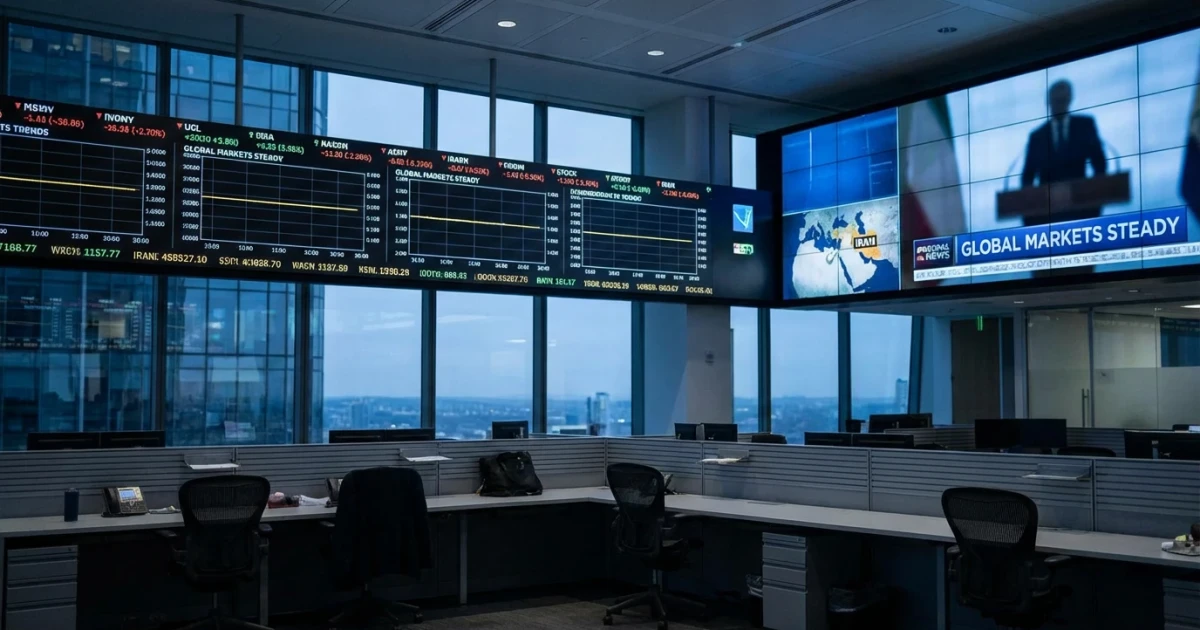
Donald Trump’s recent prime-time push for military action against Iran captured national attention, but financial markets appeared unfazed by the rhetoric. Despite the former president’s high-profile appearance and calls for a tougher stance, investors showed little sign of panic or volatility, underscoring a complex dynamic between political theater and market behavior.
The Prime-Time Appeal and Market Response
In a televised address, Trump advocated for aggressive military action against Iran, framing it as a necessary step for American security and global stability. While such statements have historically rattled markets, especially in the energy and defense sectors, this time the response was muted. The S&P 500 Index maintained its previous trend, with only minor fluctuations during and after Trump’s remarks, according to data from the Federal Reserve.
Investor Sentiment and Geopolitical Fatigue
- Market volatility indicators such as the VIX remained within their expected ranges, showing no significant spike that would indicate investor fear or uncertainty. Historical data from the Cboe Futures Exchange confirms these stable patterns.
- Major energy benchmarks, including Brent crude oil prices, experienced only modest, short-lived movements, with traders citing an already priced-in risk of Middle East tensions.
- Broader economic indicators, such as the Consumer Price Index, showed no immediate impact from Trump’s statements.
Why the Calm? Market and Policy Analysis
Several factors help explain why investors didn’t react more strongly to Trump’s messaging:
- Geopolitical fatigue: After years of Middle East tensions, market participants have learned to distinguish rhetoric from action. According to the Congressional Research Service, markets now wait for concrete developments rather than reacting to political statements alone.
- Policy constraints: The U.S. Congress previously passed House Resolution 752, which restricts unauthorized military action against Iran, limiting the likelihood of immediate escalation.
- Oil production and global supply: The U.S. Department of Energy’s International Energy Statistics notes that diversified oil supply chains have reduced the global economy’s sensitivity to regional shocks, further dampening market reactions.
Broader Implications and Forward Look
Analysts suggest that despite the high-profile nature of Trump’s remarks, the lack of market movement reflects a broader skepticism among investors. The International Monetary Fund’s World Economic Outlook highlights how global markets have become more resilient to geopolitical headlines, focusing instead on actual policy changes and measurable risks.
While political tensions remain high and the debate over U.S.-Iran relations is far from settled, the muted market response signals a new era of investor discernment—one in which headlines alone are no longer sufficient to drive major market moves. As geopolitical events continue to unfold, both policymakers and traders will be watching for substantive developments rather than rhetoric alone.