World
May Day Protests Highlight Rising Energy Costs Amid Iran War
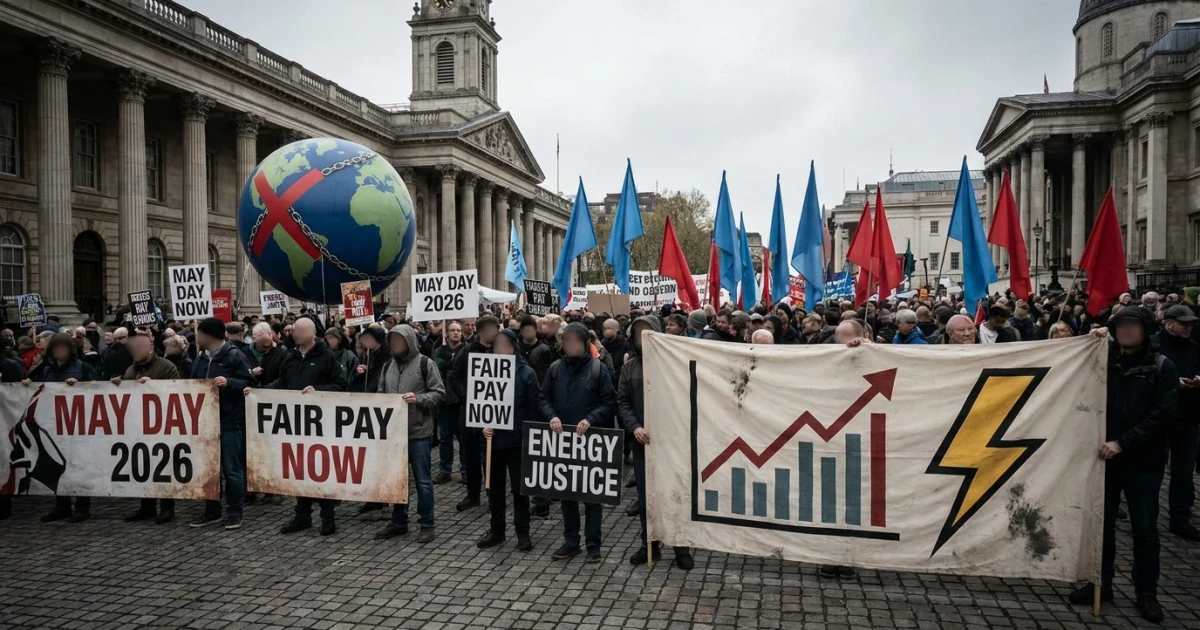
May Day protests swept through cities across Europe and Asia this week, as workers rallied against mounting economic pressures—most notably, surging energy costs driven by the ongoing Iran war. According to reports from AP News and PBS, these annual demonstrations took on added urgency in 2026, reflecting deepening frustrations with inflation, stagnant wages, and geopolitical tensions increasingly shaping the cost of living.
Workers Rally Amid Soaring Energy Prices
The backdrop to this year's May Day events was the continued conflict involving Iran, which has disrupted global energy markets. Both AP News and PBS highlighted how the war has contributed to rising global energy prices, with household electricity and gas costs soaring to record highs in multiple countries. Data from the Eurostat and the IEA confirm that European consumers faced double-digit percentage increases in their utility bills over the past year.
- Electricity prices for households in several EU countries climbed by over 15% since 2025.
- Natural gas prices spiked in regions heavily reliant on imports from the Middle East.
- OECD figures show that energy costs have outpaced wage growth in most advanced economies.
Protesters voiced concerns that the energy crisis is not only straining household budgets but also eroding purchasing power, especially for low- and middle-income workers. This economic anxiety fueled larger-than-usual turnouts for May Day rallies in cities like Paris, Berlin, Istanbul, and Jakarta.
Political Tensions Shape May Day Rallies
Beyond economic grievances, this year’s demonstrations became platforms for broader political statements. PBS reported that many rallies in Europe and Asia focused criticism on the United States and Israel, whom some protesters blamed for escalating the Iran conflict and destabilizing global markets. In several cities, banners and speeches linked rising living costs to Western foreign policy decisions, underscoring how labor protests are increasingly intertwined with international politics.
While the majority of events remained peaceful, both AP News and PBS noted isolated clashes between demonstrators and police, particularly in urban centers where anti-American and anti-Israel sentiment was most visible. Organizers in multiple countries called for urgent diplomatic efforts to end the Iran war, arguing that a return to energy market stability is essential for worker well-being.
Government Responses and Worker Demands
Governments across the affected regions responded with a mix of short-term relief measures and calls for patience. Several European leaders announced temporary subsidies or tax breaks to offset rising utility bills, but unions and advocacy groups argued that these steps fall short of addressing the root causes of inflation. According to the International Labour Organization, the gap between wage growth and consumer prices has widened, fueling worker dissatisfaction.
- Unions are demanding immediate wage increases to match inflation.
- Calls for stronger price controls and energy market reforms have grown louder.
- Many protesters demanded greater government investment in renewable energy to reduce reliance on volatile imports.
Some governments, particularly in the EU, reiterated their commitment to long-term energy diversification and climate goals, but acknowledged that these solutions will take time to ease current hardships.
Global Outlook: Economic and Social Strain
Both AP News and PBS emphasized that the 2026 May Day demonstrations were not isolated events, but part of a broader trend of rising global discontent. According to the ILO’s World Employment and Social Outlook report, persistent high energy prices and geopolitical instability are expected to continue challenging workers worldwide.
- Labor force participation is projected to stagnate or decline in countries hardest hit by inflation.
- Real wages remain under pressure despite government interventions.
- Energy poverty is on the rise, affecting vulnerable populations most severely.
Looking Ahead
As May Day 2026 concludes, the message from streets across Europe and Asia is clear: workers are demanding not only relief from immediate economic pain but also longer-term changes to protect against future shocks. With the Iran war still unresolved and energy markets volatile, the intersection of labor rights, economic justice, and geopolitics is likely to remain a defining issue for governments and workers alike in the months ahead.