Health
Medicare to cover weight loss GLP-1 drugs for seniors at $50 a month
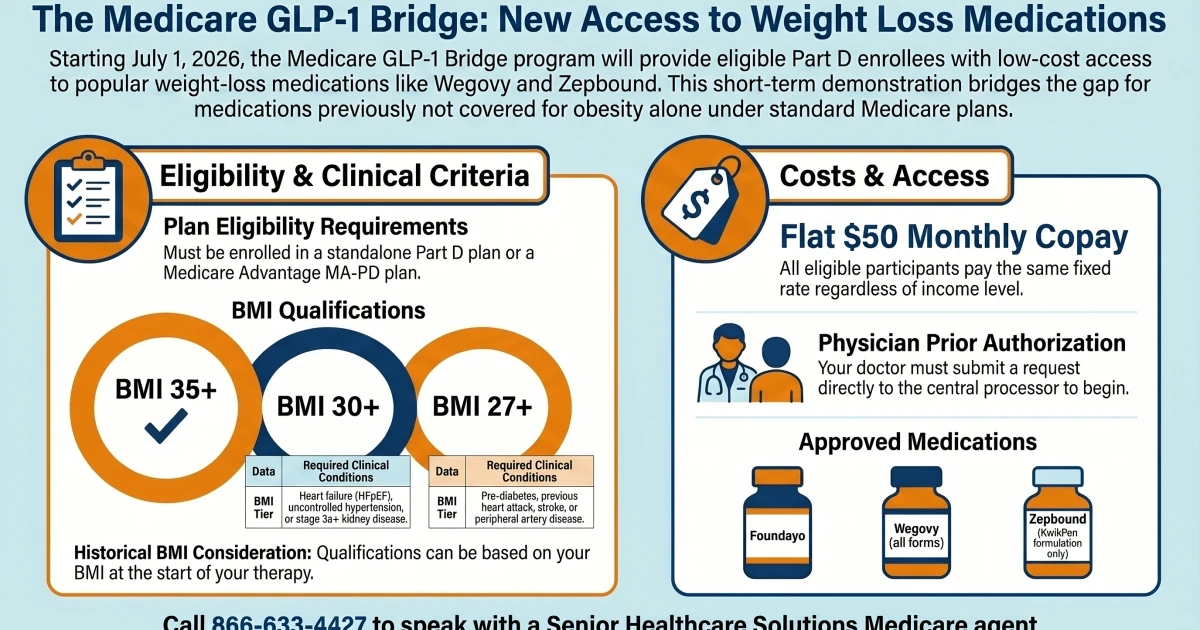
Medicare will begin covering certain GLP-1 drugs for weight loss on July 1, 2026, in a short-term demonstration that runs through December 31, 2027, and uses a $50 monthly copay. The Centers for Medicare & Medicaid Services says the Medicare GLP-1 Bridge will operate outside Medicare Part D’s normal coverage and payment flow, a limited rollout that could widen access while still leaving many patients behind.
Eligibility is narrow. Beneficiaries must have Medicare Part D coverage, be at least 18, and meet CMS weight and clinical rules, including a BMI of 35 or higher, a BMI of 30 or higher with certain heart or kidney conditions, or a BMI of 27 or higher with prediabetes or a prior heart attack, stroke or blocked arteries. CMS says people with type 2 diabetes, moderate-to-severe sleep apnea or fatty liver disease will not qualify, and beneficiaries already receiving a GLP-1 through their regular Medicare drug plan for another indication will also be excluded.
The covered drugs listed by Medicare are Foundayo, Wegovy and Zepbound KwikPen only. The single-dose Zepbound pen and Zepbound vials will not be covered. CMS will use a single central processor in 2026 to handle prior authorization, claims adjudication and pharmacy payment, as the agency works with providers, pharmacies and manufacturers ahead of launch.
The $50 monthly payment will not count toward a drug plan deductible or a yearly out-of-pocket limit, and the medicines will not be eligible for the Medicare Prescription Payment Plan. That means some enrollees who are used to spreading drug costs over time will still have to pay the full monthly copay directly.

Mehmet Oz, the CMS administrator, called the drugs a “major medical advancement” and said too many seniors have been unable to access them because of cost. Eli Lilly and Company said the program will be the first time eligible Medicare Part D patients can broadly receive coverage for a GLP-1 for overweight or obesity, and estimated about 20 million Medicare patients may meet the clinical criteria for obesity medicines.
Even with the new benefit, the policy is likely to reach only a slice of the older adults and disabled beneficiaries who could benefit medically. The demonstration marks a sharp break from Medicare’s long-standing refusal to cover weight-loss drugs, but the real test will be whether $50 a month is low enough to convert eligibility into treatment.
Sources
- [1]cbsnews.com
- [2]cms.gov
- [3]medicare.gov
- [4]investor.lilly.com