Science
Messier 2 Shines in NASA's Latest Observations
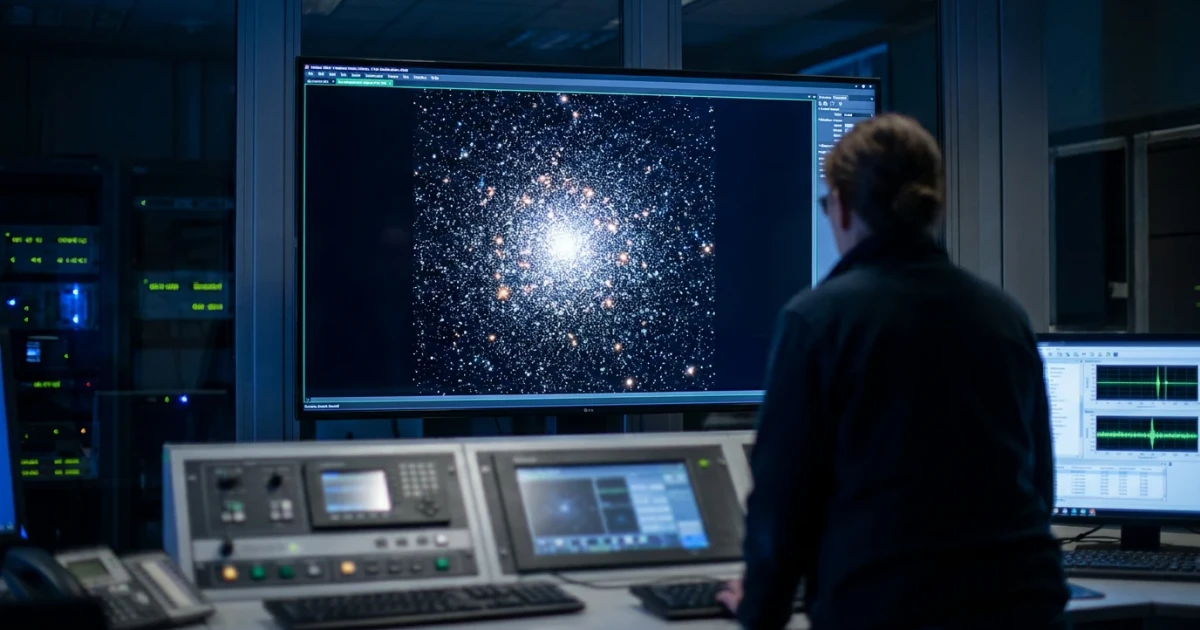
Messier 2, a globular cluster renowned for its dense population of ancient stars, has been spotlighted by NASA in its latest astronomical update released on May 23, 2026. This renewed attention underscores Messier 2's significance as both a subject of ongoing research and a striking celestial object for amateur and professional astronomers.
Messier 2: A Closer Look at a Stellar Giant
Located in the constellation Aquarius, Messier 2—or M2—is one of the largest and brightest globular clusters in the northern sky. According to the NASA NSSDC official database, Messier 2 lies approximately 37,500 light-years from Earth and boasts a diameter of nearly 175 light-years. The cluster contains over 100,000 stars, including many red giants and variable stars, making it a key subject for studying stellar evolution and galactic formation.
- Age: Estimated at nearly 13 billion years, Messier 2 is among the oldest known clusters.
- Star Count: Over 100,000 stars—with a dense core and extended halo.
- Brightness: Visible through binoculars and small telescopes, with an apparent magnitude of 6.5.
- Variable Stars: The AAVSO Variable Star Index catalogs numerous RR Lyrae variables within M2.
NASA's Observational Highlights
The NASA update emphasizes M2's role in advancing the understanding of globular cluster formation and evolution. High-resolution imaging and spectroscopic studies, including those from the Hubble Space Telescope, have revealed a complex structure with a dense core, multiple stellar generations, and evidence of past galactic interactions. NASA notes that Messier 2's composition and metallicity provide clues about the early universe and the processes that shaped our galaxy.
Scientific Importance and Ongoing Research
Researchers continue to explore Messier 2's unique characteristics, including its population of variable stars and the distribution of heavier elements. According to ESA Science analysis, studies of M2’s RR Lyrae stars help calibrate cosmic distance scales, while spectroscopic surveys examine the cluster's chemical composition and stellar dynamics. These efforts contribute to broader understanding of galactic archaeology and the history of the Milky Way.
Messier 2 for Observers and Enthusiasts
Messier 2 remains a popular target for amateur astronomers. Its bright core and extended halo are visible with modest equipment, especially during late summer and autumn in the northern hemisphere. Observing guides recommend searching for M2 near the star Sadalsuud in Aquarius, where its round, condensed appearance stands out against the night sky.
- Best viewing: August through October, after dusk.
- Equipment: Binoculars or small telescopes reveal the cluster’s hazy glow; larger telescopes resolve individual stars.
- Access to data: Observers can explore detailed observation logs and high-resolution imagery from the Hubble Space Telescope.
Looking Ahead
NASA’s renewed focus on Messier 2 highlights the cluster’s continuing relevance in both observational astronomy and astrophysics. As new technologies enable deeper exploration of its structure and history, Messier 2 is poised to reveal more about the formation of stars, clusters, and galaxies. For both researchers and skywatchers, Messier 2 remains a shining testament to the universe's enduring mysteries.