Technology
Meta AI detection tool fails on cropped Muse images, Reuters finds
Meta’s new AI detection preview verified all 40 original Muse Image pictures in a test, but failed to verify 55% of them after the same images were cropped to roughly one-third to one-half of their original size. The result cuts to the core trust problem for newsrooms, schools, election watchdogs and ordinary users trying to judge whether a picture is real: if a synthetic image can be recognized in pristine form but not after ordinary edits, the label is already fragile by the time it reaches social feeds.
Meta introduced Muse Image on July 7, 2026, calling it the first image-generation model from Meta Superintelligence Labs and saying it is now integrated into Meta AI. The company says its preview detector is meant to identify images generated by Muse Image through an invisible watermarking system called Content Seal. Meta also says images created with its generative AI tools may be edited inside Meta AI and Vibes, which makes the cropping problem especially relevant because posts are rarely shared exactly as they were first generated.
The company’s own Help Center says AI labels are used for ads created or significantly edited with Meta’s generative AI tools or third-party AI tools, but minor changes such as resizing or color correction do not always trigger labels. Meta says its disclosure approach will continue to evolve with experts, advertisers, policy stakeholders and industry partners. That leaves the system dependent on a chain of intact signals across editing, compression and reposting, exactly the places where online images are most often altered.
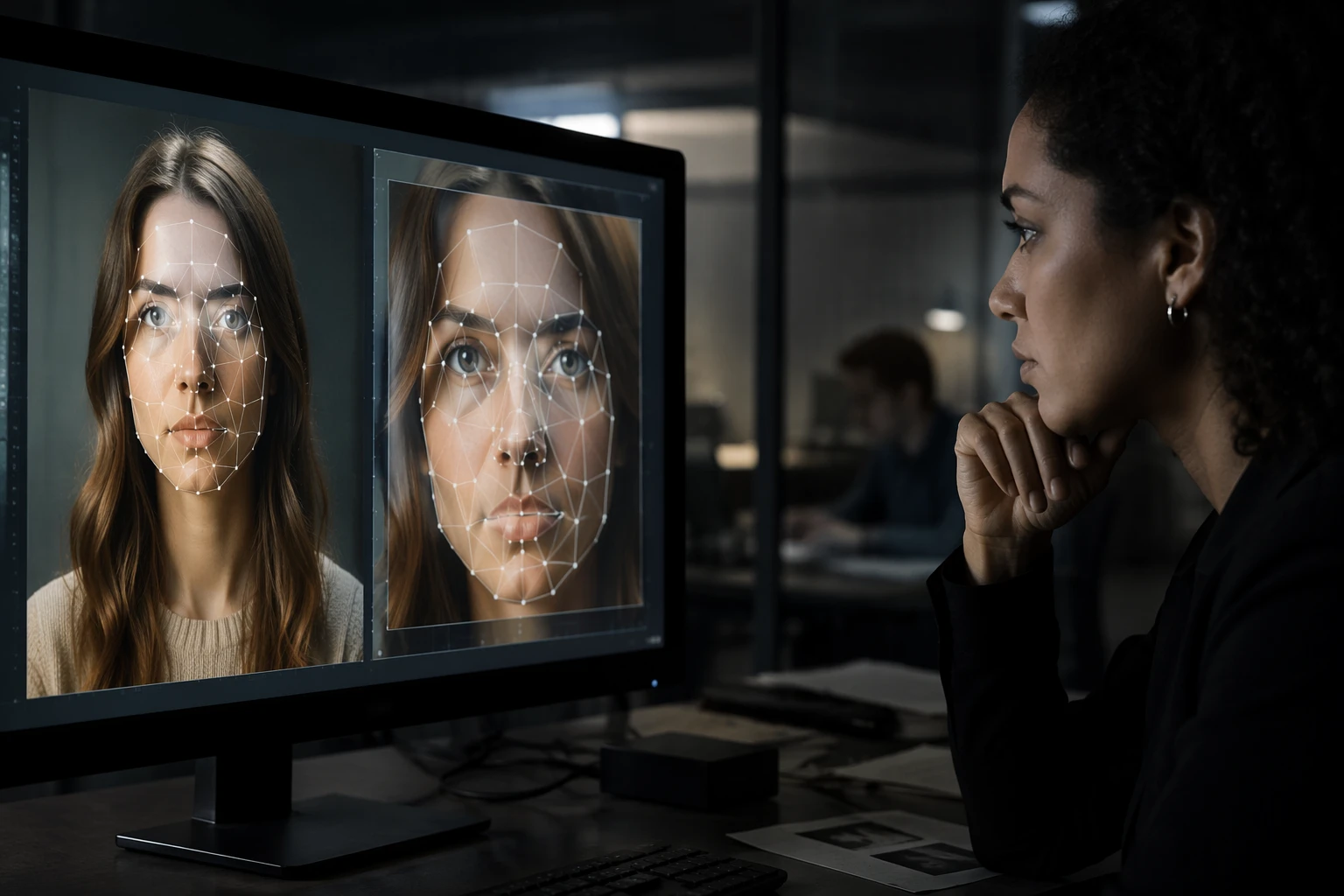
The weakness does not stop with Meta. Google says its SynthID Detector can scan uploaded media and detect whether the content, or specific portions of it, contain a watermark. OpenAI says provenance checks can fail if metadata is stripped, the watermark is degraded, or the image came from an unsupported source. Researchers at the Reuters Institute for the Study of Journalism showed in 2024 that lowering the resolution and editing a synthetic image could make a detector say it was not a deepfake. Together, the examples show that watermarking can help identify AI content, but it remains vulnerable once an image is cropped, compressed, resized or re-encoded.
Sources
- [1]money.usnews.com
- [2]about.fb.com
- [3]meta.com
- [4]blog.google
- [5]openai.com
- [6]reutersinstitute.politics.ox.ac.uk
- [7]tech.yahoo.com