Technology
Meta launches $299 smart glasses to expand AI hardware push
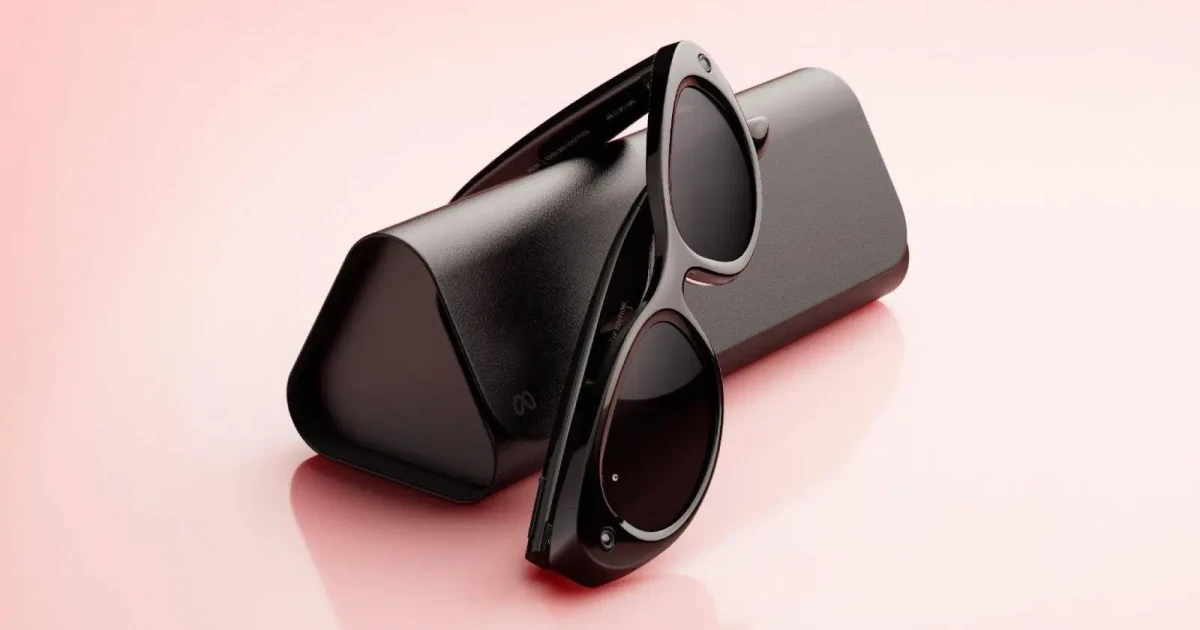
Meta lowered the entry price of its latest smart glasses to $299 and stripped away the Ray-Ban and Oakley logos, betting that a broader lineup of 26 styles can pull AI wearables beyond early adopters. The new Meta Glasses line, built with EssilorLuxottica and on sale now, keeps the product focused on a camera, personal speakers and access to Meta’s AI, but no display.
That mix is the point. Meta is trying to make glasses a normal way to interact with AI before asking consumers to buy more complex hardware. Users can ask the glasses to translate, identify what they are looking at, and capture photos and videos. They can also livestream from the glasses to Facebook or Instagram, turning the device into something closer to a wearable interface than a novelty accessory.
The new line builds on a product category Meta has been shaping for nearly five years. Ray-Ban Stories arrived on Sept. 9, 2021, starting at €329. Meta and EssilorLuxottica followed with second-generation Ray-Ban Meta smart glasses on Sept. 27, 2023, adding livestreaming and Meta AI, while keeping the starting price at $299. Meta then moved upmarket with the $799 Meta Ray-Ban Display, which launched on Sept. 17, 2025 and went on sale Sept. 30, 2025 with the Meta Neural Band wrist controller.
The latest launch shows how Meta is trying to cover both ends of the market. The company has now paired a simpler, lower-friction product with a more advanced display model, while using EssilorLuxottica’s manufacturing and retail reach to keep the category moving. Meta and EssilorLuxottica already dominate the small but fast-growing smart-glasses market, with an estimated share above 80% and millions of units sold since the first launch in 2021.

But the central question remains whether price and style are enough. The new glasses may look more approachable than a headset, yet the category still depends on consumers accepting a device that can see, hear and record from their face. That tension has only sharpened. In April, an ACLU-led letter signed by 75 organizations urged Meta to drop reported facial-recognition plans for its Ray-Ban and Oakley glasses, warning about use at protests, medical clinics and businesses. Northeastern University said on June 22 that smart-glasses privacy rules are lagging and that biometric data collected by such devices could erode expectations of privacy in public.
Meta’s latest move widens the aisle for AI hardware. It does not yet prove that ordinary buyers are ready to wear it.
Sources
- [1]cnbc.com
- [2]about.fb.com
- [3]aclu.org
- [4]news.northeastern.edu
- [5]essilorluxottica.com
- [6]investor.atmeta.com