Science
Meteor Blast Over Massachusetts Shakes Homes
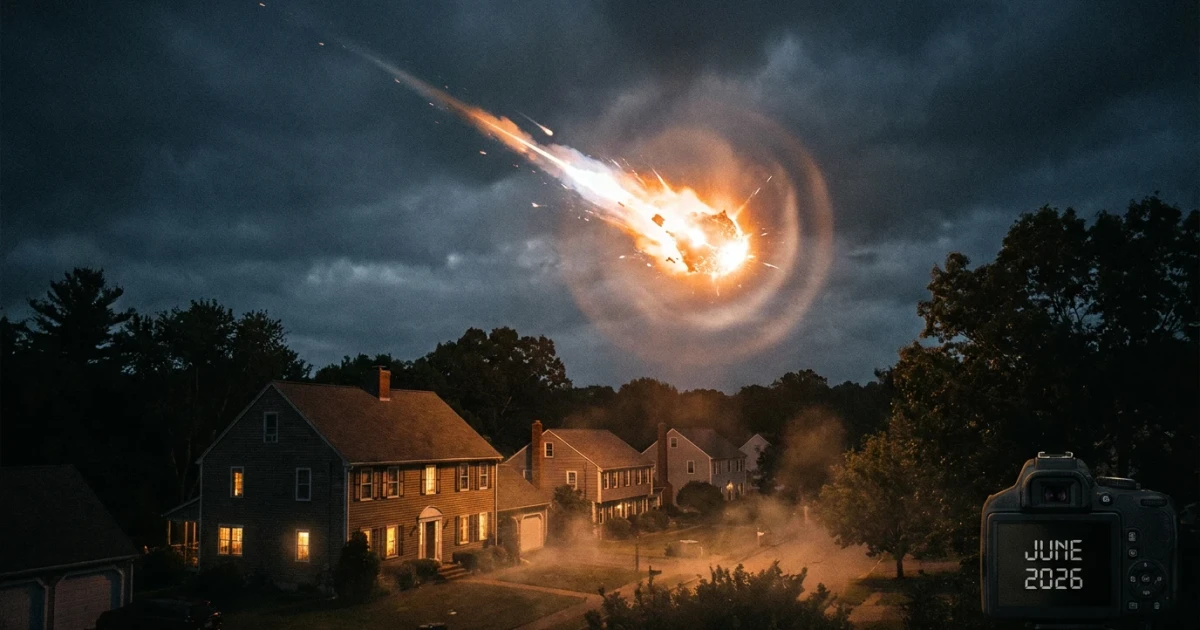
Residents across Massachusetts experienced a startling event on Friday night as a meteor exploded in the atmosphere, rattling homes and lighting up the sky. According to ScienceAlert, the blast was equivalent to 300 tons of TNT, making it one of the most powerful recent meteor airbursts in the region.
Explosion Shakes Homes and Draws Attention
The meteor entered Earth's atmosphere and detonated at a high altitude, causing a shockwave that was felt by communities across Massachusetts. Reports flooded in from residents who described windows shaking and a loud boom that echoed across the area. Local news outlets, including WJAR, provided footage of the meteor streaking across the night sky before the explosion.
- Explosion force: Estimated at 300 tons of TNT (NASA CNEOS Fireball Event Database)
- Location: Over Massachusetts, visible in several counties
- Reports: Residents across the region felt the shockwave and saw the bright flash
Footage and Community Response
Video evidence from local security cameras and dashcams captured the meteor’s fiery descent, highlighting the brief but dramatic moment before the explosion. The American Meteor Society’s fireball event data corroborates multiple eyewitness accounts, noting the trajectory and magnitude of the blast.
While the explosion startled many, there were no reports of injuries or significant property damage. The event sparked renewed interest in planetary defense protocols and discussions about the frequency of such atmospheric events.
Scientific Context: How Common Are Meteor Airbursts?
Meteor explosions of this magnitude are rare but not unprecedented. According to a recent scientific analysis, airbursts comparable to hundreds of tons of TNT occur globally several times a year, but most happen over remote areas or oceans. The NASA Earthdata asteroid impact records show that events with similar energy typically make headlines when they occur near populated regions.
- Energy: 300 tons of TNT, enough to cause a shockwave felt over several miles
- Frequency: Large airbursts are uncommon over urban areas
- Impact: No physical meteorite fragments found, explosion occurred in upper atmosphere
What Causes Such Explosions?
Meteors explode when atmospheric friction causes them to break apart, releasing energy in an airburst. The size, speed, and composition of the meteor determine the force of the explosion. While most meteors burn up harmlessly, those with greater mass or velocity can create significant blasts, as illustrated by this Massachusetts event.
Safety and Planetary Defense
NASA’s planetary defense overview confirms that detection systems monitor near-Earth objects and track potential threats. The Massachusetts airburst serves as a reminder of the importance of continued surveillance and public awareness.
Looking Forward
As scientists analyze data from the explosion, the event has sparked curiosity and concern among residents and researchers alike. With robust monitoring systems and community reporting, authorities are better equipped to understand and respond to future meteor airbursts. For those interested in further details, the NASA CNEOS database and American Meteor Society offer ongoing updates on fireball and meteor events worldwide.
Meteor airbursts are rare but powerful reminders of Earth’s dynamic relationship with space. The Massachusetts event demonstrates both the unpredictability and the fascination of such natural phenomena.