Science
Meteor Explosion Lights Up Skies Over Cleveland
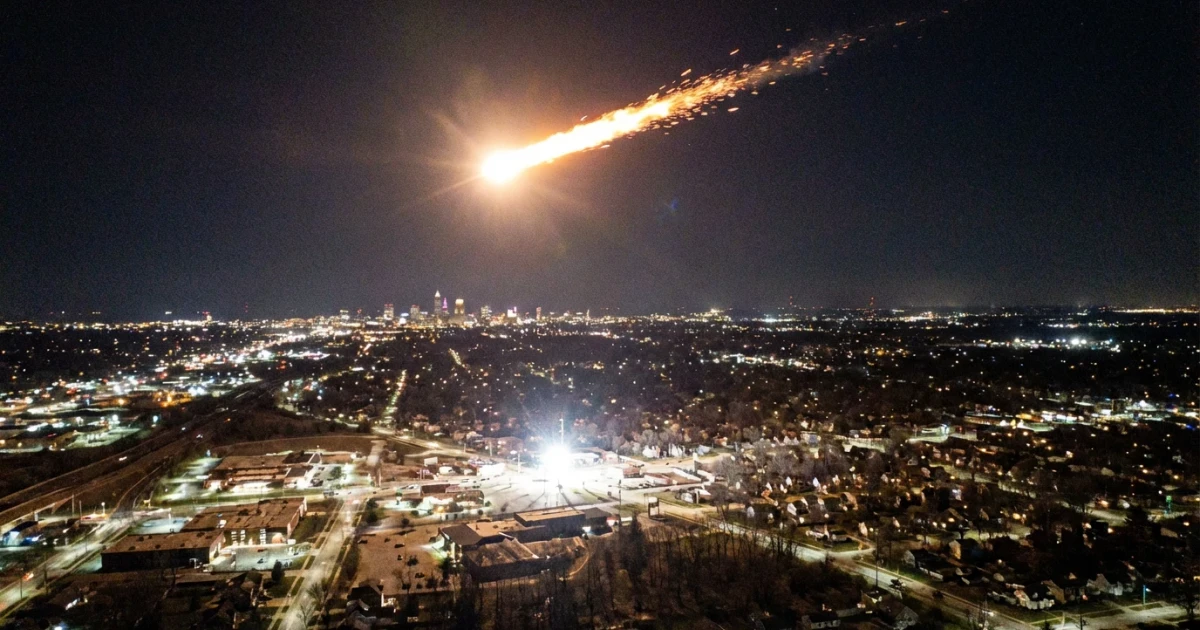
Residents across Northeast Ohio were stunned late Tuesday night when a meteor exploded over Cleveland, producing a dazzling light show, a sonic boom, and scattering fragments above Medina County. The meteor, estimated to weigh around 7 tons, entered Earth’s atmosphere at high speed before disintegrating in a bright fireball visible for miles, according to The Washington Post.
Explosion Captured Across Multiple Reports
The event occurred just after 10:40 p.m., when the night sky lit up with an intense flash followed by a loud boom that startled many residents. Local outlets like Cleveland 19 News reported widespread calls from startled citizens who saw the meteor streaking overhead and heard the subsequent explosion. Witnesses described a brilliant trail followed by a sudden burst of light and a thunderous noise that rattled homes and windows.
- The meteor’s explosion was visible across Cleveland and surrounding communities, with the most intense activity reported near Medina County.
- Emergency services received numerous calls from residents concerned about the loud noise and bright flashes.
- Local meteorological offices confirmed the phenomenon was not weather-related but a bolide event—a particularly bright meteor explosion in the atmosphere.
Scientific Details and Official Records
According to NASA's Center for Near-Earth Object Studies Fireball Event Database, the object that exploded was a 7-ton asteroid, releasing significant energy as it broke apart. Such fireball events, while rare, are monitored by government sensors and cataloged for scientific research. The American Meteor Society also collects eyewitness reports of fireballs, helping scientists reconstruct the meteor’s trajectory and estimate the location of any surviving fragments.
The explosion over Cleveland fits the scientific definition of a bolide, meaning a meteor that explodes in the atmosphere, sometimes with enough force to generate a sonic boom. According to NASA’s official reporting system, these events can release the energy equivalent of several tons of TNT, depending on the meteor’s size, speed, and entry angle.
Public Reaction and Response
The sonic boom generated by the meteor caused concern among residents unfamiliar with such phenomena. Social media quickly filled with photos and videos capturing the meteor’s brief but spectacular appearance, as well as accounts of homes shaking from the explosion. Local authorities reassured the public that no injuries or property damage had been reported and that the event posed no ongoing danger.
Scientists from local universities and national agencies are expected to analyze the event further, seeking to locate any meteorite fragments that may have survived the explosion and landed in rural areas near Medina County. Such fragments can provide valuable information about the composition of near-Earth objects and the dynamics of atmospheric entry.
Understanding Meteor Events in the U.S.
Meteor explosions of this size are rare but not unprecedented in the United States. The USGS tracks meteorite impact hazards and notes that while most space debris burns up harmlessly in the atmosphere, larger objects occasionally produce fireballs or even reach the ground as meteorites.
NASA and partner organizations maintain ongoing efforts to track and analyze near-Earth objects, aiming to improve early warning for potentially hazardous asteroids. Events like the Cleveland meteor explosion help refine these detection and reporting systems, while also engaging the public in planetary science and space awareness.
Looking Ahead
As scientists comb through sensor data and eyewitness accounts, Northeast Ohioans remain abuzz about the unexpected celestial show. The event will likely prompt renewed interest in meteor science and the ongoing work to monitor Earth’s skies for similar objects.