Science
Meteor Lights Up Massachusetts Sky, Rattles Northeast
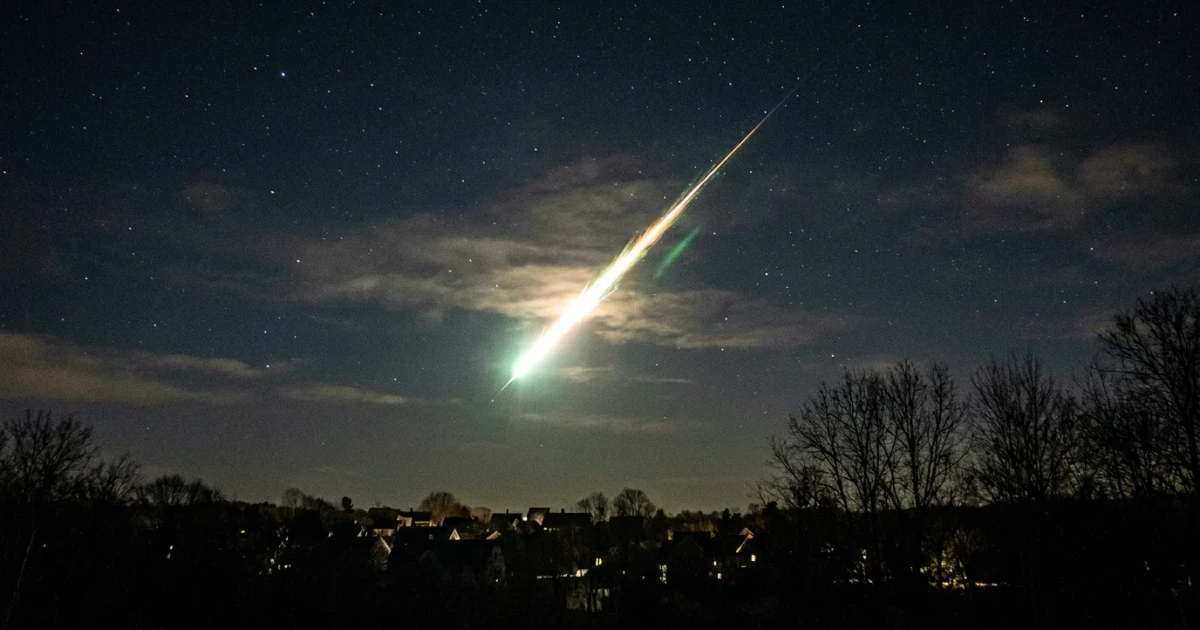
Residents across Massachusetts and the broader Northeast were startled this weekend as a brilliant meteor streaked across the sky, accompanied by loud booms and flashes that were reported as far as Canada. The event, which unfolded late Friday evening, generated a surge of eyewitness accounts, social media posts, and scientific intrigue as experts worked to confirm the meteor's path and potential impact.
Widespread Sightings and Sonic Booms
The Guardian reported that the meteor was clearly visible over Massachusetts, with its fiery trail captured on security cameras and mobile phones from numerous towns and cities. The American Meteor Society and NASA's Center for Near Earth Object Studies both received dozens of reports from witnesses describing a bright, fast-moving object followed by a thunderous boom. These fireball reports were also echoed in communities across New Hampshire, Vermont, Maine, and even parts of Quebec and Ontario.
- Many witnesses described a "daylight-bright" flash that lasted a few seconds before the sky returned to normal.
- Dozens of sonic booms were reported, rattling windows and startling residents, particularly in rural areas.
- Emergency services in several Massachusetts communities received calls about "explosions" and "unknown flashes in the sky."
What Caused the Booms?
The distinctive booms heard after the meteor's passage are known as meteor booms. According to NASA, these occur when a meteor traveling at high speed breaks the sound barrier as it passes through the atmosphere, creating a sonic boom similar to that produced by supersonic aircraft. The National Severe Storms Laboratory explains that the energy released can sometimes be strong enough to shake the ground and even be detected on seismographs, though no significant seismic activity was recorded in Massachusetts during this event.
Scientific Response and Public Curiosity
Meteor experts and astronomers quickly began analyzing the event using satellite data, eyewitness videos, and international fireball reports. While it remains unclear if any fragments of the meteor reached the ground, the incident has sparked renewed interest in how often such events occur and what risks they pose.
- Meteors of this size are relatively rare but not unprecedented. NASA tracks several such events each year globally.
- Most meteors burn up in the atmosphere, but occasionally, small fragments—known as meteorites—can land on Earth. There are no confirmed meteorite recoveries from this event as of Saturday morning.
- Public reporting plays a critical role in helping scientists triangulate the meteor's path and estimate its size and speed.
Community Impact and Safety
Despite the dramatic sights and sounds, no injuries or property damage have been reported. Local authorities and meteorological services are encouraging residents to report any unusual rock fragments or debris they may find. Scientific teams may conduct field searches in the coming days if further evidence suggests meteorites reached the ground.
Understanding Meteor Events
This event highlights how advances in public reporting, satellite monitoring, and government fireball detection systems allow scientists to better understand the frequency and characteristics of meteor events. For curious readers, NASA and the American Meteor Society offer real-time databases and educational resources explaining the science behind these spectacular occurrences.
While the meteor over Massachusetts left many startled and some in awe, experts emphasize that such events are a natural part of Earth's interaction with space debris. For those who witnessed the fireball, it was a rare reminder of the dynamic skies above—and a story sure to be retold for years to come.