Business
Miami draws wave of family offices with tax advantages and wealth growth
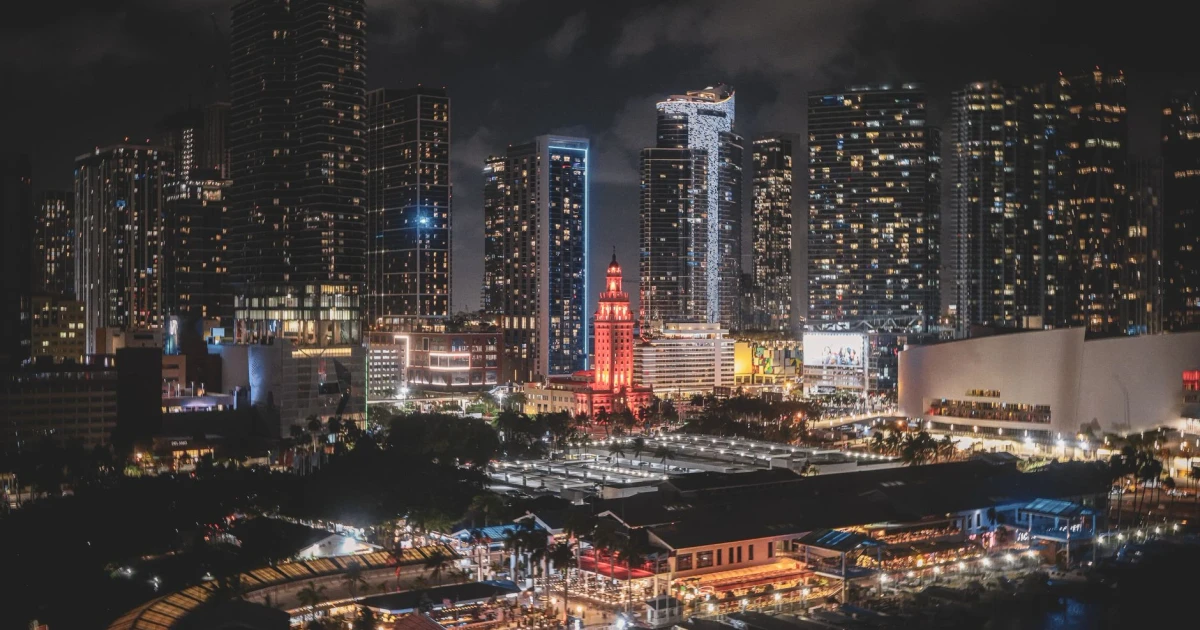
Miami's draw is no longer just penthouses and sunshine. Tax advantages, especially Florida's lack of a state income tax, are bringing family offices, private bankers and real estate demand into the city, most visibly around Brickell and downtown. The deeper question is whether that flow is building a true second financial center or simply a tax-efficient outpost for elite capital.
Why wealth is clustering in Miami
Wealth-industry publications have already marked the shift. Euromoney said Miami had risen from a “financial backwater to wealth powerhouse,” and said the city was pulling in capital and private wealth at a record rate, a sharp change from its old reputation as a retiree destination. The New York Times then described “a wave of family offices” arriving in Miami, underscoring how client migration is bringing institutional money management with it.
That migration is not abstract. One Altss post said 23 family offices formally moved to Florida in the second quarter of 2026, a figure that points to a rapid buildout of elite advisory shops around the state. In Miami, the appeal is simple and durable: wealthy households keep arriving, and Florida's tax structure gives them a strong reason to keep their financial operations nearby.

The firms following clients south
The service layer is already in place. Bernstein Private Wealth Management lists a Miami office at 701 Brickell Avenue, Suite 2240, and Goldman Sachs Private Wealth Management lists one at 200 South Biscayne Boulevard, Suite 5300. Other firms with a Miami presence include Morgan Stanley, Citi Personal Wealth Management, J.P. Morgan Private Bank, NewEdge Wealth and Wells Fargo, showing that the city is no longer a side market for national wealth managers.
That footprint matters because family offices need more than a warm-weather mailing address. They need portfolio managers, tax specialists, legal support, estate planning and private banking, all of which become easier to assemble when major firms are already clustered in the same part of town. Peter Thiel's historic Miami office lease, which Fox Business pointed to as an example, illustrated the same logic: tax savings can justify moving wealth-management operations as well as personal residences.
Brickell is absorbing the spillover
The office market is one of the clearest ways to see the shift. Family offices do not just move capital, they need high-end workspace near the financial core, and in Miami that has meant more attention on Brickell and downtown. The concentration of private-wealth firms around those districts creates a reinforcing loop: clients want proximity to advisers, and advisers want proximity to clients.
That spillover is visible in the events calendar too. Markets Group lists a Real Estate Private Wealth East Retreat in Miami for Sept. 9 to Sept. 10, 2026, while Opal Group lists a Family Office & Private Wealth Management Forum in Miami for July 27 to July 29, 2026. Those gatherings signal that Miami is functioning not only as a relocation destination but as a convening point for deal makers, advisers and property investors who want access to the same wealth network.

Latin America still gives Miami an edge
Miami's appeal is not built only on domestic tax policy. Its role as a gateway to Latin America remains a major advantage, especially for families and firms that operate across borders and currencies. Family Wealth Report said Miami's Latin American market offered ample opportunity, but it also warned advisers to proceed carefully, a reminder that cross-border wealth brings regulatory and cultural complexity.
That same ecosystem already supports firms built around Latin clients. Family Wealth Report highlighted WE Family Offices and Maximai Investments as examples of firms serving this market, showing that Miami's private-wealth scene is specialized rather than generic. The city's advantage is that it can combine U.S. financial infrastructure with a regional client base that stretches from South Florida into Latin America.

The support economy around wealth is growing too
The migration has also created demand for practical guidance. City National Bank and other wealth-management firms publish Miami and Florida relocation and wealth-management materials, a sign that inbound households need help with banking, taxes and relocation planning as much as with portfolio construction. That kind of support business often grows alongside the more visible private-bank names, because every new family office brings more back-office, compliance and advisory work.
Taken together, the pattern looks less like a one-off inflow and more like a geographic rebalancing of wealth services. Miami now has the clients, the firms, the events and the office demand to support a deeper financial ecosystem than it had a few years ago. Whether that makes it a genuine rival to New York will depend on whether the city can turn tax-driven migration into lasting institutional depth.
Sources
- [1]nytimes.com
- [2]euromoney.com
- [3]altss.com
- [4]bernstein.com
- [5]pwm.gs.com
- [6]familywealthreport.com
- [7]fwreport.com
- [8]marketsgroup.org
- [9]opalgroup.net
- [10]wefamilyoffices.com
- [11]wealthmanagement.com
- [12]foxbusiness.com