Health
Michigan cyclospora outbreak tops 700 cases across eight counties
Michigan’s cyclospora outbreak has surged past 708 cases across at least eight southeast counties, and state officials have not identified the food, grower or supplier behind it. State officials have not identified the food, grower or supplier behind it.
Michigan health officials said on July 1 that they were actively investigating the outbreak with the Michigan Department of Agriculture and Rural Development and local health departments. By June 30, more than 170 cases had already been reported in Monroe, Lenawee, Washtenaw, Wayne, Livingston, Shiawassee and Jackson counties in just the previous nine days. By July 7, infections were spread across Monroe, Lenawee, Washtenaw, Wayne, Shiawassee, Jackson, Oakland and Livingston counties.
The state typically identifies about 50 cyclosporiasis cases in an entire year. Officials expect more cases.

Cyclosporiasis is caused by the microscopic parasite Cyclospora cayetanensis. The illness is not known to spread person to person, but it can make people sick two to 14 days after exposure. Common symptoms include watery diarrhea, abdominal cramps, bloating, nausea, loss of appetite, weight loss and low-grade fever. Without treatment, illness can last from days to a month or longer, though antibiotics can significantly improve symptoms.
Cyclosporiasis usually rises in summer. The Centers for Disease Control and Prevention says cases typically peak between May and August, and national surveillance data through June 16 showed at least 145 domestically acquired cases in 17 states, with 20 hospitalizations and no deaths.

Oakland County health officer Kate Guzman said investigators are interviewing cases one by one to trace where the parasite entered the food supply. That work is harder because Cyclospora infections often point back to fresh produce, but not to a single obvious ingredient.
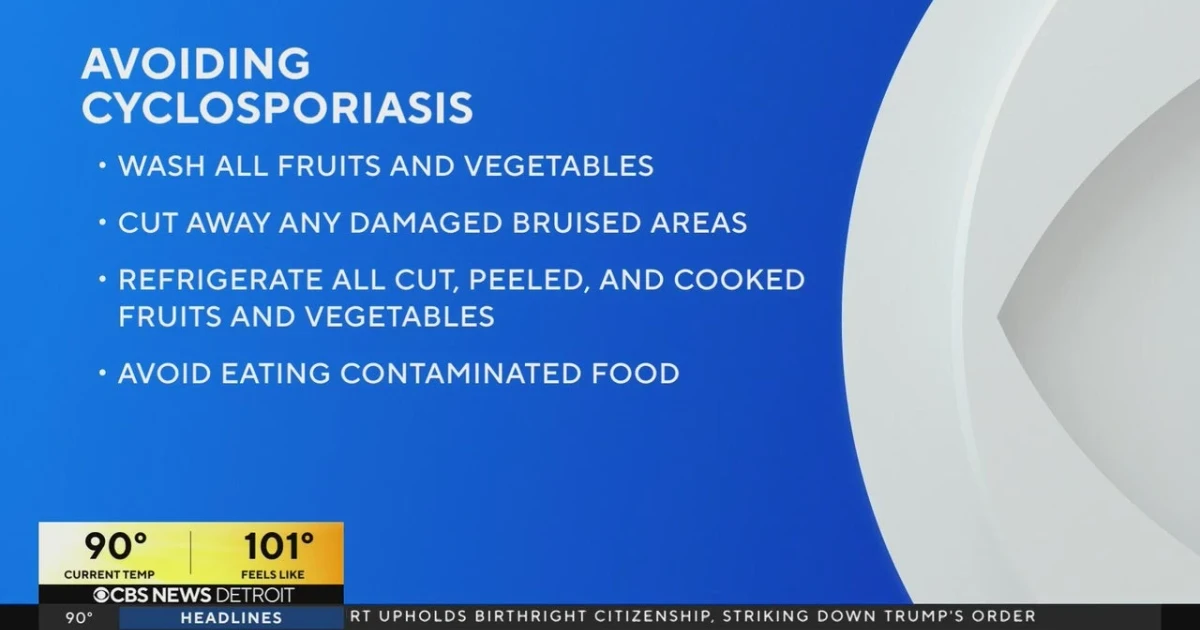
Michigan officials say anyone with sudden, ongoing diarrhea should contact a health care provider, and families should alert local health departments if others in the household develop similar symptoms. Prevention guidance: wash hands before and after handling produce, wash fruits and vegetables under running water, and follow food-safety precautions.
Sources
- [1]arstechnica.com
- [2]michigan.gov
- [3]today.com
- [4]cdc.gov
- [5]fda.gov
- [6]wdet.org