Politics
Michigan Democrats vote in divisive Senate primary, future of party at stake

Michigan Democrats voted Tuesday in a Senate primary that doubled as a referendum on who should define the party after Gary Peters passed on a third term. Rep. Haley Stevens, a four-term moderate, faced progressive Abdul El-Sayed in a race that drew backing from Alexandria Ocasio-Cortez and Bernie Sanders and put AIPAC spending at the center of the fight.
Polling in the final stretch suggested a contest tight enough to turn on turnout blocs rather than party labels alone. Emerson College Polling had El-Sayed tied with Mallory McMorrow in an April 16 survey before McMorrow faded from the top tier, and later polls pointed to a virtual deadlock between Stevens and El-Sayed. Michigan Advance reported on July 8 that the two were statistically tied, and WDIV Local 4 said on July 14 that a Detroit-area poll showed them virtually even. In 270toWin’s average, El-Sayed stood at 36.5 percent and Stevens at 32.8 percent.
The split in the race tracked the Democratic Party’s larger argument over whether voters wanted ideological clarity or establishment pragmatism. The Hill described Michigan as the first major test of that identity fight as Democrats looked beyond the midterms toward 2028, while The New Yorker cast the primary as a sign of the party’s growing ideological schism. McMorrow’s early strength showed that the field initially had room for a different kind of coalition, but the final contest narrowed to Stevens’ institutional support against El-Sayed’s progressive base.
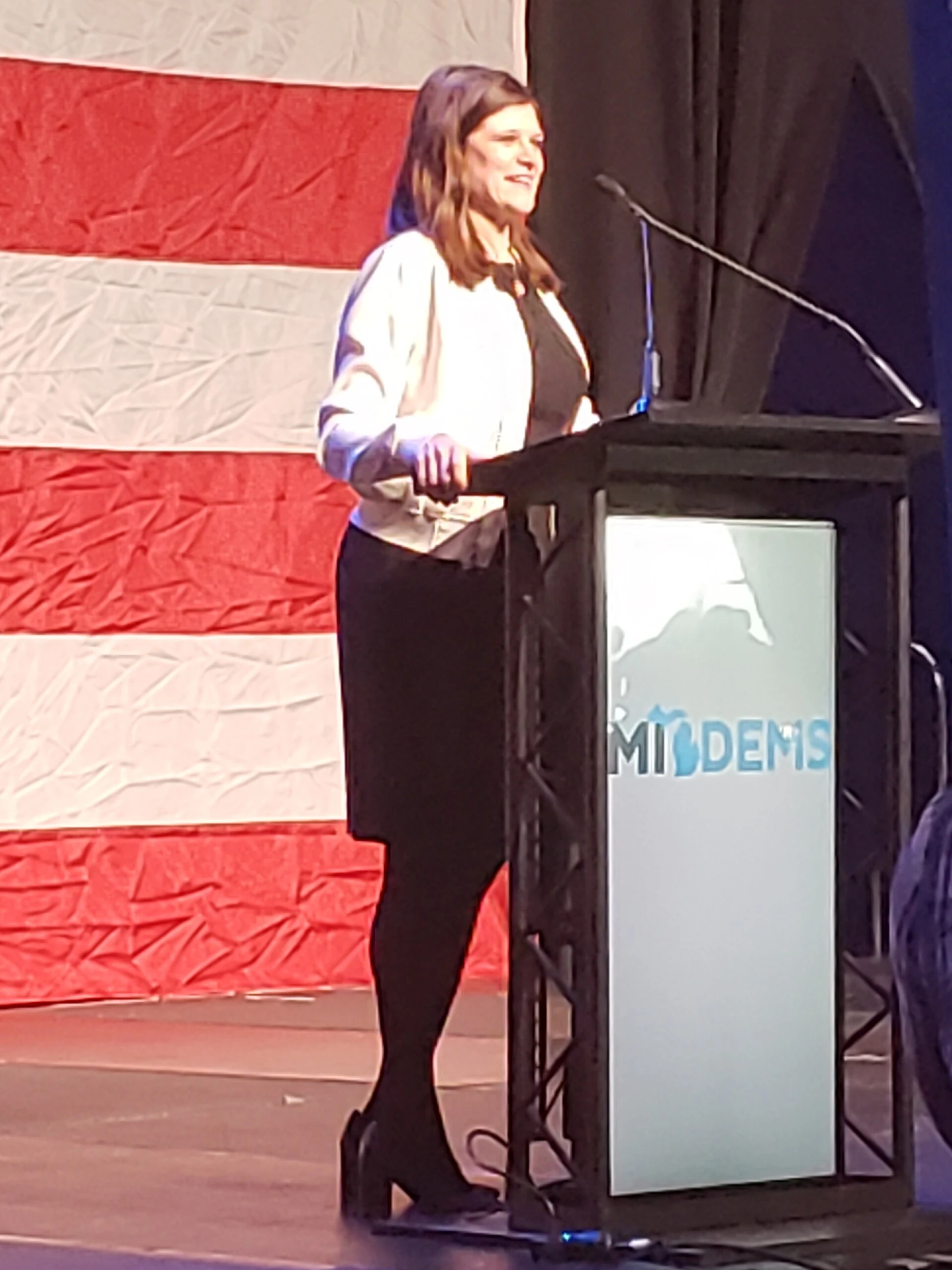
Israel and Gaza became the sharpest fault line inside that coalition. Reuters said the primary carried implications for the battle for control of Congress and the future of the Democratic Party amid the party’s fight over Israel. CBS News reported protesters outside a Stevens event in Grand Rapids objected to the tens of millions of dollars spent on her campaign by AIPAC and affiliated groups, and The Times of Israel said AIPAC was a key topic at the last Democratic debate before the vote. Politico said the fight over Israel was returning to where it began for Democrats, while Al Jazeera noted that U.S. Arab voters were watching for a possible historic Senate win for El-Sayed despite the attacks.
The blocs most likely to decide the result were the voters who could assemble a cross-pressured coalition: younger and educated Democrats who gave El-Sayed an edge in Emerson’s polling, Jewish Democrats weighing the party’s posture toward Israel, and Arab American voters in a state with one of the country’s most politically active blocs on Gaza. The outcome carried immediate Senate consequences because the seat was open, and the winner would step into one of the cycle’s most closely watched battlegrounds as Democrats test whether moderation, movement politics, or a broader coalition can travel in competitive races nationwide.
Sources
- [1]news.google.com
- [2]thehill.com
- [3]emersoncollegepolling.com
- [4]michiganadvance.com
- [5]youtube.com
- [6]270towin.com
- [7]reuters.com
- [8]cbsnews.com
- [9]timesofisrael.com
- [10]aljazeera.com
- [11]politico.com
- [12]nbcnews.com