World
Middle East Conflict Raises Concerns at IMF, World Bank Meetings
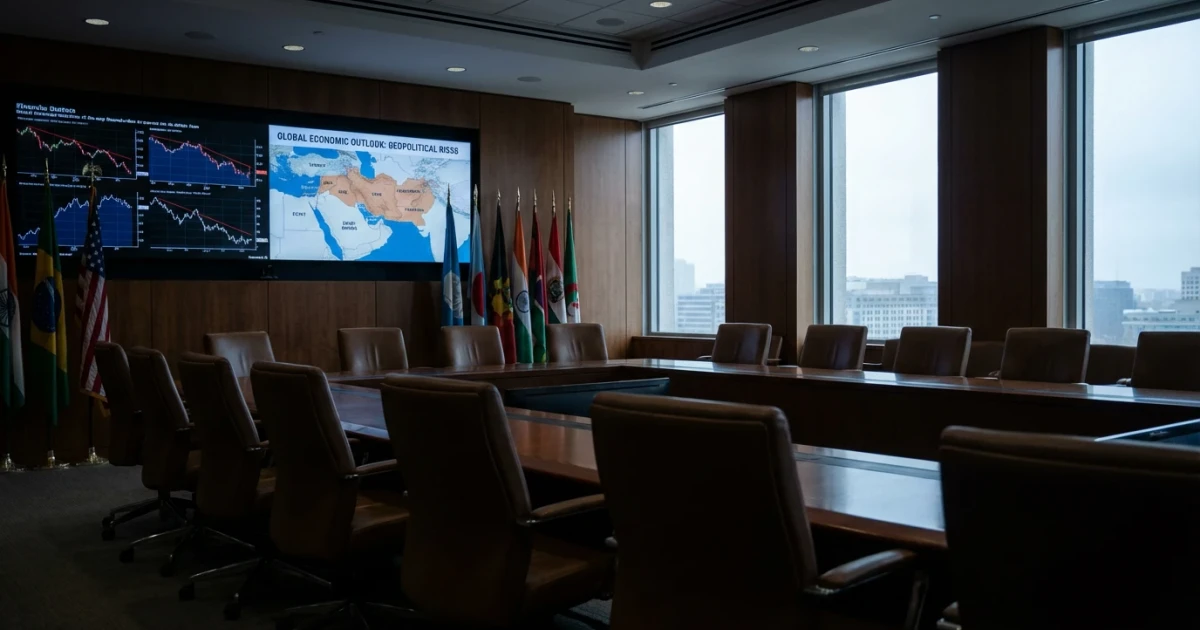
The ongoing conflict in the Middle East is set to dominate discussions at the upcoming IMF World Economic Outlook and World Bank Global Economic Prospects meetings, as economists and policymakers brace for potential shocks to global growth, inflation, and financial markets.
Global Economic Outlook Clouded by Conflict
According to reporting from The Economic Times, the escalation of war in the Middle East has sent ripples through global economies, prompting fears of reduced growth and heightened instability. The conflict’s impact is particularly acute given the region’s central role in energy markets and international trade.
- Brent crude oil prices have shown significant volatility, with recent data from FRED: Crude Oil Prices reflecting heightened investor anxiety about potential supply disruptions.
- The Bureau of Labor Statistics Consumer Price Index releases have highlighted energy and fuel price increases, which could be exacerbated if the conflict persists.
- Global trade flows, as documented in the WTO World Trade Statistical Review, are sensitive to geopolitical shocks, with the Middle East serving as a critical nexus for shipping and commerce.
IMF and World Bank Respond to Heightened Risks
Both the International Monetary Fund and World Bank have signaled concerns about the war’s potential to derail fragile recoveries, especially in emerging and developing economies. Their analysts are closely monitoring indicators such as oil price volatility, inflation trends, and capital flows.
Key risks highlighted include:
- Potential for sustained energy price increases leading to higher global inflation
- Downward revisions to growth forecasts, especially for oil-importing countries
- Increased uncertainty in financial markets, potentially affecting investment and lending
Analysis from the OECD Economic Outlook further supports these concerns, noting that geopolitical shocks can trigger "second-round effects" in both advanced and developing economies through trade and financial linkages.
Energy, Trade, and Inflation: The Transmission Channels
The Middle East remains a linchpin of the global energy system. Any disruption to oil production or shipping routes can have quick and wide-ranging effects, as seen in previous regional crises. The March 2024 IEA Oil Market Report emphasized that even modest production outages can fuel price spikes, especially against a backdrop of robust demand and limited spare capacity.
For many countries, particularly in Asia and Europe, higher energy costs translate into higher import bills, reduced consumer spending, and pressure on government budgets. This, in turn, complicates efforts to manage inflation and support economic recovery.
Focus Shifts to Policy Responses
As delegates gather for the IMF and World Bank meetings, much attention will be on policy coordination to contain financial volatility and support vulnerable economies. Options under discussion include targeted financial aid, enhanced lending facilities, and coordinated interventions to stabilize energy and commodity markets.
Looking Ahead
While the full impact of the Middle East war remains uncertain, its effect on global economic sentiment is already clear. Policymakers face a difficult balancing act: containing inflation pressures without undermining growth or financial stability. The outcomes of the IMF and World Bank meetings may set the tone for international cooperation in the months ahead, as leaders seek to navigate a more volatile global landscape.