World
Middle East wars leave no victors as civilian toll mounts
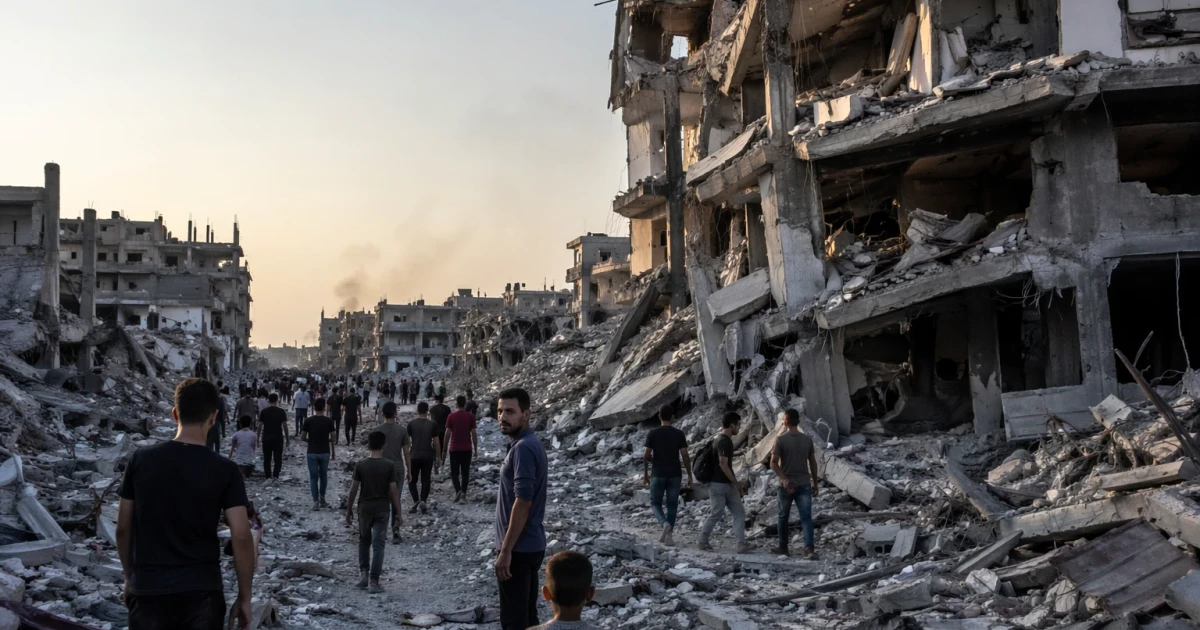
The latest Middle East wars have produced a brutal ledger: thousands dead, tens of thousands displaced, and no side with a believable claim to victory. The fighting that began with the Hamas-led October 7, 2023 attacks on southern Israel has widened into a regional contest that has drained deterrence, legitimacy, and stability from everyone involved. Gaza, south Lebanon, and parts of Iran now read like a map of strategic failure.
Gaza: the heaviest price falls on civilians
The war’s opening blow was devastating. The October 7 attacks killed about 1,195 people in Israel and took 251 hostages, a shock that still shapes Israeli politics and military strategy. In Gaza, the toll has been far larger and far more enduring: by May 6, 2026, UNRWA said 72,619 Palestinians had been killed since the war began, and it had recorded 391 colleagues killed in Gaza as well.
That death count matters not only as a humanitarian catastrophe but as a public health collapse. OCHA says the casualty figures it publishes are based on reports from the Ministry of Health and Israeli authorities, and that deaths are added only after independent verification. Even as of June 3, 2026, OCHA was still publishing reported-impact updates for Gaza, a sign that the emergency is not a closed chapter but an ongoing accounting of destroyed lives and broken systems.
The strategic cost is equally stark. Hamas can point to survival and continued relevance, but not to a decisive political outcome. Israel can point to military pressure on Hamas, but the price has been a deeper legitimacy crisis abroad, a strained relationship with civilians whose lives have been upended, and a war that has not produced a clean security solution.
What the war has done to regional stability
This is not just a Gaza war anymore. The conflict has pulled in a broader Arab-Israeli history that stretches back more than a century and has already passed through major wars in 1948-49, 1956, 1967, 1973, 1982, 2006, and now the 2023-present conflict. Each round has promised resolution and delivered a new layer of grievance, displacement, and mistrust.
The 1967 war remains the clearest example of how battlefield success can harden into long-term instability. That war led to Israeli occupation of the Gaza Strip, the West Bank including East Jerusalem, the Golan Heights, and the Sinai Peninsula, turning military victory into decades of political consequence. The 1973 war, by contrast, did not produce a decisive battlefield settlement, but it helped trigger later peace diplomacy, including the Camp David Accords and the Egypt-Israel peace treaty, a reminder that wars can shift diplomacy only after immense loss.
Today’s war has not produced that kind of diplomatic opening. Instead, leaders such as Yahya Sinwar, Mohammed Deif, Benjamin Netanyahu, and Joe Biden have all operated inside a narrowing space where military action has outpaced political imagination. The result is not clarity, but a hardening belief across the region that force can change facts on the ground faster than negotiations can change the future.
Lebanon shows how spillover becomes displacement
The Israel-Hezbollah front in Lebanon shows the cost of a war that escapes its original theater. By February 2024, fighting along the southern Lebanese border had displaced over 90,000 people from south Lebanon, forcing families away from homes, jobs, and community networks with little assurance they could return quickly. That kind of displacement is not a side effect; it is one of the main ways regional wars reshape daily life.
UN human-rights officials later said Israeli attacks in Lebanon destroyed and damaged civilian infrastructure and made it harder for displaced residents to return. That matters because infrastructure is not just concrete and steel. It is the system that lets people get medical care, keep schools open, and sustain local economies after violence subsides.
Hezbollah can claim it kept pressure on Israel, but the exchange also widened the humanitarian footprint of the war and deepened anxiety inside Lebanon. Israel, meanwhile, gained little durable security from the cross-border escalation, only a larger perimeter of uncertainty. The border became a lesson in how quickly deterrence can become mutual exhaustion.
Iran and the widening spiral
By March 2026, UN experts were warning that the region had entered a widening Middle East war, describing it as a "spiral of conflict" after Israeli and U.S. strikes on Iran and counterstrikes by Tehran and allied groups. That phrase captures the core danger: each retaliatory move creates the justification for the next, while civilian exposure keeps expanding. What begins as deterrence often ends as normalization of escalation.
Iran’s involvement matters because it broadens the conflict from a series of separate fronts into a regional contest of signaling and retaliation. Tehran, Israel, the United States, and allied groups all risk reading the same events as proof that force works, when in fact the larger result has been greater instability and thinner security for everyone. The strategic victory each side seeks keeps receding as the civilian cost rises.
The record of the region is the warning
The Middle East wars have rarely produced neat winners. They have produced stalemate, displacement, occupation, diplomatic aftershocks, and generations of people forced to live with consequences they did not choose. That pattern is visible from the 1948 refugee crisis to the 1967 occupation, from the 1973 turn toward diplomacy to the present wars in Gaza, Lebanon, and beyond.
What this latest phase makes unmistakable is that tactical achievements do not add up to political success. Each side has lost lives, deterrence, legitimacy, and a measure of regional stability, while civilians have carried the heaviest burden. In the end, the region’s wars keep returning to the same verdict: there are no victors when the human ledger keeps growing.
Sources
- [1]nytimes.com
- [2]britannica.com
- [3]ochaopt.org
- [4]unocha.org
- [5]unrwa.org
- [6]cfr.org
- [7]ohchr.org
- [8]news.un.org
- [9]education.cfr.org