US News
Midwest storms bring tornadoes, hail and damaging winds to region
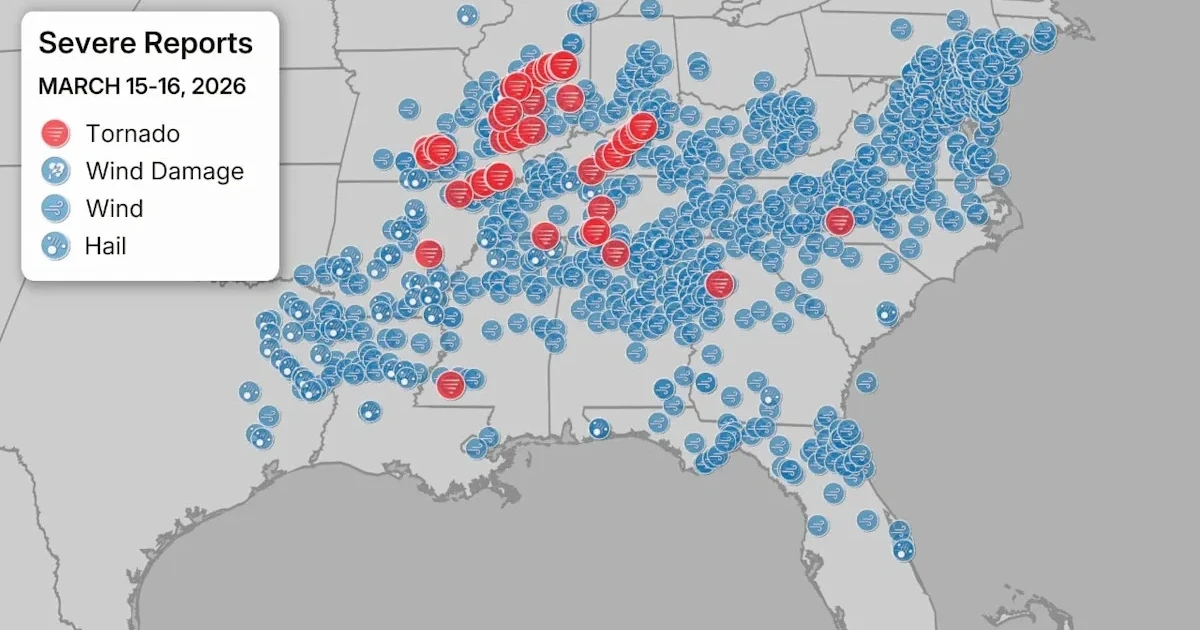
The deadliest part of the outbreak was already over across the Midwest, but the same storm system was setting up a different kind of danger for the Northeast: fewer tornadoes, more people, and a far tighter margin for warning before a commute, a train ride or a packed city block turned hazardous. Forecasters said the main threat there was damaging wind gusts above 60 mph and hail, with storms expected to rebuild across the lower Great Lakes and upper Ohio Valley before sweeping toward the Interstate 95 corridor.
The Midwest damage was severe and widespread. As of June 22, at least 51 tornadoes had been confirmed from the June 11 outbreak across Illinois, Indiana, Wisconsin and Michigan, including three EF-3 tornadoes and three EF-2 tornadoes, according to NOAA. The strongest was the Kouts, Indiana, EF-3, with peak estimated winds of 165 mph. NOAA said the outbreak was the second-largest on record in the National Weather Service Chicago area of responsibility, trailing only the July 15, 2024 outbreak, when 32 tornadoes were recorded.
The storms also exposed how vulnerable major metro areas can be when severe weather hits in the middle of the workday. In Illinois alone, more than 221,000 customers were without power Friday morning after the outbreak, and Chicago’s O’Hare and Midway airports were forced into ground stops that contributed to more than 1,000 flight delays or cancellations in the city. The National Weather Service’s Storm Prediction Center had raised the Chicago area to a Level 4 out of 5 severe-risk category before the storms, a level that CBS News Chicago said is usually seen only about once every two years. In Chicago and surrounding communities, destructive straight-line winds added to the damage.
The human toll extended beyond Illinois. At least one person died in Iowa during the Midwest storms, and Governor Kim Reynolds later issued a disaster proclamation for 11 counties tied to severe weather that began on June 5 and continued. As the threat shifted east, near-record heat raised the stakes again, with temperatures in the mid-90s and heat index values in the 90s and low 100s across parts of the Northeast, including Philadelphia, Washington, Baltimore and New York City. For millions in the region, the next hazard was not a funnel cloud but the combined strain of heat, wind, hail and power loss, arriving just as cities braced for the evening rush.
Sources
- [1]abcnews.com
- [2]weather.gov
- [3]cbsnews.com
- [4]foxweather.com
- [5]governor.iowa.gov